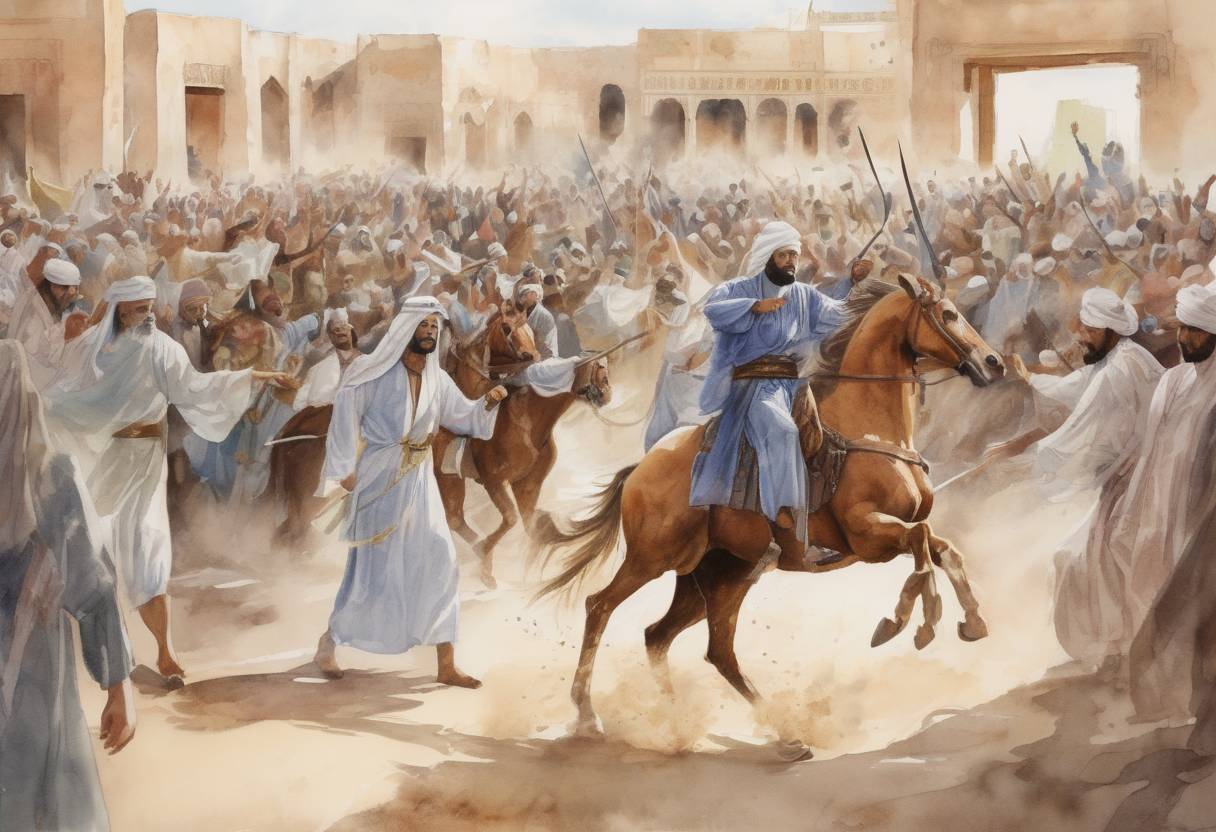
Assassination of Umar ibn al-Khattab
On November 4, 644, Umar ibn al-Khattab, the second caliph of the Rashidun Caliphate, was assassinated by Abu Lu’lu’a Firuz, a Persian slave. This event marked a significant turning point in early Islamic history, impacting the political and social landscape of the burgeoning Islamic state.
Background
Umar ibn al-Khattab
- Reign: Umar ibn al-Khattab served as the caliph from 634 to 644 CE, succeeding Abu Bakr, the first caliph.
- Contributions: Umar is renowned for his administrative and military prowess. Under his leadership, the Islamic empire expanded significantly, encompassing territories in the Byzantine and Sassanian empires, including Egypt, Syria, and Persia.
- Reforms: He implemented numerous administrative reforms, established a welfare state, and is credited with organizing the Islamic calendar.
Abu Lu’lu’a Firuz
- Identity: Abu Lu’lu’a Firuz was a Persian slave who worked as a craftsman in Medina. He was owned by al-Mughira ibn Shu’ba, a prominent companion of the Prophet Muhammad.
- Motivation: The exact motivations behind Firuz’s actions remain a subject of historical debate. Some accounts suggest grievances over taxation or personal disputes, while others hint at broader political or cultural tensions.
The Assassination
- Date and Location: Umar was attacked on November 4, 644, while leading the Fajr (dawn) prayer in the mosque of Medina.
- Method: Abu Lu’lu’a Firuz used a double-edged dagger to stab Umar multiple times. Despite the attack, Umar managed to appoint a council to choose his successor before succumbing to his wounds three days later.
- Aftermath: Firuz attempted to flee but was captured and reportedly committed suicide to avoid capture.
Consequences
- Succession: Umar’s death led to the appointment of Uthman ibn Affan as the third caliph. The process of his selection was marked by deliberation among a council of six companions of the Prophet, as per Umar’s instructions.
- Impact on the Caliphate: Umar’s assassination highlighted the vulnerabilities within the caliphate and foreshadowed future internal conflicts. It underscored the challenges of governing a rapidly expanding empire with diverse populations and interests.
- Legacy: Umar’s leadership left a lasting legacy on Islamic governance, law, and society. His policies and reforms continued to influence the caliphate long after his death.
Historical Significance
The assassination of Umar ibn al-Khattab was a pivotal moment in Islamic history. It not only marked the end of a significant era of expansion and consolidation but also set the stage for future political and sectarian challenges within the Islamic world. His leadership and reforms are still studied and revered in Islamic tradition, reflecting his enduring impact on the development of the Muslim community.