Heraclius Overthrows Phocas and Becomes Byzantine Emperor
610 · Constantinople, Byzantine Empire
Heraclius arrives by ship from Africa at Constantinople, overthrows Byzantine Emperor Phocas, and is crowned as the new emperor.
March 26, 0590
Emperor Maurice proclaims his son Theodosius as co-emperor of the Byzantine Empire.
Constantinople, Byzantine Empire | Byzantine Empire
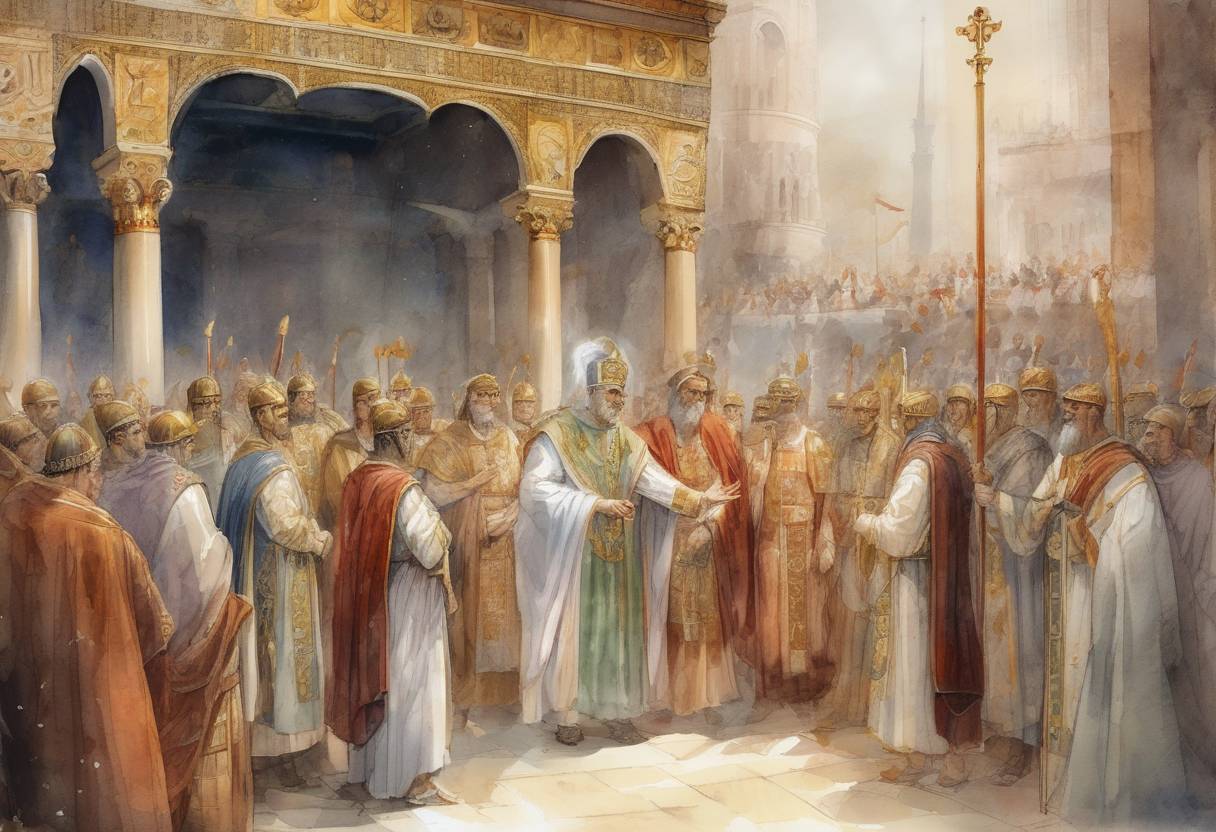
On March 26, 590, Emperor Maurice of the Byzantine Empire took a significant step in securing his dynasty by proclaiming his son, Theodosius, as co-emperor. This event was a strategic move within the context of Byzantine politics and succession practices, reflecting the complexities of maintaining stability and continuity in the empire.
Maurice became the Byzantine Emperor in 582, following the death of Emperor Tiberius II Constantine. His reign was marked by military campaigns and efforts to stabilize the empire’s borders, particularly against the Persians and the Avars. Maurice was known for his administrative reforms and attempts to strengthen the empire’s financial and military structures.
The proclamation of Theodosius as co-emperor was a customary practice in the Byzantine Empire, intended to ensure a smooth transition of power and prevent disputes over succession. By elevating his son to this position, Maurice aimed to solidify his family’s claim to the throne and provide Theodosius with the necessary experience and legitimacy to rule.
Theodosius, still a young man at the time, was given the title of Augustus, a common practice for heirs apparent in the Byzantine tradition. This move was also a signal to the empire’s military and administrative elites that the continuity of Maurice’s policies and leadership style would be maintained.
The proclamation had several implications:
Dynastic Stability: By naming Theodosius as co-emperor, Maurice sought to ensure the stability of his dynasty and prevent potential power struggles after his death.
Political Strategy: This act was a political maneuver to consolidate support among the empire’s nobility and military leaders, who were crucial for maintaining power.
Precedent for Succession: The practice of appointing co-emperors was a long-standing tradition in the Byzantine Empire, serving as a mechanism to manage succession and mitigate the risks of civil war.
Despite Maurice’s efforts, his reign eventually faced significant challenges. In 602, Maurice was overthrown by a military revolt led by Phocas, a centurion who seized power and executed Maurice and his family, including Theodosius. This marked a period of instability and turmoil for the Byzantine Empire, leading to further conflicts and weakening its defenses against external threats.
The proclamation of Theodosius as co-emperor, while initially a strategic move, ultimately could not prevent the eventual downfall of Maurice’s reign. However, it remains a notable example of the Byzantine approach to governance and succession planning.
The elevation of Theodosius as co-emperor on March 26, 590, highlights the intricate dynamics of Byzantine imperial politics. It underscores the challenges faced by emperors in securing their legacies and the ever-present threat of internal dissent and external pressures that characterized the Byzantine Empire’s history.
Source: en.wikipedia.org