Garry Kasparov vs. IBM's Deep Blue: February 10, 1996
1996 · Philadelphia, United States
World chess champion Garry Kasparov defeats the IBM supercomputer Deep Blue in a six-game match.
May 11, 1997
Deep Blue, a chess-playing computer developed by IBM, defeats world champion Garry Kasparov in a six-game match.
New York City, United States | IBM
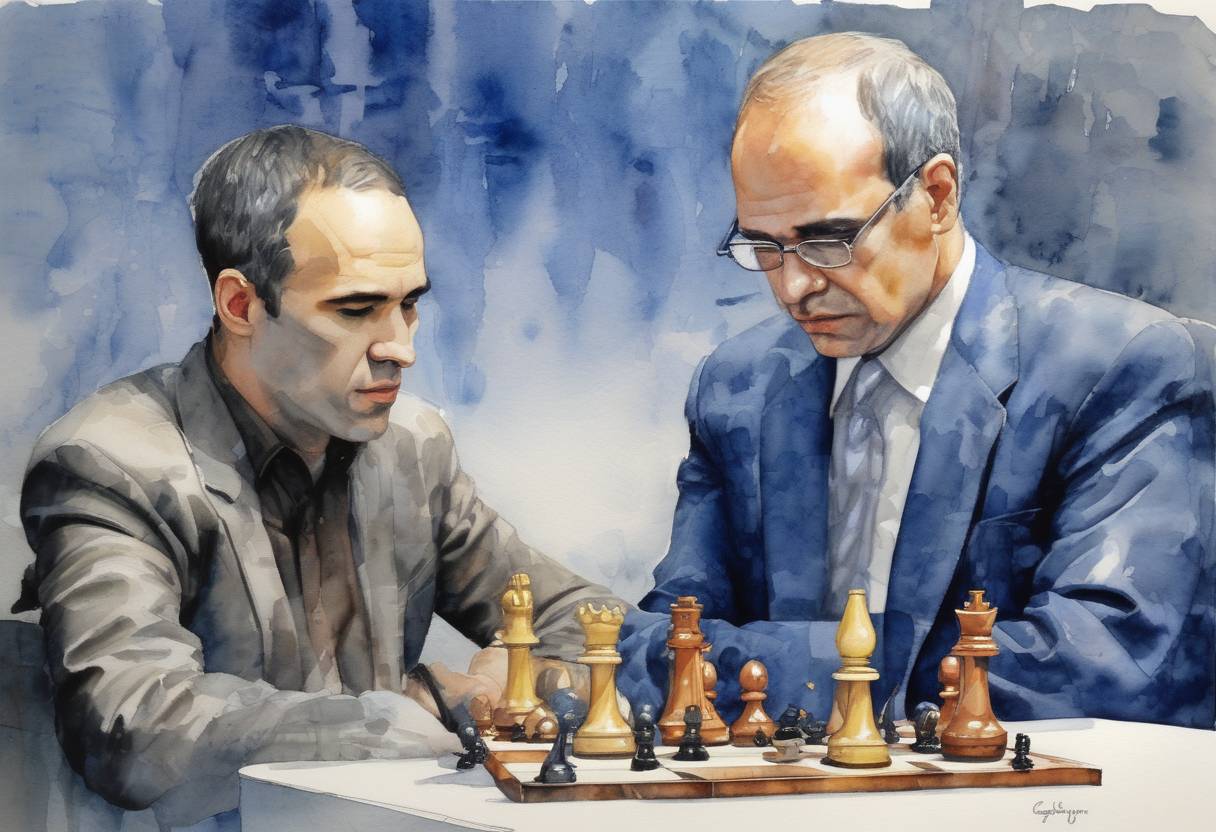
On May 11, 1997, a landmark event in the history of artificial intelligence and competitive chess took place when IBM’s chess-playing computer, Deep Blue, defeated the reigning world chess champion, Garry Kasparov, in a six-game match. This victory marked the first time a computer defeated a world champion in a match under standard chess tournament time controls.
Deep Blue: Developed by IBM, Deep Blue was a specialized supercomputer designed to play chess at the highest level. It was an evolution of earlier systems like Deep Thought and was capable of evaluating 200 million positions per second.
Garry Kasparov: Widely regarded as one of the greatest chess players of all time, Kasparov had been the World Chess Champion since 1985. Known for his aggressive style and deep understanding of the game, he was considered a formidable opponent for any challenger, human or machine.
Location: The match took place in New York City, drawing significant media attention and public interest.
Format: The match consisted of six games, with standard tournament time controls applied to each game.
Outcome: Deep Blue won the match with a score of 3.5 to 2.5. The individual game results were as follows:
Technological Milestone: Deep Blue’s victory was a significant milestone in the field of artificial intelligence, demonstrating the potential of computers to perform complex tasks traditionally thought to require human intuition and creativity.
Impact on Chess: The match highlighted the growing influence of computer analysis in chess, leading to increased use of computer programs for training and preparation by players at all levels.
Cultural Impact: The event captured the public’s imagination, symbolizing the advancing capabilities of technology and sparking discussions about the future relationship between humans and machines.
Kasparov’s Reaction: Kasparov expressed skepticism about the fairness of the match, suggesting that human intervention might have influenced Deep Blue’s play. However, no evidence of such interference was found.
Legacy: The match remains a pivotal moment in both chess and AI history. It paved the way for further advancements in AI and machine learning, influencing research and development in various fields beyond chess.
In conclusion, the 1997 match between Deep Blue and Garry Kasparov was not just a contest between a human and a machine but a defining moment that showcased the evolving capabilities of artificial intelligence and its potential to challenge human expertise in complex domains.
Source: en.wikipedia.org