Escape of Pablo Escobar from La Catedral
1992 · Envigado, Colombia
Colombian drug lord Pablo Escobar escaped from his luxury prison, La Catedral, sparking a massive manhunt.
June 19, 1991
Colombian drug lord Pablo Escobar surrendered to authorities, marking a significant moment in Colombia's fight against drug cartels.
Medellín, Colombia | Colombian Government
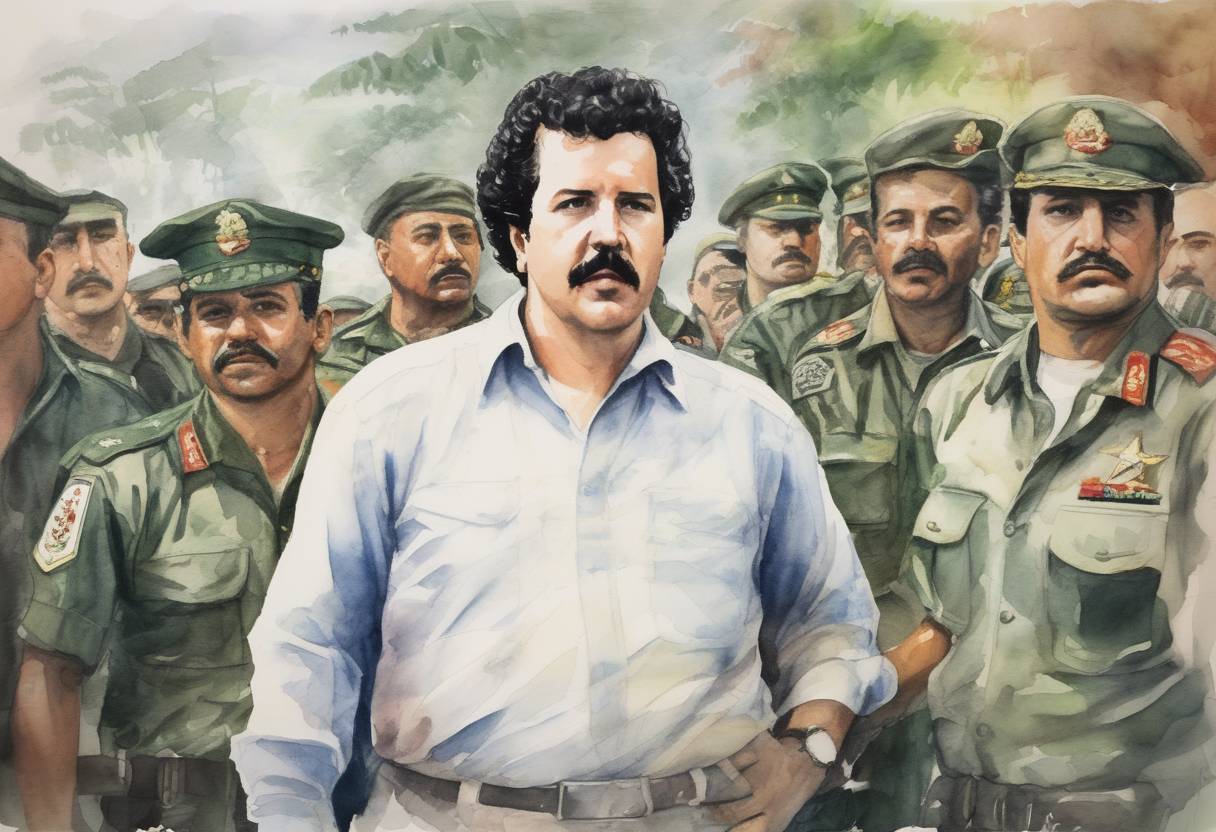
On June 19, 1991, one of the most notorious drug lords in history, Pablo Escobar, surrendered to Colombian authorities. This event marked a pivotal moment in Colombia’s ongoing battle against powerful drug cartels that had plagued the country for years.
Pablo Escobar was the leader of the Medellín Cartel, which at its peak controlled a significant portion of the cocaine trade into the United States. His operations made him one of the wealthiest men in the world, but also one of the most violent. Escobar’s reign was characterized by a ruthless campaign of terror, including bombings, assassinations, and bribery, aimed at maintaining his power and influence.
Escalating Violence: By the late 1980s, the violence associated with Escobar’s cartel had reached unprecedented levels. The cartel was responsible for the deaths of thousands, including judges, police officers, journalists, and politicians.
Government Pressure: The Colombian government, under President César Gaviria, was under immense pressure to curb the violence and dismantle the cartels. The U.S. government also exerted pressure, offering military and financial assistance to combat the drug trade.
Extradition Threat: One of the key factors leading to Escobar’s surrender was the threat of extradition to the United States, where he would face severe penalties. The Colombian government had reinstated the extradition treaty with the U.S., which was a significant concern for Escobar.
Negotiations: In an attempt to avoid extradition and potentially reduce his sentence, Escobar entered into negotiations with the Colombian government. He agreed to surrender under the condition that he would not be extradited and would be allowed to build his own prison, La Catedral, where he would serve his sentence under relatively comfortable conditions.
On June 19, 1991, Escobar turned himself in to Colombian authorities. His surrender was a highly publicized event, symbolizing a temporary victory for the Colombian government in its fight against the drug cartels. However, the terms of his surrender, particularly the construction of La Catedral, were controversial and criticized for being too lenient.
La Catedral: The prison, built to Escobar’s specifications, was more of a luxury retreat than a penitentiary. It included amenities such as a soccer field, bar, and jacuzzi, and Escobar continued to run his operations from within its walls.
Continued Influence: Despite being imprisoned, Escobar maintained significant influence over the drug trade and continued to orchestrate criminal activities.
Escape and Death: In 1992, fearing extradition after the government attempted to move him to a more secure facility, Escobar escaped from La Catedral. This led to a massive manhunt, culminating in his death on December 2, 1993, during a shootout with Colombian National Police.
Impact on Colombia: Escobar’s surrender and subsequent escape highlighted the challenges faced by Colombia in dealing with powerful drug cartels. It underscored the need for comprehensive reforms in law enforcement and judicial processes to effectively combat organized crime.
Pablo Escobar’s surrender was a significant moment in the history of Colombia’s struggle against drug cartels. It illustrated the complexities of negotiating with powerful criminal figures and the difficulties in balancing justice with practical considerations. The event also emphasized the international dimensions of the drug trade and the necessity for cooperation between nations to address such global issues.
Source: en.wikipedia.org