The 2002 Venezuelan Coup d'État
2002 · Caracas, Venezuela
A coup d'état in Venezuela led to the temporary ousting of President Hugo Chávez. He was restored to power two days later after a popular uprising and military support.
February 4, 1992
A coup attempt was launched in Venezuela by Hugo Chávez and his supporters, which ultimately failed but marked the beginning of his rise to power.
Caracas, Venezuela | Bolivarian Revolutionary Movement-200
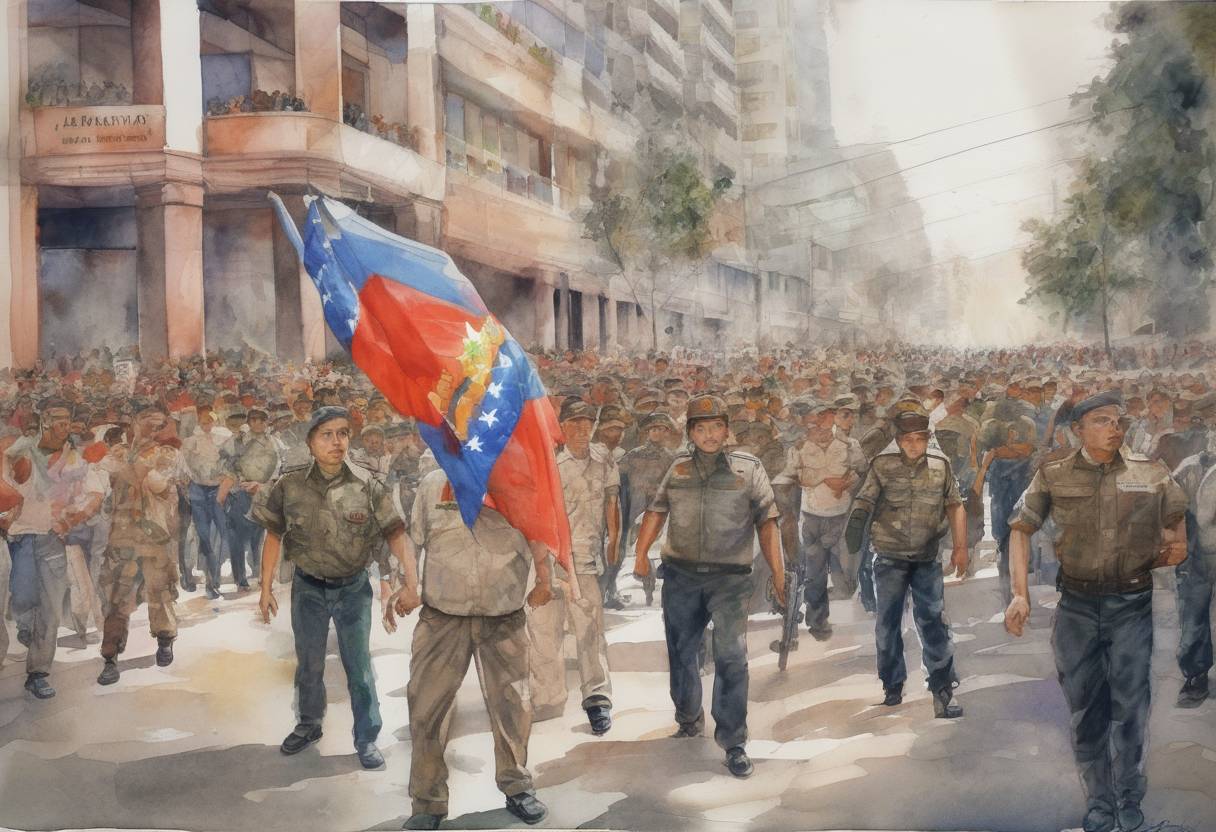
On February 4, 1992, a significant coup attempt took place in Venezuela, led by Lieutenant Colonel Hugo Chávez and a group of military officers known as the “Bolivarian Revolutionary Movement-200” (MBR-200). This event marked a pivotal moment in Venezuelan history, setting the stage for Chávez’s eventual rise to power.
In the late 1980s and early 1990s, Venezuela was experiencing severe economic difficulties, characterized by high inflation, increasing poverty, and widespread corruption. President Carlos Andrés Pérez, serving his second term, implemented austerity measures under the guidance of the International Monetary Fund (IMF), which were deeply unpopular among the populace. These measures led to social unrest, most notably the “Caracazo” riots in 1989, where hundreds were killed in clashes with security forces.
The coup attempt on February 4, 1992, was orchestrated by Chávez and his fellow conspirators within the Venezuelan military. Their goal was to overthrow President Pérez and establish a government that would address the grievances of the Venezuelan people. The plan involved simultaneous uprisings in several key cities, including Caracas, Maracaibo, Valencia, and Maracay.
Despite initial successes in some areas, the coup ultimately failed due to poor coordination and communication among the conspirators. Chávez, leading the operation in Caracas, was unable to capture the presidential palace, Miraflores, or detain President Pérez, who managed to escape and rally loyalist forces.
After the coup’s failure, Chávez was allowed to address the nation on television, where he famously declared that their objectives had not been achieved “por ahora” (“for now”). This phrase resonated with many Venezuelans, who saw Chávez as a symbol of resistance against the corrupt political establishment. His brief speech catapulted him into the national spotlight and garnered significant public sympathy.
Following the failed coup, Chávez and other leaders were imprisoned. However, the event significantly weakened President Pérez’s administration, which was already under scrutiny for corruption. In 1993, Pérez was impeached and removed from office on corruption charges.
Chávez’s imprisonment was short-lived; he was released in 1994 by President Rafael Caldera, who had succeeded Pérez. Chávez then embarked on a political career, founding the Fifth Republic Movement and eventually winning the presidency in 1998.
The 1992 coup attempt is seen as a turning point in Venezuelan history. It highlighted the deep-seated issues within the country’s political and economic systems and set the stage for Chávez’s rise to power, which would lead to significant changes in Venezuela’s political landscape.
Chávez’s presidency, beginning in 1999, marked the start of the “Bolivarian Revolution,” characterized by socialist policies, nationalization of key industries, and a focus on social welfare programs. His leadership style and policies have had lasting effects on Venezuela and have influenced political movements across Latin America.
The events of February 4, 1992, remain a significant chapter in Venezuela’s history, symbolizing both the challenges and the transformative potential of political change.
Source: www.britannica.com