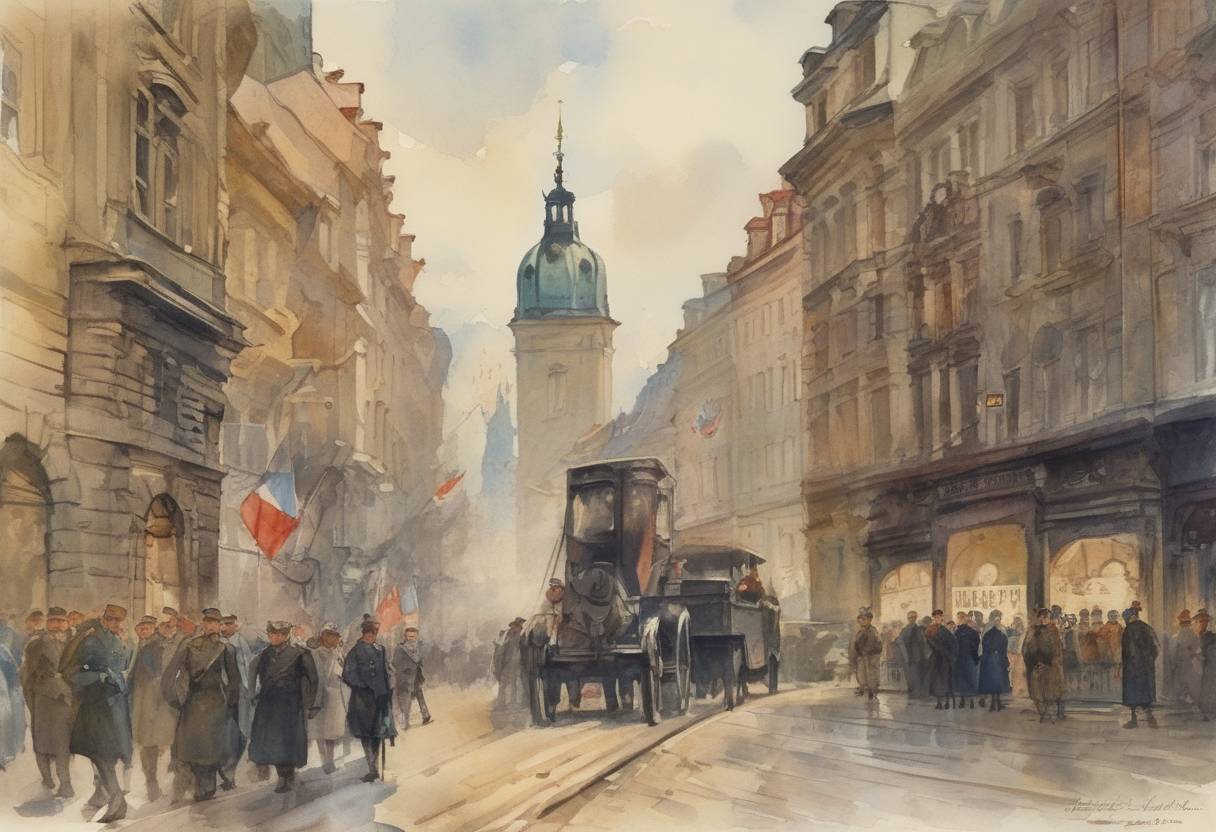
Czechoslovakia Declares Independence from Austria-Hungary
Date: October 28, 1918
Historical Context
The declaration of independence by Czechoslovakia on October 28, 1918, was a pivotal moment in the dissolution of the Austro-Hungarian Empire, marking a significant shift in the political landscape of Central Europe at the end of World War I. The Austro-Hungarian Empire, a multi-ethnic conglomerate, had been struggling with internal nationalistic tensions exacerbated by the pressures of the war.
Key Events Leading Up to Independence
Nationalist Movements: Throughout the 19th and early 20th centuries, nationalist movements had been gaining momentum within the empire. The Czechs and Slovaks, among other ethnic groups, sought greater autonomy and recognition of their national identities.
World War I Impact: The war further strained the empire’s resources and unity. As the Central Powers faced defeat, the empire’s internal cohesion weakened, providing an opportunity for nationalist leaders to push for independence.
The Czechoslovak National Council: Formed in 1916, this body, led by Tomáš Garrigue Masaryk, Edvard Beneš, and Milan Rastislav Štefánik, played a crucial role in advocating for Czechoslovak independence. They garnered international support, particularly from the Allied Powers.
The Fourteen Points: U.S. President Woodrow Wilson’s Fourteen Points, announced in January 1918, included the principle of self-determination, which inspired and legitimized the aspirations of various nationalist movements within the Austro-Hungarian Empire.
The Declaration of Independence
On October 28, 1918, the Czechoslovak National Council declared the independence of Czechoslovakia. This declaration was a culmination of diplomatic efforts and the deteriorating situation within the Austro-Hungarian Empire. The declaration was met with widespread support among Czechs and Slovaks, who were eager to establish a sovereign state.
Aftermath and Consequences
Formation of the First Czechoslovak Republic: The new state was officially recognized by the Allied Powers, and Tomáš Garrigue Masaryk became its first president. The republic was established as a democratic state, encompassing the regions of Bohemia, Moravia, Slovakia, and Carpathian Ruthenia.
Impact on the Austro-Hungarian Empire: The declaration of Czechoslovak independence was part of a broader pattern of disintegration within the Austro-Hungarian Empire. Other regions, such as Hungary, Austria, and Yugoslavia, also declared independence, leading to the empire’s eventual collapse.
Legacy: The establishment of Czechoslovakia marked a significant reconfiguration of Central Europe. It set a precedent for the creation of nation-states based on ethnic and national identities, influencing the post-war treaties and the geopolitical landscape of the region.
Broader Historical Significance
The independence of Czechoslovakia exemplified the broader trend of nationalist movements reshaping Europe in the aftermath of World War I. It highlighted the challenges and opportunities of self-determination and the complexities of creating new states from the remnants of empires. The event also underscored the importance of international diplomacy and support in achieving national aspirations.