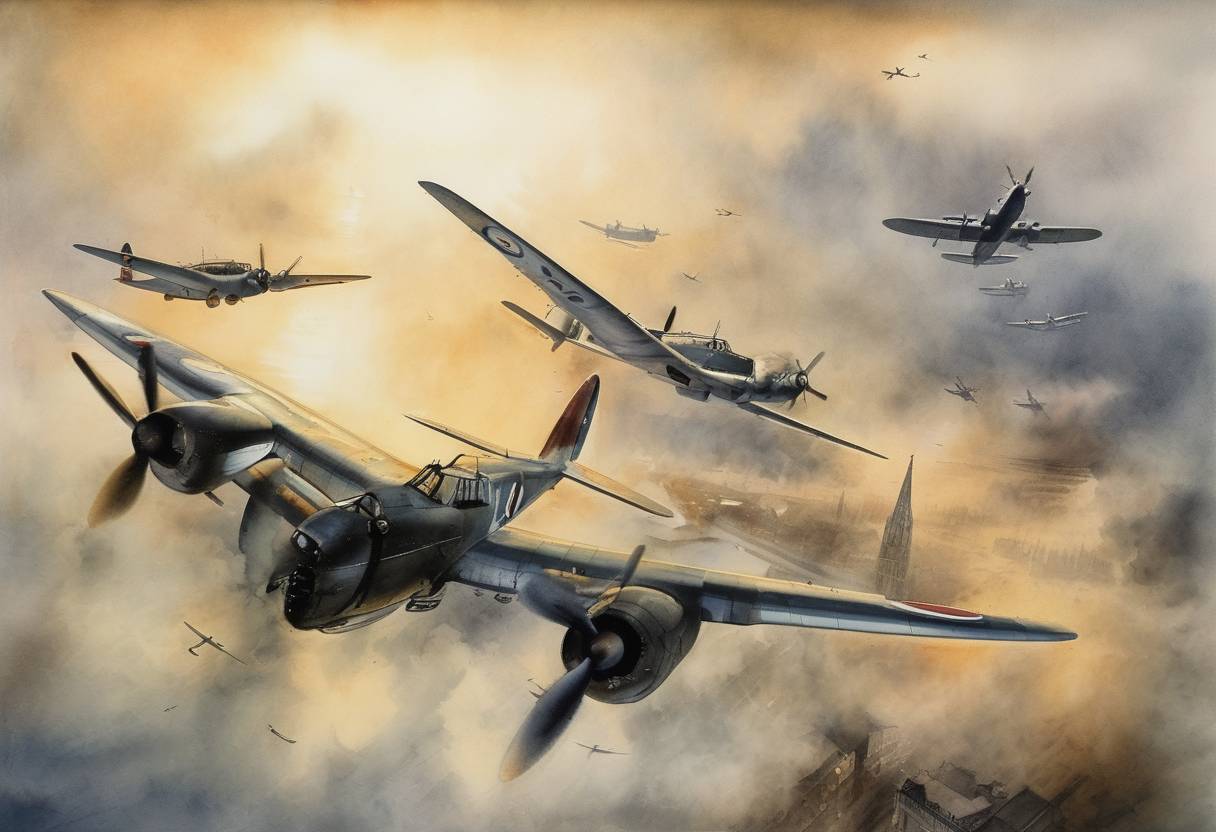
The First 1,000-Bomber Raid: Cologne, May 30, 1942
On the night of May 30-31, 1942, the Royal Air Force (RAF) launched its first 1,000-bomber raid against Cologne, Germany, marking a significant escalation in the Allied strategic bombing campaign during World War II. This operation, known as “Operation Millennium,” was orchestrated by Air Chief Marshal Sir Arthur Harris, the head of RAF Bomber Command, as a demonstration of the RAF’s growing capability and as a morale booster for the Allied forces.
Context and Planning
- Strategic Objectives: The raid aimed to inflict maximum damage on German industrial and civilian infrastructure, disrupt the German war effort, and demonstrate the RAF’s ability to conduct large-scale bombing operations.
- Preparation: To assemble the necessary number of aircraft, Harris drew from operational training units and Coastal Command, supplementing the main force of bombers. This included a mix of aircraft such as the Avro Lancaster, Handley Page Halifax, and Vickers Wellington.
- Target Selection: Cologne was chosen due to its industrial significance, including chemical and manufacturing plants, and its relatively accessible location for the bombers.
The Raid
- Execution: The raid commenced on the evening of May 30, 1942, with a total of 1,046 aircraft taking part. The operation was meticulously planned to ensure maximum concentration of bombs over the target area.
- Bombing Strategy: The attack was conducted in waves, with pathfinder aircraft marking the target with flares and incendiaries to guide the main force. The raid lasted approximately 90 minutes.
- Outcome: Approximately 1,455 tons of bombs were dropped on Cologne, resulting in widespread destruction. An estimated 600 acres of the city were devastated, with significant damage to both industrial and residential areas.
Aftermath and Significance
- Casualties and Damage: The raid resulted in around 469 civilian deaths and left thousands homeless. Over 13,000 buildings were damaged or destroyed.
- Impact on the War: The raid demonstrated the potential of strategic bombing to inflict significant damage on enemy infrastructure and morale. It also marked a turning point in the RAF’s bombing strategy, emphasizing area bombing over precision targeting.
- Legacy: Operation Millennium set a precedent for future large-scale bombing raids and underscored the importance of air power in the Allied strategy. It also highlighted the ethical and humanitarian concerns associated with bombing civilian areas, which would continue to be a topic of debate throughout the war and beyond.
The first 1,000-bomber raid on Cologne was a pivotal moment in the air war over Europe, showcasing the RAF’s growing capabilities and the increasing intensity of the Allied bombing campaign against Nazi Germany.