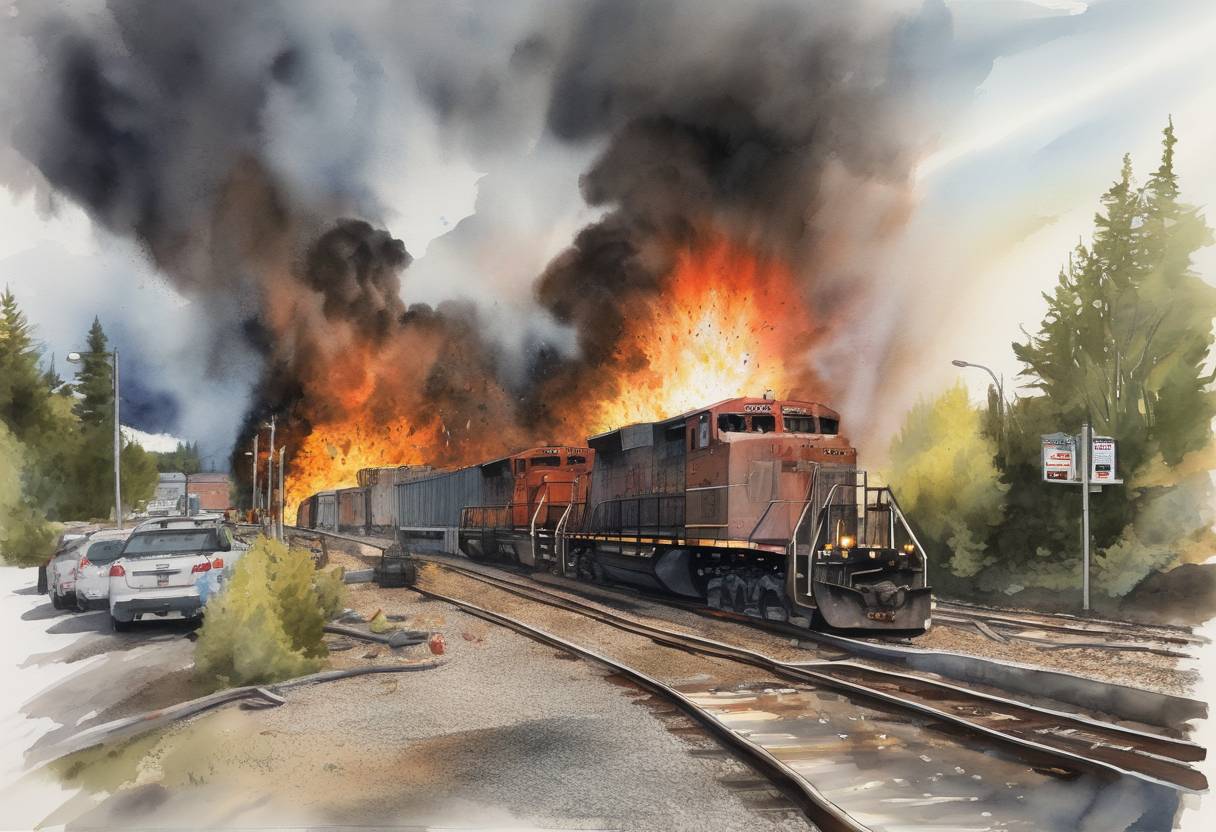
Lac-Mégantic Rail Disaster - July 7, 2013
On July 7, 2013, a catastrophic rail disaster occurred in the small town of Lac-Mégantic, Quebec, Canada. This tragic event involved a freight train carrying crude oil, which derailed and caused a massive explosion and fire, resulting in the deaths of 47 people and the destruction of much of the town’s center.
Background
The train, operated by the Montreal, Maine and Atlantic Railway (MMA), consisted of 72 tank cars filled with highly flammable Bakken crude oil. It was en route from North Dakota to a refinery in Saint John, New Brunswick. The train was parked unattended on a main line near Nantes, a town located about 7 miles west of Lac-Mégantic.
Key Events Leading to the Disaster
Brake Failure: The train was left unattended on a slope with its brakes applied. However, a series of mechanical failures and human errors led to the brakes releasing, causing the train to roll downhill towards Lac-Mégantic.
Derailed Cars: At approximately 1:15 a.m., the train derailed in the heart of Lac-Mégantic. Several tank cars exploded upon impact, igniting a massive fire that engulfed the downtown area.
Casualties and Damage: The explosion and ensuing fire resulted in the deaths of 47 people, making it one of the deadliest rail disasters in Canadian history. The fire destroyed more than 30 buildings, including the town’s library and archives, and forced the evacuation of about 2,000 residents.
Environmental Impact: The disaster also caused significant environmental damage, with crude oil spilling into the nearby Chaudière River, leading to widespread contamination.
Aftermath and Consequences
Investigation and Accountability: The Transportation Safety Board of Canada (TSB) conducted an investigation, which highlighted several safety deficiencies, including inadequate brake systems and insufficient safety protocols by the railway company.
Regulatory Changes: In response to the disaster, Canada implemented stricter regulations on the transportation of hazardous materials by rail, including improved tank car standards and more rigorous safety procedures.
Legal and Financial Repercussions: The railway company, MMA, faced numerous lawsuits and eventually filed for bankruptcy. Several individuals, including train operators and company executives, were charged, though they were later acquitted.
Community Rebuilding: Lac-Mégantic has been undergoing a long and challenging rebuilding process. Efforts have been made to restore the community and address the psychological impact on its residents.
Broader Historical Significance
The Lac-Mégantic rail disaster underscored the risks associated with transporting crude oil by rail, particularly through populated areas. It prompted a reevaluation of rail safety standards and emergency response protocols in Canada and beyond, influencing policy changes aimed at preventing similar tragedies in the future. The disaster remains a poignant reminder of the importance of stringent safety measures in industrial operations.