The Voluntary Abdication of Roman Emperors Diocletian and Maximian on May 1, 305
305 · Nicomedia, Roman Empire
Roman Emperors Diocletian and Maximian retire from office, marking the first voluntary abdication of Roman emperors in history.
March 10, 0298
Roman Emperor Maximian concluded his campaign against the Berbers in North Africa, securing the region for the Roman Empire.
Carthage, Roman Empire (modern-day Tunisia) | Roman Empire
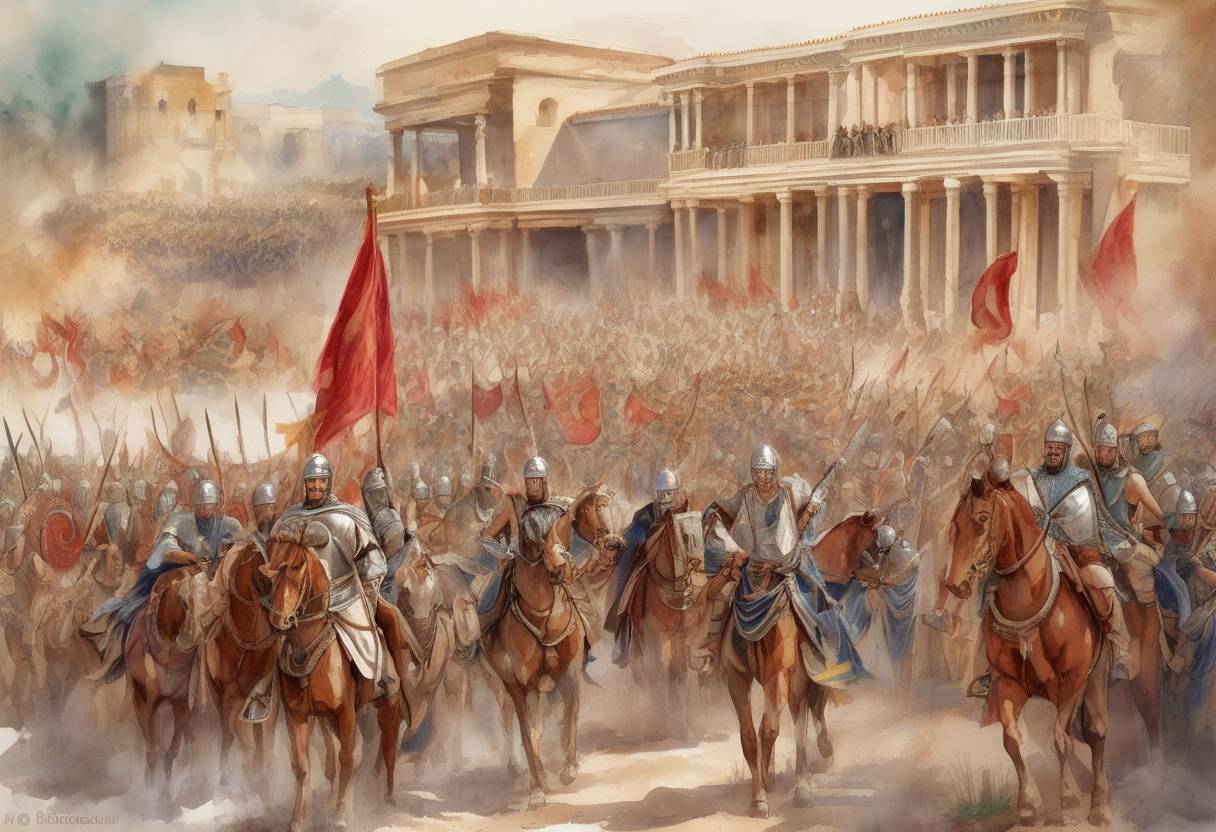
On March 10, 298, Roman Emperor Maximian successfully concluded his military campaign against the Berbers in North Africa, securing the region for the Roman Empire. This event marked a significant moment in the stabilization and expansion of Roman influence in North Africa during the late 3rd century.
The Tetrarchy: By 293, the Roman Empire was governed by the Tetrarchy, a system established by Emperor Diocletian to bring order to the empire’s vast territories. The Tetrarchy divided power among four rulers: two senior emperors (Augusti) and two junior emperors (Caesars). Maximian was appointed as Augustus of the Western Roman Empire, sharing power with Diocletian, who ruled the East.
Berber Threat: The Berbers, indigenous peoples of North Africa, posed a persistent threat to Roman control in the region. They frequently conducted raids and resisted Roman authority, exploiting the empire’s internal struggles and external pressures.
Military Strategy: Maximian’s campaign against the Berbers was part of a broader effort to consolidate Roman power and secure the empire’s borders. He employed a combination of military force and strategic alliances to subdue the Berber tribes.
Key Battles: The campaign involved several key battles and skirmishes, where Roman legions, known for their discipline and organization, engaged Berber forces. The Romans utilized their superior military tactics and infrastructure, such as roads and fortifications, to gain an advantage.
Outcome: By March 10, 298, Maximian had successfully subdued the Berber resistance, securing the region for the Roman Empire. This victory not only reinforced Roman control over North Africa but also ensured the safety of vital trade routes and resources.
Stabilization of the Region: The successful campaign against the Berbers allowed for a period of relative stability in North Africa. This stability facilitated economic growth and the integration of the region into the Roman economic system.
Legacy of the Tetrarchy: Maximian’s victory demonstrated the effectiveness of the Tetrarchic system in addressing regional threats and maintaining imperial cohesion. It reinforced the idea that shared power could effectively manage the empire’s vast territories.
Long-term Impact: The campaign’s success contributed to the Roman Empire’s enduring presence in North Africa, which would last for several centuries. Roman cultural, architectural, and administrative influences became deeply embedded in the region.
In conclusion, Maximian’s campaign against the Berbers was a pivotal event in the history of the Roman Empire, showcasing the military prowess and strategic acumen of the Tetrarchic rulers. It played a crucial role in securing the empire’s western territories and ensuring the continued prosperity of Roman North Africa.
Source: en.wikipedia.org