The Mumbai Attacks: November 27, 2008
2008 · Mumbai, India
The coordinated terrorist attacks in Mumbai, India, continued for a second day, resulting in over 160 deaths and hundreds of injuries.
December 13, 2001
The Indian Parliament attack occurred when five armed terrorists stormed the Parliament House in New Delhi, India, leading to a gun battle that resulted in the deaths of six police officers, a civilian, and the five terrorists.
New Delhi, India | Jaish-e-Mohammed and Lashkar-e-Taiba
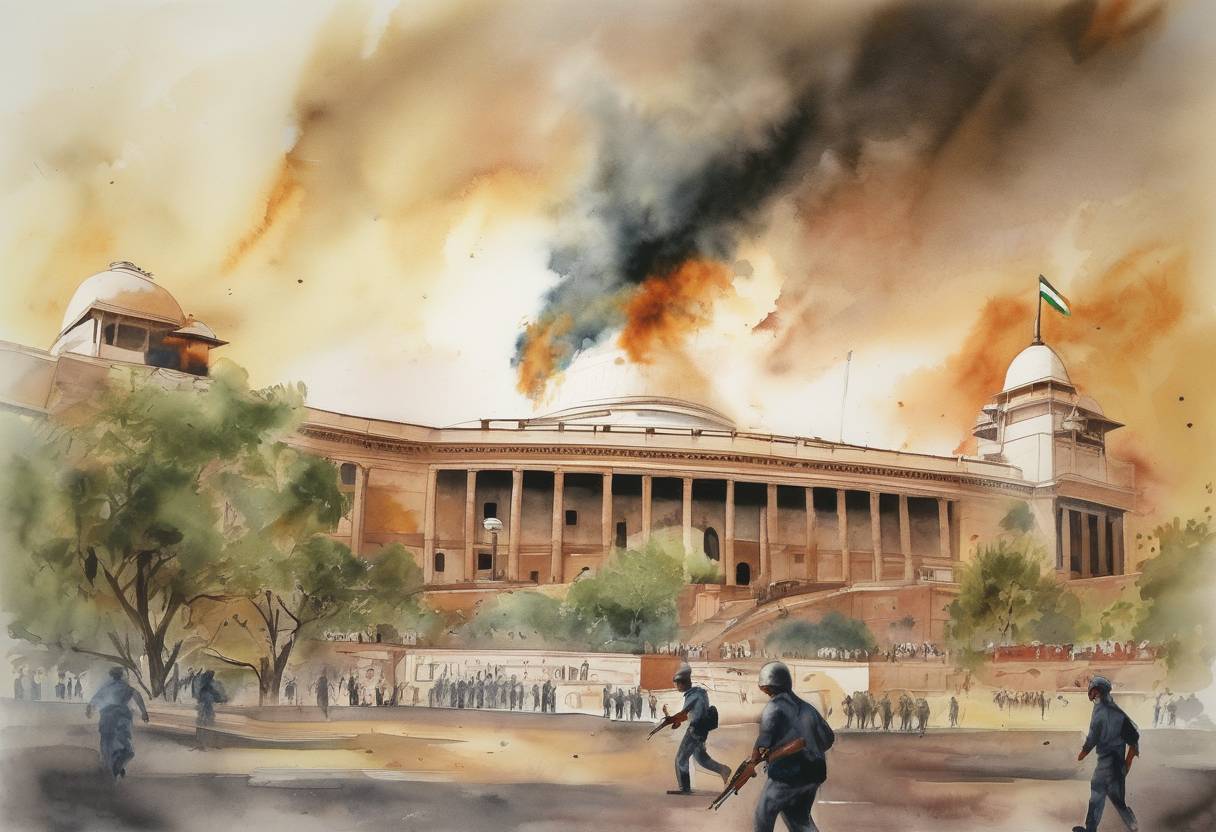
On December 13, 2001, a significant and tragic event unfolded in New Delhi, India, when five armed terrorists launched an attack on the Indian Parliament House. This assault marked a pivotal moment in India’s contemporary history, highlighting vulnerabilities in national security and escalating tensions between India and Pakistan.
The attack occurred against a backdrop of ongoing conflict and tension in the region, particularly concerning the disputed territory of Kashmir. Relations between India and Pakistan were already strained, with both countries having fought multiple wars over Kashmir since their independence in 1947. The attack on the Indian Parliament was perceived as an assault on the very heart of Indian democracy and sovereignty.
The attack led to a massive security operation and lockdown of the Parliament complex. It also prompted a nationwide alert and heightened security measures across India. The Indian government accused Pakistan of harboring and supporting the militant groups responsible for the attack, leading to a severe diplomatic standoff between the two nations.
The Indian Parliament attack of December 13, 2001, remains a stark reminder of the persistent threat of terrorism and the challenges of maintaining national security in a volatile geopolitical environment. It underscored the need for international cooperation in combating terrorism and highlighted the complex dynamics of Indo-Pakistani relations.
This event is remembered for its impact on regional security and its role in shaping India’s domestic and foreign policy in the early 21st century.
Source: en.wikipedia.org