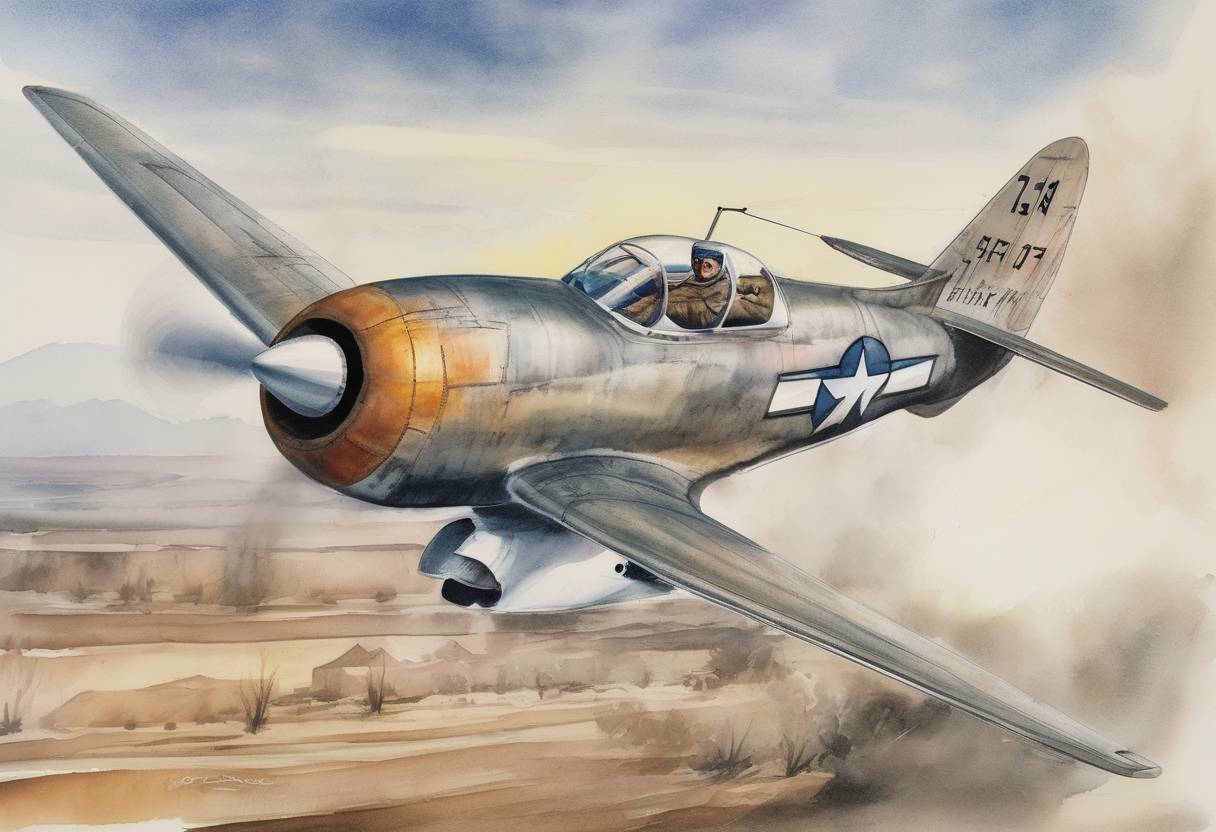
Chuck Yeager Breaks the Sound Barrier
On October 14, 1947, U.S. Air Force Captain Charles “Chuck” Yeager made history by becoming the first person to fly faster than the speed of sound. This groundbreaking achievement took place over the high desert of California at the Muroc Army Air Field, now known as Edwards Air Force Base.
Context and Background
The quest to break the sound barrier was a significant milestone in aviation history. During the 1940s, the understanding of supersonic flight was limited, and many believed that the sound barrier represented an insurmountable physical limit. Aircraft approaching the speed of sound experienced severe aerodynamic challenges, including increased drag and instability, leading to the term “sound barrier.”
The Bell X-1, a rocket-powered aircraft developed by Bell Aircraft Corporation, was designed specifically to investigate these challenges. The X-1 was shaped like a bullet, with thin wings and a powerful rocket engine, allowing it to reach high speeds.
The Historic Flight
Chuck Yeager, a skilled test pilot with combat experience from World War II, was selected to pilot the X-1. On the morning of October 14, 1947, Yeager was air-launched from a B-29 bomber at an altitude of 23,000 feet. Despite suffering from two broken ribs from a horseback riding accident just days before, Yeager was determined to complete the mission.
As the X-1, nicknamed “Glamorous Glennis” in honor of Yeager’s wife, climbed to an altitude of 43,000 feet, Yeager ignited the aircraft’s rocket engine. At approximately 10:30 AM, the X-1 reached a speed of Mach 1.06, or about 700 miles per hour, officially breaking the sound barrier.
Aftermath and Significance
Yeager’s successful flight was a pivotal moment in aviation history, proving that controlled supersonic flight was possible. This achievement paved the way for the development of faster and more advanced aircraft, influencing both military and civilian aviation.
The data collected from the X-1 flights contributed to the design of future supersonic aircraft and helped establish the United States as a leader in aerospace technology during the Cold War era. Chuck Yeager’s accomplishment remains a testament to human ingenuity and the relentless pursuit of knowledge and exploration.
Legacy
Chuck Yeager continued his career as a test pilot and became a celebrated figure in aviation history. His legacy is honored in numerous ways, including the naming of the Yeager Airport in Charleston, West Virginia. The X-1 aircraft is preserved and displayed at the Smithsonian National Air and Space Museum in Washington, D.C., serving as a symbol of this remarkable achievement in human flight.