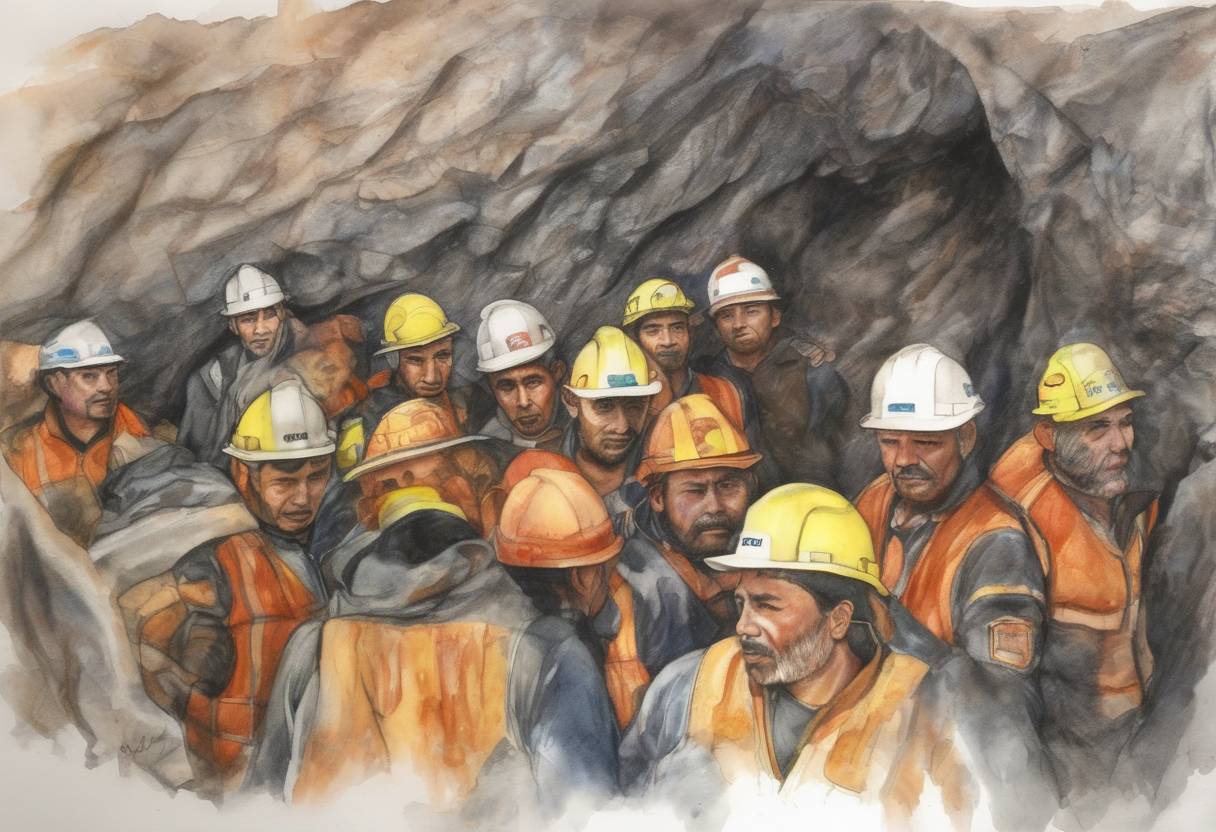
The Rescue of the Chilean Miners: October 12, 2010
On October 12, 2010, the world witnessed a remarkable rescue operation as the first of 33 trapped Chilean miners was brought to the surface after spending 69 harrowing days underground. This event took place at the San José copper-gold mine, located near Copiapó in northern Chile, and became a major international news story, showcasing human resilience and international cooperation.
Background
The ordeal began on August 5, 2010, when a cave-in occurred at the San José mine, trapping 33 miners approximately 700 meters (2,300 feet) below the surface. The miners were confined in a small refuge area with limited supplies. Initially, there was uncertainty about their fate, but on August 22, a note attached to a drill bit confirmed they were alive: “Estamos bien en el refugio, los 33” (“We are well in the shelter, the 33”).
The Rescue Operation
The rescue operation, dubbed “Operación San Lorenzo,” was a complex and meticulously planned effort involving Chilean authorities, international experts, and companies from around the world. The operation utilized a specially designed capsule named “Fénix” (Phoenix) to hoist the miners one by one through a narrow shaft drilled into the rock.
Key Events Leading to the Rescue
- Drilling of the Rescue Shaft: Three drilling plans were executed simultaneously to reach the miners as quickly as possible. Plan B, using a Schramm T130XD air drill, was the first to break through to the miners on October 9, 2010.
- Preparation of the Capsule: The Fénix capsule was equipped with oxygen, communication systems, and a harness to secure each miner during the ascent.
- International Support: Countries such as the United States, Canada, and Australia provided technical expertise and equipment. NASA contributed psychological and nutritional support strategies.
The Rescue
The rescue commenced on the evening of October 12, 2010, and continued into the next day. Florencio Ávalos was the first miner to be rescued, emerging to cheers and applause from the assembled crowd and the global audience watching via live broadcasts. The entire operation took approximately 22 hours, with each miner’s ascent taking about 15 minutes.
Aftermath and Significance
The successful rescue of all 33 miners was celebrated worldwide as a triumph of human spirit and technological innovation. It highlighted the importance of international collaboration in crisis situations and brought attention to mining safety standards globally.
Broader Impact
- Media Coverage: The event was covered extensively by media outlets, with live broadcasts capturing the emotional reunions between the miners and their families.
- Safety Reforms: The incident prompted discussions on improving mining safety regulations and emergency preparedness in Chile and other mining nations.
- Cultural Legacy: The miners’ story inspired books, documentaries, and a feature film, “The 33,” released in 2015.
The rescue of the Chilean miners remains a powerful testament to hope, perseverance, and the ability of humanity to overcome seemingly insurmountable challenges.