The United States Presidential Election of November 3, 2020
2020 · Washington D.C., United States
The United States presidential election took place, resulting in Joe Biden defeating incumbent President Donald Trump.
November 8, 2016
Donald Trump was elected as the 45th President of the United States, defeating Democratic candidate Hillary Clinton.
Washington D.C., United States | United States government
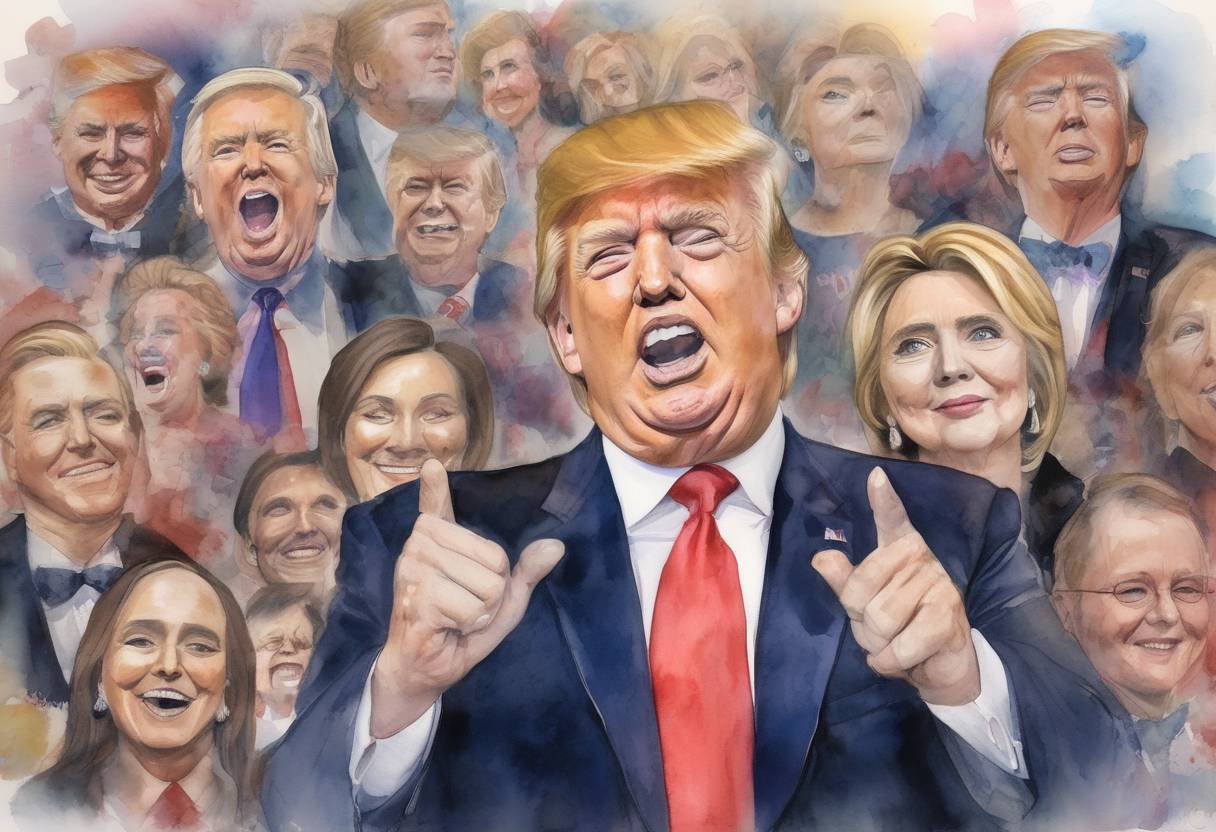
On November 8, 2016, Donald J. Trump, the Republican candidate, was elected as the 45th President of the United States, defeating the Democratic candidate, Hillary Clinton. This election was one of the most contentious and closely watched in recent American history, marked by significant political polarization and widespread media coverage.
Candidates: Donald Trump, a businessman and television personality with no prior political experience, ran on a platform of economic nationalism, immigration reform, and a promise to “Make America Great Again.” Hillary Clinton, a former Secretary of State, U.S. Senator, and First Lady, campaigned on continuing the policies of the Obama administration, with a focus on social justice, healthcare reform, and women’s rights.
Primaries: Trump emerged as the Republican nominee after a crowded and competitive primary season, defeating several established politicians. Clinton secured the Democratic nomination after a hard-fought primary battle against Senator Bernie Sanders.
Electoral College vs. Popular Vote: Trump won the presidency by securing 304 electoral votes to Clinton’s 227, despite losing the popular vote. Clinton received approximately 2.9 million more votes than Trump, highlighting the unique nature of the U.S. Electoral College system.
Key States: Trump’s victory was largely attributed to his wins in several key swing states, including Florida, Pennsylvania, Wisconsin, and Michigan. These states had previously voted for Democratic candidates in recent elections, making his victories there particularly significant.
Transition and Inauguration: Trump was inaugurated on January 20, 2017. His presidency began with a focus on fulfilling campaign promises such as tax reform, deregulation, and appointing conservative judges to the federal judiciary.
Political Climate: The election exposed deep divisions within the American electorate, with debates over issues such as immigration, trade, and healthcare becoming more pronounced. It also sparked discussions about the role of media, misinformation, and foreign interference in U.S. elections.
Historical Context: Trump’s election marked the first time a candidate with no prior political or military experience was elected to the presidency. It also underscored the shifting dynamics within both major political parties, with Trump’s populist approach reshaping the Republican Party’s platform.
The 2016 election remains a pivotal moment in U.S. history, influencing political discourse and policy directions in the years that followed.
Source: www.britannica.com