Triumph of Byzantine Emperor Constantine V - August 25, 766
766 · Constantinople, Byzantine Empire
The Byzantine Emperor Constantine V celebrates a triumph in Constantinople after his successful campaigns against the Bulgars.
April 28, 0585
The Battle of the Volturnus is fought between the Byzantine Empire and the Lombards, resulting in a Byzantine victory.
Volturnus, Byzantine Empire | Byzantine Empire
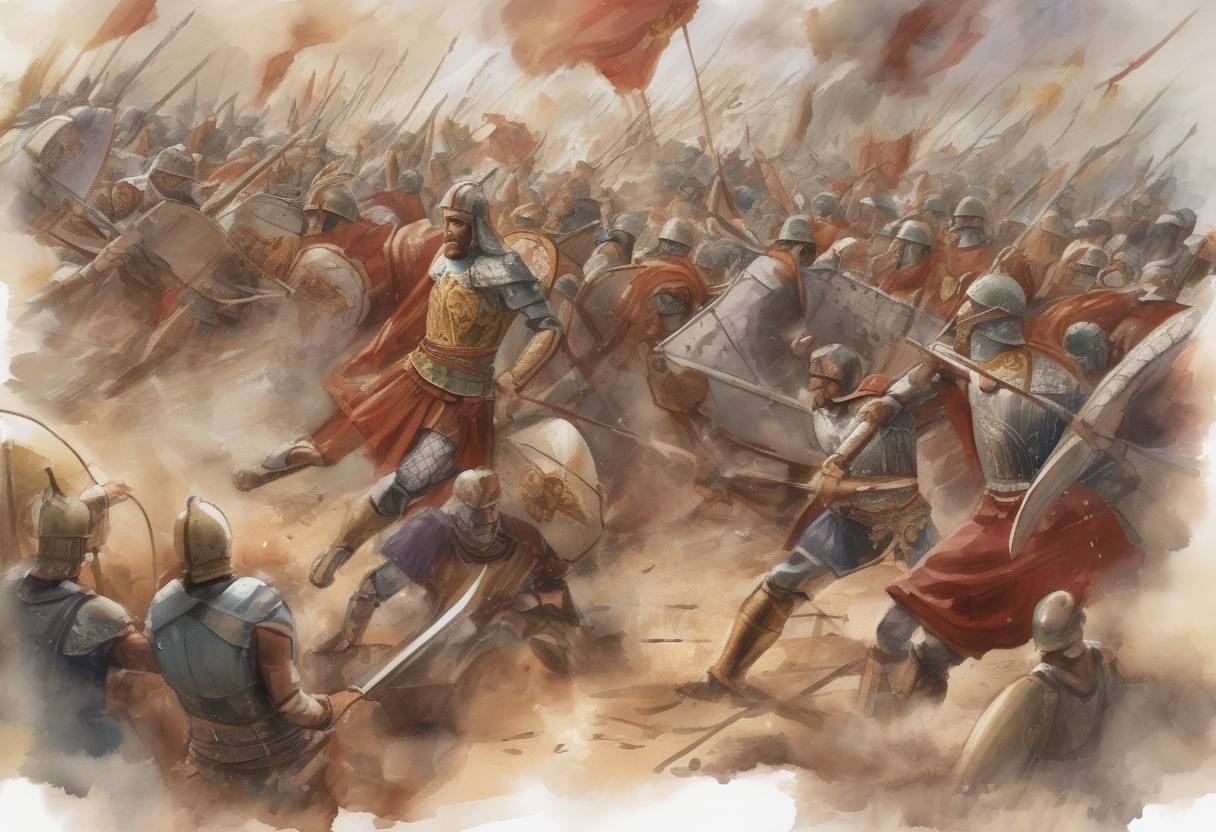
The Battle of the Volturnus, fought on April 28, 585, was a significant military engagement between the Byzantine Empire and the Lombards. This battle took place during a period of intense conflict in the Italian Peninsula, following the Lombard invasion of Italy in 568. The Lombards, a Germanic people, had gradually expanded their control over much of northern and central Italy, posing a substantial threat to the Byzantine territories in the region.
The Byzantine Empire, under the leadership of Emperor Maurice (reigned 582–602), was determined to maintain its hold over Italy, which was a crucial part of the empire’s western territories. The Byzantines were engaged in a broader struggle to preserve their influence in the face of various barbarian incursions and internal challenges.
The Battle of the Volturnus occurred near the Volturno River in southern Italy. The Byzantine forces, likely commanded by a local dux or military leader appointed by the emperor, engaged the Lombard troops in a decisive confrontation. The exact details of the battle, including the size of the forces and the tactics employed, are not extensively documented in historical sources. However, it is known that the Byzantines achieved a significant victory over the Lombards.
The victory at the Volturnus was an important achievement for the Byzantine Empire, as it temporarily halted the Lombard advance in southern Italy. This success helped to stabilize the Byzantine presence in the region and demonstrated the empire’s military capabilities despite the ongoing challenges it faced on multiple fronts.
However, the Byzantine hold on Italy remained tenuous. The Lombards continued to exert pressure, and the region was characterized by a fragmented political landscape with various duchies and territories vying for power. The Byzantine victory at the Volturnus did not lead to a decisive shift in the balance of power, but it underscored the empire’s resilience and commitment to defending its territories.
The Battle of the Volturnus is a reflection of the complex and dynamic nature of early medieval Italy, where the remnants of Roman authority clashed with emerging barbarian kingdoms. It highlights the Byzantine Empire’s strategic interests in maintaining its influence in the West, even as it faced significant challenges in the East, particularly from the Sassanian Empire and later the rise of Islam.
This battle is part of the larger narrative of the Byzantine-Lombard conflicts, which continued for several centuries and shaped the political and cultural landscape of Italy. The struggle between these two powers contributed to the eventual fragmentation of the Italian Peninsula into a mosaic of competing states and influenced the development of medieval European history.
Source: en.wikipedia.org