The Death of Carloman and the Rise of Pepin the Short
747 · Vienne, Frankish Kingdom
The death of Carloman, the Frankish mayor of the palace of Austrasia, occurs, leading to the consolidation of power by his brother Pepin the Short.
October 22, 0741
Charles Martel, the Frankish military leader and de facto ruler of Francia, died. He was known for his victory at the Battle of Tours in 732, which halted the advance of Muslim forces into Western Europe.
Quierzy, Frankish Kingdom | Frankish Kingdom
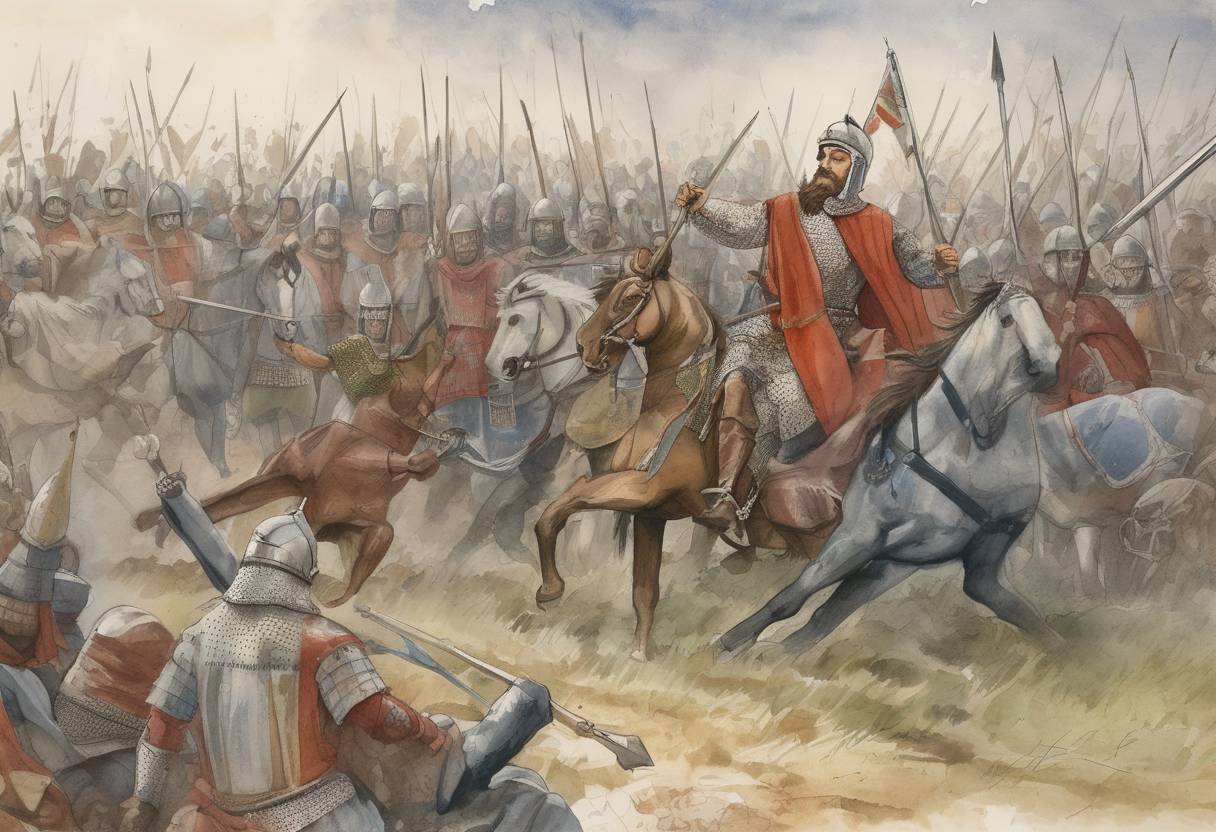
Charles Martel, a pivotal figure in European history, passed away on October 22, 741. Known as the “Mayor of the Palace,” he was the de facto ruler of the Frankish kingdoms, wielding power during a time when the Merovingian kings were largely figureheads. His leadership and military prowess were instrumental in shaping the future of Western Europe.
Charles Martel was born around 688, the illegitimate son of Pepin of Herstal, the Mayor of the Palace of Austrasia. After his father’s death in 714, Charles faced a period of political instability and civil war. Despite these challenges, he emerged victorious, consolidating his power by 718 and effectively ruling the Frankish realms.
One of Charles Martel’s most significant achievements was his victory at the Battle of Tours (also known as the Battle of Poitiers) in October 732. This battle was crucial in halting the northward advance of Muslim forces from the Iberian Peninsula into Western Europe. The victory at Tours is often credited with preserving Christianity as the dominant faith in Europe, and it solidified Charles’s reputation as a formidable military leader.
Beyond his military successes, Charles Martel was a skilled administrator. He laid the groundwork for the Carolingian Empire by reorganizing the Frankish territories and strengthening the power of the nobility. His policies and reforms set the stage for the rise of his grandson, Charlemagne, who would become one of the most famous rulers in European history.
Charles’s death in 741 marked the end of an era, but his legacy endured. He divided his territories between his sons, Carloman and Pepin the Short, ensuring the continuation of his lineage and the eventual establishment of the Carolingian dynasty.
Charles Martel’s impact on European history is profound. His military and political actions helped shape the medieval landscape, influencing the balance of power between Christian and Muslim territories. His leadership during a critical period of transition laid the foundations for the Carolingian Renaissance and the eventual unification of much of Western Europe under his descendants.
In summary, Charles Martel’s death on October 22, 741, marked the passing of a leader whose influence extended far beyond his lifetime, leaving an indelible mark on the course of European history.
Source: en.wikipedia.org