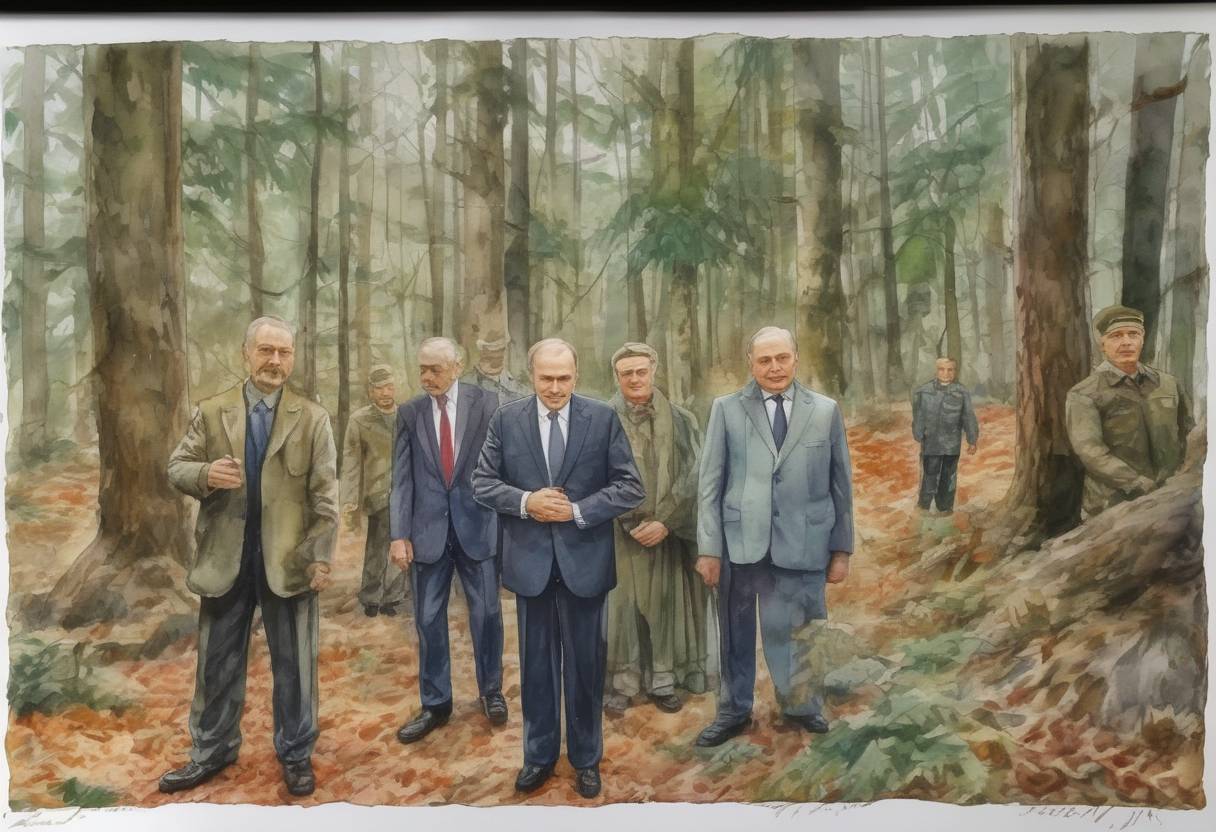
The Belavezha Accords: Dissolution of the Soviet Union
Overview
On December 8, 1991, a pivotal moment in world history occurred when the leaders of Russia, Ukraine, and Belarus signed the Belavezha Accords. This agreement effectively dissolved the Soviet Union and established the Commonwealth of Independent States (CIS), marking the end of the Cold War era and the beginning of a new geopolitical landscape.
- Boris Yeltsin: President of the Russian Soviet Federative Socialist Republic (RSFSR).
- Leonid Kravchuk: President of Ukraine.
- Stanislav Shushkevich: Chairman of the Supreme Soviet of Belarus.
Context Leading Up to the Accords
The dissolution of the Soviet Union was the culmination of a series of events and pressures:
- Economic Strain: The Soviet economy was in severe decline, struggling with inefficiencies and a lack of innovation.
- Political Reforms: Mikhail Gorbachev’s policies of Glasnost (openness) and Perestroika (restructuring) had unintended consequences, leading to increased demands for autonomy among Soviet republics.
- Nationalist Movements: Throughout the late 1980s, nationalist movements gained momentum in various Soviet republics, seeking independence from Moscow’s control.
- Failed Coup: In August 1991, a failed coup by hardline Communist Party members against Gorbachev weakened the central Soviet government and accelerated the push for independence among republics.
The Signing of the Accords
The leaders met at a dacha in the Belavezha Forest, located in Belarus, to discuss the future of their nations. The agreement they reached included several key points:
- Dissolution of the Soviet Union: The Soviet Union was declared effectively dissolved, with its legal existence coming to an end.
- Creation of the CIS: The Commonwealth of Independent States was established as a loose association of former Soviet republics, aimed at fostering economic and political cooperation.
- Recognition of Sovereignty: Each signatory recognized the independence and sovereignty of the others, paving the way for international recognition.
Aftermath and Consequences
- International Recognition: The dissolution of the Soviet Union was quickly recognized by the international community, including the United States and European nations.
- End of the Cold War: The end of the Soviet Union marked the conclusion of the Cold War, a period of geopolitical tension between the Soviet bloc and the Western powers.
- Economic and Political Transition: The newly independent states faced significant challenges in transitioning from centrally planned economies to market economies and establishing democratic governance structures.
- Gorbachev’s Resignation: On December 25, 1991, Mikhail Gorbachev resigned as President of the Soviet Union, acknowledging the end of the state he had attempted to reform.
Historical Significance
The signing of the Belavezha Accords was a watershed moment in 20th-century history. It not only ended the existence of one of the world’s superpowers but also reshaped international relations and set the stage for the post-Cold War era. The formation of the CIS provided a framework for cooperation among the former Soviet republics, although its effectiveness and influence have varied over time.
The dissolution of the Soviet Union remains a subject of extensive analysis and debate, with its legacy continuing to influence global politics and regional dynamics in Eastern Europe and beyond.