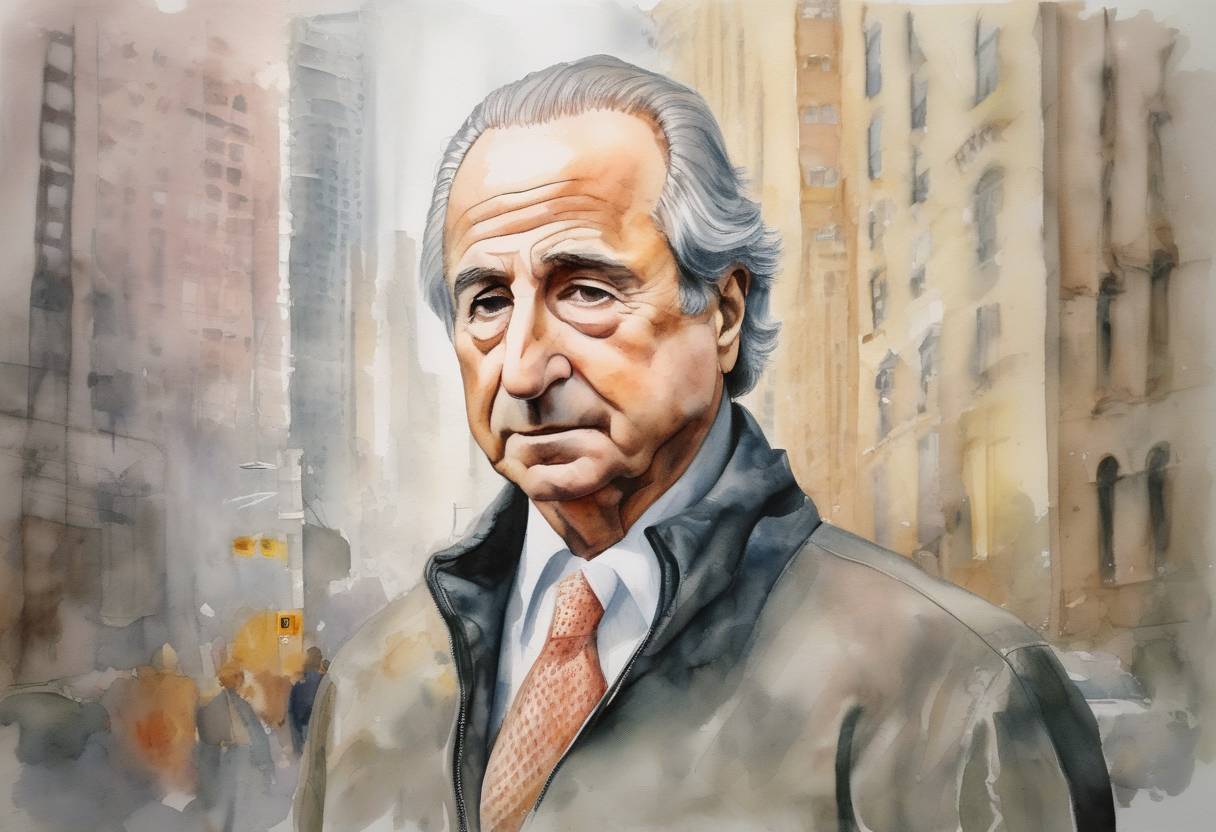
Bernard Madoff’s Arrest and the Unveiling of a Massive Ponzi Scheme
On December 11, 2008, Bernard L. Madoff, a former chairman of NASDAQ and a prominent figure on Wall Street, was arrested and charged with securities fraud. This marked the beginning of the unraveling of one of the largest and most infamous financial frauds in U.S. history.
Background
Bernard Madoff founded Bernard L. Madoff Investment Securities LLC in 1960. Over the decades, he built a reputation as a successful and respected financier, attracting a wide range of investors, including individuals, charities, and institutional clients. Madoff’s firm promised consistent, high returns, which drew in billions of dollars in investments.
The Ponzi Scheme
Madoff’s operation was a classic Ponzi scheme, where returns to earlier investors were paid using the capital from newer investors, rather than from profit earned by the firm. This scheme relied on a continuous influx of new investments to maintain the illusion of profitability and sustainability.
Events Leading to the Arrest
The financial crisis of 2008 put immense pressure on Madoff’s scheme. As investors sought to withdraw their funds due to the economic downturn, Madoff could no longer sustain the payouts. On December 10, 2008, Madoff confessed to his sons, who were senior executives at his firm, that the asset management arm of his business was a massive fraud. His sons reported him to authorities, leading to his arrest the following day.
Aftermath and Consequences
Legal Proceedings: Madoff was charged with securities fraud and later pleaded guilty to 11 federal felonies, including money laundering, perjury, and theft. In June 2009, he was sentenced to 150 years in prison.
Impact on Investors: The scheme defrauded thousands of investors of an estimated $65 billion, including both principal and fictitious profits. Many investors lost their life savings, and numerous charities and foundations were severely impacted.
Regulatory Reforms: The scandal prompted widespread criticism of the U.S. Securities and Exchange Commission (SEC) for failing to detect the fraud despite multiple warnings. It led to calls for regulatory reforms to improve oversight and prevent similar frauds in the future.
Broader Historical Significance
The Madoff scandal highlighted vulnerabilities in the financial regulatory system and underscored the need for greater transparency and accountability in financial markets. It served as a cautionary tale about the risks of unchecked financial practices and the importance of due diligence by investors.
Madoff’s arrest and the subsequent fallout remain a significant chapter in the history of financial fraud, illustrating the devastating impact of white-collar crime on individuals and the broader economy.