The Council of Constantinople Ends - February 18, 842
842 · Constantinople, Byzantine Empire
The Council of Constantinople ends, which was convened to address the issue of iconoclasm in the Byzantine Empire.
December 9, 0730
Emperor Leo III issues a decree banning the veneration of icons, marking the beginning of the Byzantine Iconoclasm.
Constantinople, Byzantine Empire | Byzantine Empire
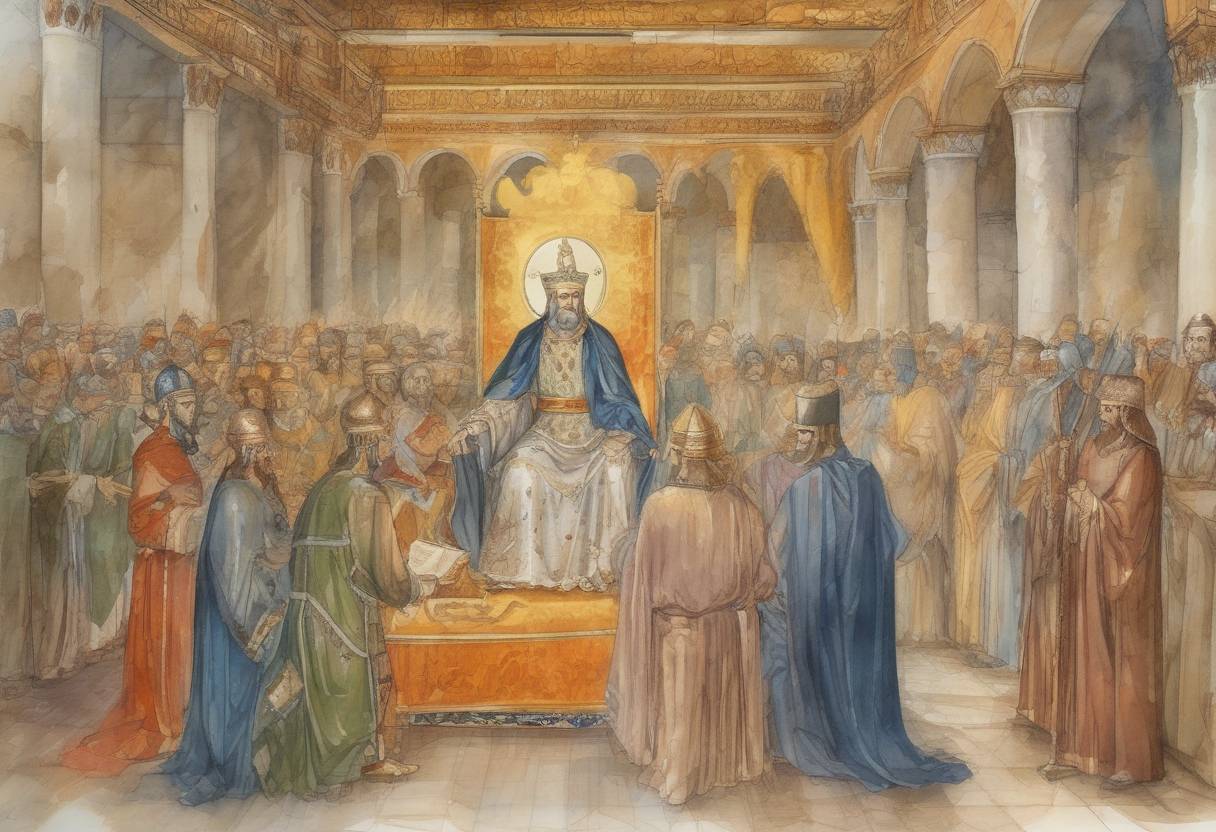
On December 9, 730, Emperor Leo III of the Byzantine Empire issued a significant decree that banned the veneration of icons, marking the beginning of a period known as the Byzantine Iconoclasm. This event had profound religious, political, and cultural implications for the Byzantine Empire and the wider Christian world.
The Byzantine Empire in the early 8th century was a period of considerable turmoil and transformation. The empire faced external threats from the expanding Islamic Caliphates and internal challenges, including economic difficulties and religious disputes. The veneration of icons—religious images depicting Christ, the Virgin Mary, and saints—had become a widespread practice in Byzantine religious life. However, this practice was increasingly controversial, with some viewing it as idolatrous.
Emperor Leo III, who reigned from 717 to 741, sought to strengthen and unify the empire under his rule. Influenced by both theological arguments and political considerations, Leo III decided to address the issue of icon veneration. His motivations included a desire to consolidate imperial control over the church and to respond to the criticisms of icon veneration by both Islamic and certain Christian factions.
On December 9, 730, Leo III formally issued a decree that prohibited the veneration of icons. This decree initiated the first phase of Byzantine Iconoclasm, a movement characterized by the destruction of religious images and the persecution of those who supported their use. The decree was met with resistance from many quarters, particularly from monastic communities and the populace who were deeply attached to their religious icons.
The decree led to significant conflict within the empire. The Patriarch of Constantinople, Germanus I, opposed the emperor’s policy and was subsequently deposed. This marked the beginning of a schism between the iconoclasts, who supported the emperor’s policy, and the iconodules, who defended the veneration of icons.
The Iconoclasm controversy had lasting effects on the Byzantine Empire and the Christian world. It contributed to a deepening divide between the Eastern Orthodox and Western Catholic Churches, as the papacy in Rome opposed the iconoclastic policies. The controversy also influenced Byzantine art, leading to a period where religious imagery was significantly altered or destroyed.
The first phase of Iconoclasm lasted until 787, when the Second Council of Nicaea restored the veneration of icons. However, the issue resurfaced in the early 9th century, leading to a second period of Iconoclasm until 843, when the practice was definitively restored.
Emperor Leo III’s decree banning the veneration of icons on December 9, 730, was a pivotal moment in Byzantine history. It sparked a religious and political conflict that would shape the empire’s religious practices and its relations with the broader Christian world for centuries. The Iconoclasm controversy remains a significant chapter in the history of Christianity, illustrating the complex interplay between theology, politics, and culture.
Source: en.wikipedia.org