The First Edict of Persecution Against Christians by Emperor Diocletian
303 · Nicomedia, Roman Empire
Roman Emperor Diocletian issues the first edict of persecution against Christians, leading to the Great Persecution.
September 25, 0303
The Roman Emperor Diocletian issues a decree that begins the persecution of Christians in the Eastern Roman Empire.
Nicomedia, Roman Empire | Roman Empire
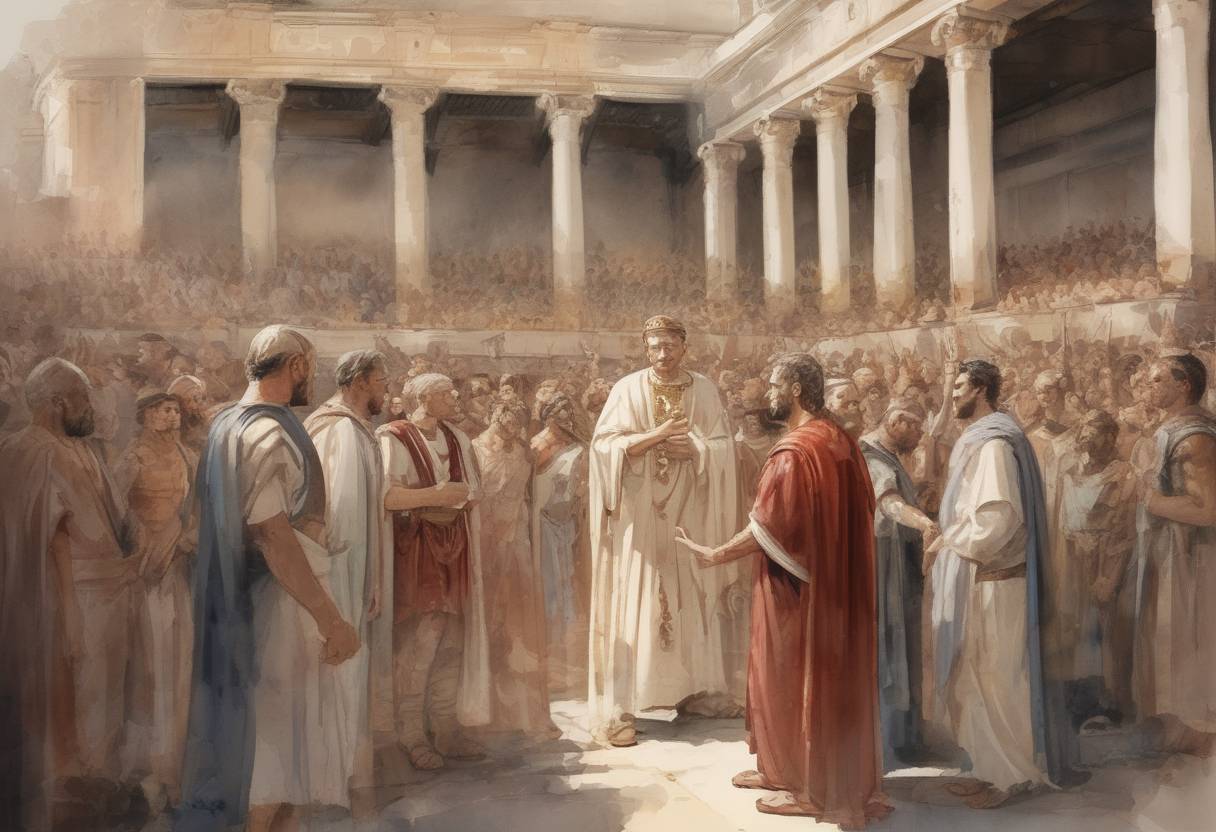
On September 25, 303, the Roman Emperor Diocletian issued a decree that marked the beginning of one of the most severe persecutions of Christians in the Eastern Roman Empire. This event is part of what is known as the Diocletianic or Great Persecution, which was the last and most intense period of persecution against Christians in the Roman Empire.
Diocletian’s Reign: Diocletian became emperor in 284 CE and is known for his administrative reforms, which included the establishment of the Tetrarchy, dividing the empire into four regions each ruled by a co-emperor. His reign was marked by efforts to stabilize and strengthen the empire, which included reinforcing traditional Roman religious practices.
Religious Climate: By the late 3rd century, Christianity had spread significantly throughout the Roman Empire, attracting converts from various social classes. However, Christians often refused to participate in traditional Roman religious rituals, which were seen as a civic duty, leading to tensions with Roman authorities.
Nature of the Decree: The decree issued by Diocletian on September 25, 303, was part of a series of edicts aimed at suppressing Christianity. It ordered the destruction of Christian scriptures and places of worship, prohibited Christian gatherings, and stripped Christians of legal rights.
Implementation: The enforcement of the decree varied across the empire, with the Eastern provinces experiencing more severe persecution. Christians were subjected to imprisonment, torture, and execution if they refused to renounce their faith.
Council of Nicomedia: In 302, Diocletian held a council in Nicomedia to address the issue of Christians in the empire. Influenced by his co-emperor Galerius, who was a staunch opponent of Christianity, Diocletian decided to take decisive action against the Christian community.
Previous Edicts: Earlier in 303, Diocletian had already issued edicts that targeted Christian clergy and ordered the destruction of churches. The September decree expanded these measures to the broader Christian population.
Impact on Christians: The persecution led to widespread suffering among Christians, with many becoming martyrs for their faith. The severity of the persecution varied, with some regions experiencing brutal crackdowns while others saw more lenient enforcement.
End of the Persecution: The persecution officially ended in 311 with the Edict of Toleration issued by Galerius, who acknowledged the failure of the persecution to eradicate Christianity and allowed Christians to practice their faith openly.
Legacy: The Diocletianic Persecution is remembered as a pivotal moment in Christian history. It tested the resilience of the Christian community and ultimately contributed to the religion’s growth and eventual acceptance within the Roman Empire, culminating in the Edict of Milan in 313, which granted religious tolerance to Christians.
The events of September 25, 303, and the subsequent persecution highlight the complex relationship between the Roman state and the burgeoning Christian faith, setting the stage for Christianity’s transformation from a persecuted sect to a dominant religion in the Roman Empire.
Source: en.wikipedia.org