The March for Our Lives: March 24, 2018
2018 · Washington, D.C., United States
The March for Our Lives, a student-led demonstration in support of tighter gun control, took place in Washington, D.C., and in cities across the United States.
October 16, 1995
The Million Man March takes place in Washington, D.C., organized by Louis Farrakhan to promote African American unity and family values.
Washington, D.C., United States | Nation of Islam
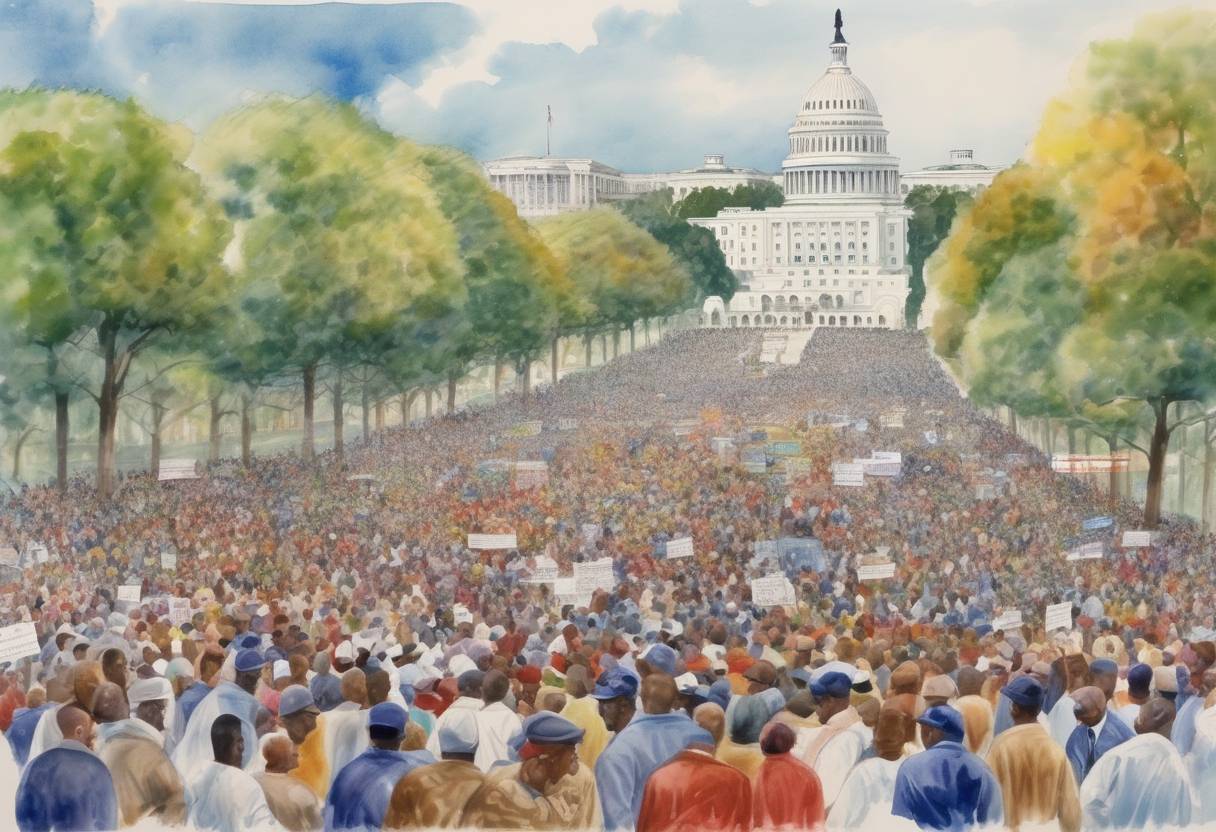
On October 16, 1995, the Million Man March took place in Washington, D.C., marking a significant moment in the history of African American civil rights. Organized by Louis Farrakhan, the leader of the Nation of Islam, the march aimed to promote African American unity, family values, and social justice.
The 1990s were a period of significant social and economic challenges for African Americans in the United States. Issues such as racial inequality, economic disparity, and high crime rates in urban areas were prevalent. In response to these challenges, the Million Man March was conceived as a way to inspire African American men to take responsibility for their communities and families, and to foster a spirit of renewal and empowerment.
Planning and Organization: The idea for the march was announced by Louis Farrakhan in 1994. It was organized with the help of various civil rights leaders and organizations, including the Reverend Benjamin Chavis, who played a crucial role in mobilizing support.
Goals of the March: The march aimed to encourage African American men to register to vote, become more involved in their communities, and commit to personal and social responsibility. It also sought to address issues such as unemployment, poverty, and violence.
Attendance: Estimates of attendance vary widely, with numbers ranging from 400,000 to nearly 1.1 million participants. Despite the discrepancies in figures, it was one of the largest gatherings of its kind in U.S. history.
Location and Activities: The march took place on the National Mall in Washington, D.C. Participants engaged in a day of atonement and reflection, with speeches, prayers, and musical performances. Key speakers included Louis Farrakhan, Maya Angelou, and Rosa Parks, among others.
Impact on African American Communities: The march had a lasting impact on African American communities, inspiring many to become more involved in civic activities and community service. It also led to increased voter registration and political engagement among African Americans.
Criticism and Controversy: Despite its positive messages, the march faced criticism due to Farrakhan’s controversial statements and the exclusion of women from the event. Some civil rights leaders and organizations chose not to participate due to these issues.
Legacy: The Million Man March is remembered as a pivotal moment in the struggle for African American civil rights. It highlighted the power of grassroots organizing and the importance of unity and collective action in addressing social injustices.
The Million Man March underscored the ongoing challenges faced by African Americans in the United States and the need for continued advocacy and reform. It served as a reminder of the importance of solidarity and the potential for change through peaceful demonstration and civic engagement. The event remains a significant chapter in the history of the civil rights movement, illustrating the enduring quest for equality and justice.
Source: en.wikipedia.org