Adolf Hitler's Suicide on April 30, 1945
1945 · Berlin, Germany
Adolf Hitler, the leader of Nazi Germany, committed suicide in his underground bunker in Berlin as Soviet forces closed in on the city.
April 20, 1945
During World War II, Adolf Hitler makes his last trip to the surface from his underground bunker to award Iron Crosses to Hitler Youth members.
Berlin, Germany | Nazi Germany
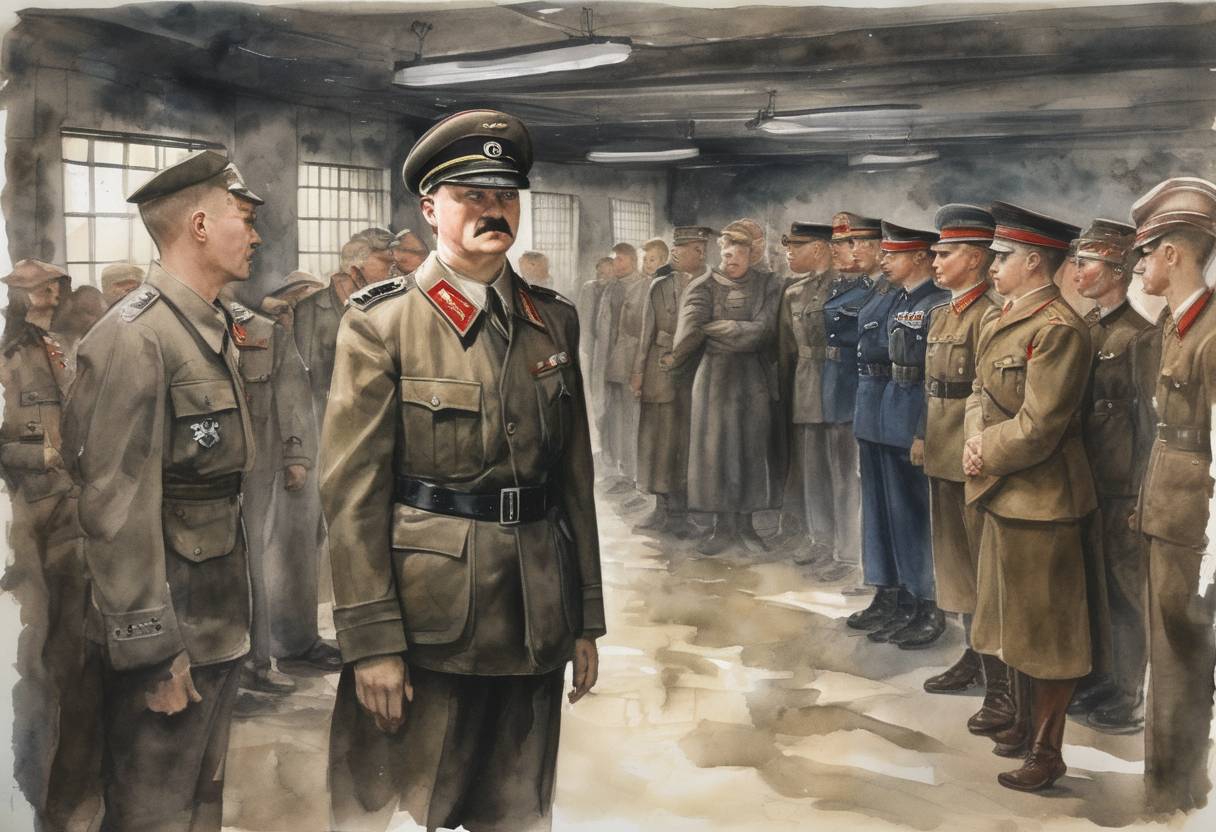
On April 20, 1945, Adolf Hitler made his final public appearance during World War II. This date marked his 56th birthday, and it was a significant moment as it was the last time he emerged from his underground bunker, the Führerbunker, located beneath the Reich Chancellery in Berlin. The event was both symbolic and poignant, occurring during the final days of the Third Reich as the Allies closed in on Berlin.
By April 1945, the situation for Nazi Germany was dire. The Soviet Red Army was advancing into Berlin from the east, while Allied forces were pushing in from the west. The once-mighty German military was in retreat, and the capital was under constant bombardment. Hitler had retreated to the Führerbunker in January 1945, where he remained isolated from the worsening conditions above ground.
On April 20, Hitler emerged from the bunker to present Iron Crosses to members of the Hitler Youth. These young boys, some as young as 12, were being recognized for their bravery in defending the city against the advancing Soviet forces. The ceremony took place in the garden of the Reich Chancellery, amidst the ruins of a city under siege.
The Iron Cross was a military decoration awarded for valor, and its presentation to such young recipients underscored the desperate situation facing Germany. The use of children in combat roles was a testament to the depleted state of the German military and the regime’s willingness to sacrifice its youth in a futile defense.
This appearance was Hitler’s last known trip to the surface. Within ten days, on April 30, 1945, he would commit suicide in the Führerbunker as Soviet forces closed in on the city center. The fall of Berlin soon followed, leading to Germany’s unconditional surrender on May 8, 1945, effectively ending the war in Europe.
The event is historically significant as it symbolizes the collapse of Nazi Germany and the end of Hitler’s reign. It highlights the tragic exploitation of youth in warfare and serves as a reminder of the human cost of the conflict. Hitler’s final public act was one of desperation, reflecting the inevitable defeat that awaited the Third Reich.
Source: www.history.com