September 23, 1122

The Concordat of Worms was signed, ending the Investiture Controversy between the Papacy and the Holy Roman Empire.


Worms, Holy Roman Empire | Catholic Church
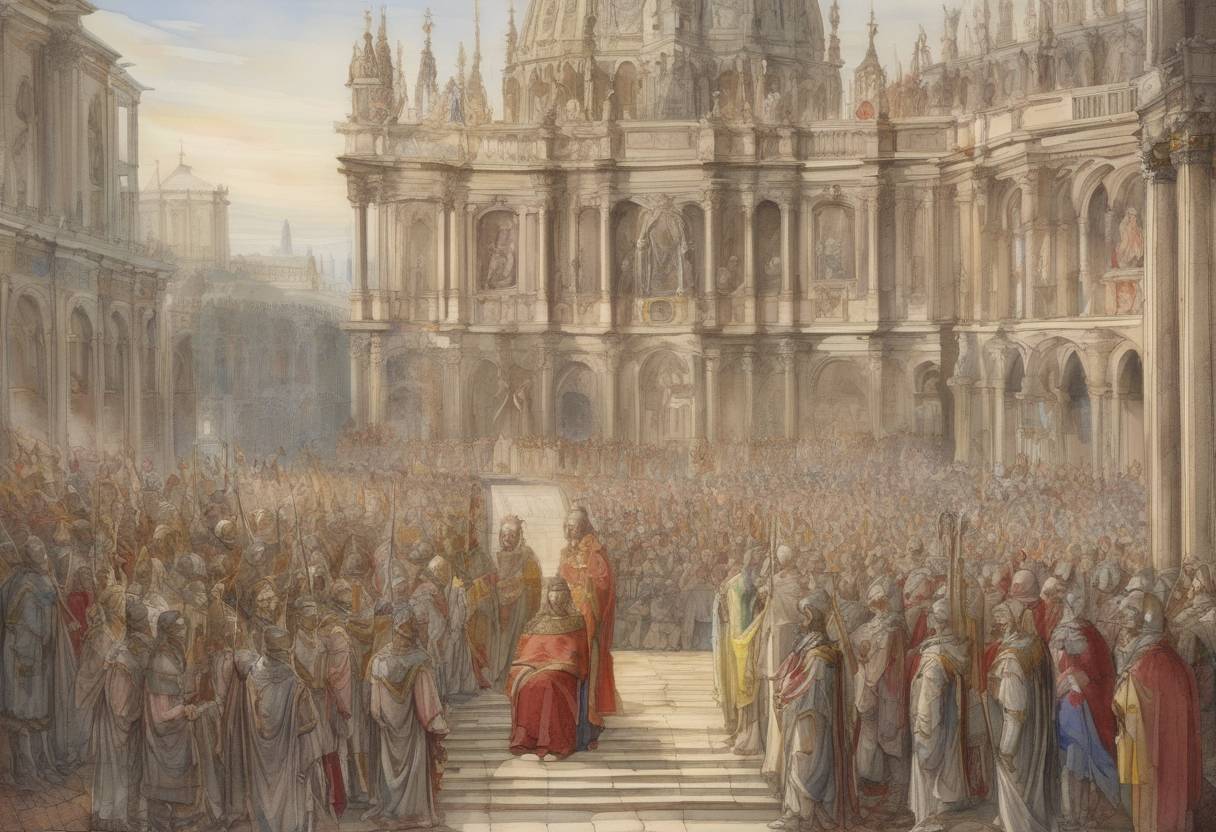
Watercolor painting based depiction of The Concordat of Worms was signed, ending the Investiture Controversy between the Papacy and the Holy Roman Empire. (1122)

The Concordat of Worms: Ending the Investiture Controversy

On September 23, 1122, a significant agreement known as the Concordat of Worms was signed, marking the resolution of the Investiture Controversy, a prolonged conflict between the Papacy and the Holy Roman Empire. This agreement was pivotal in defining the relationship between the church and the state in medieval Europe.

Background

The Investiture Controversy began in the late 11th century and was primarily a power struggle between the Holy Roman Emperors and the Popes over who held the authority to appoint (invest) bishops and abbots. The conflict was rooted in the dual role of bishops as both spiritual leaders and feudal lords, which made their appointment a matter of both ecclesiastical and secular importance.

  • Papal Position: The Papacy, under leaders like Pope Gregory VII, argued that only the church had the authority to appoint bishops, as they were spiritual leaders.
  • Imperial Position: The Holy Roman Emperors, such as Henry IV, contended that as the secular rulers, they had the right to invest bishops with their temporal authority.

Key Events Leading to the Concordat

  • Excommunication of Henry IV: In 1076, Pope Gregory VII excommunicated Emperor Henry IV, which led to a series of conflicts and negotiations.
  • Walk to Canossa: In 1077, Henry IV famously traveled to Canossa to seek absolution from the Pope, a symbolic moment in the struggle.
  • Ongoing Conflicts: The controversy continued for decades, with successive popes and emperors clashing over the issue.

The Concordat of Worms

The Concordat of Worms was negotiated between Pope Calixtus II and Emperor Henry V. It established a compromise that effectively ended the Investiture Controversy:

  • Spiritual Investiture: The church retained the sole right to invest bishops with spiritual authority, symbolized by the ring and staff.
  • Temporal Authority: The emperor retained the right to invest bishops with secular authority, symbolized by the scepter, but only after their ecclesiastical appointment.

Aftermath and Significance

The Concordat of Worms was a landmark in the history of church-state relations. It:

  • Strengthened Papal Authority: By securing the church’s control over spiritual appointments, it reinforced the Papacy’s influence over ecclesiastical matters.
  • Defined Secular and Ecclesiastical Roles: It clarified the distinction between spiritual and temporal powers, setting a precedent for future church-state interactions.
  • Influence on European Politics: The agreement influenced the political landscape of Europe, as it was a step towards the separation of church and state powers.

The Concordat of Worms is often seen as a turning point in medieval history, illustrating the complex interplay between religious and secular authorities and laying the groundwork for future developments in European governance.