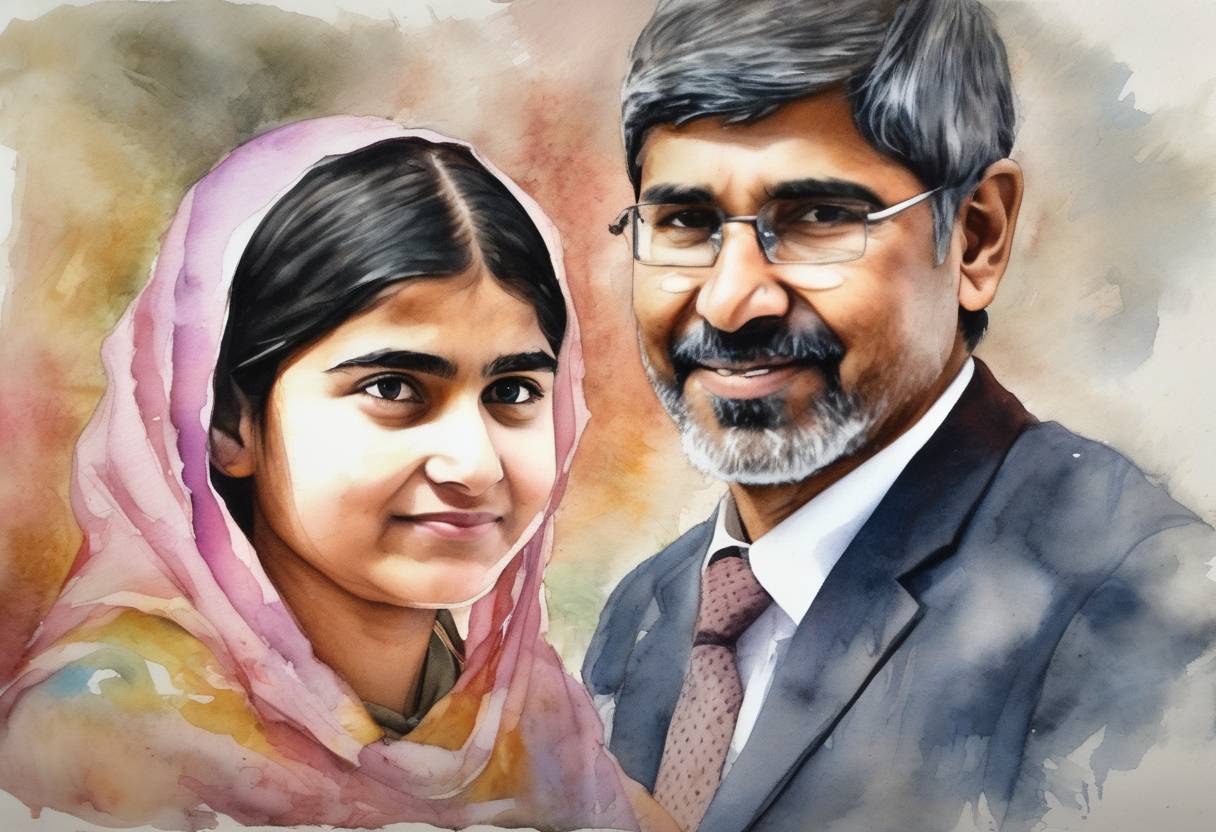
Nobel Peace Prize 2014: Malala Yousafzai and Kailash Satyarthi
On October 10, 2014, Malala Yousafzai and Kailash Satyarthi were jointly awarded the Nobel Peace Prize for their tireless efforts in advocating for the rights of children and young people, particularly focusing on the right to education and the fight against the suppression of children.
Malala Yousafzai
Background
- Born: July 12, 1997, in Mingora, Swat Valley, Pakistan.
- Advocacy: Malala became an international symbol of the struggle for girls’ education after surviving an assassination attempt by the Taliban in 2012. She began her activism at a young age, writing a blog under a pseudonym for the BBC Urdu about life under Taliban rule and the importance of education for girls.
Achievements
- Malala Fund: Co-founded the Malala Fund with her father, Ziauddin Yousafzai, to bring awareness and resources to girls’ education globally.
- Publications: Authored the memoir “I Am Malala,” which details her life and advocacy work.
- Global Influence: Malala has addressed the United Nations and met with numerous world leaders to advocate for education rights.
Kailash Satyarthi
Background
- Born: January 11, 1954, in Vidisha, India.
- Advocacy: Kailash has been a lifelong activist against child labor and exploitation. He founded the Bachpan Bachao Andolan (Save the Childhood Movement) in 1980, which has rescued thousands of children from slavery and trafficking.
Achievements
- Global March Against Child Labour: Organized this movement in 1998, which brought together millions of people to demand the end of child labor.
- Legislative Impact: His efforts have significantly contributed to the development of international conventions and national legislation aimed at protecting children from exploitation.
Significance of the Award
- Joint Recognition: The Nobel Committee highlighted the importance of a Hindu and a Muslim, an Indian and a Pakistani, joining in a common struggle for education and against extremism.
- Impact: The award brought global attention to the issues of child labor and the right to education, inspiring further activism and policy changes worldwide.
Aftermath
- Continued Advocacy: Both laureates have continued their advocacy work, with Malala pursuing her education at Oxford University and Kailash expanding his efforts to combat child labor.
- Legacy: Their joint award symbolizes a commitment to peace and the belief that education is a fundamental right for all children, regardless of gender or nationality.
This Nobel Peace Prize award underscores the critical importance of education and the protection of children’s rights as foundational elements for achieving global peace and development.