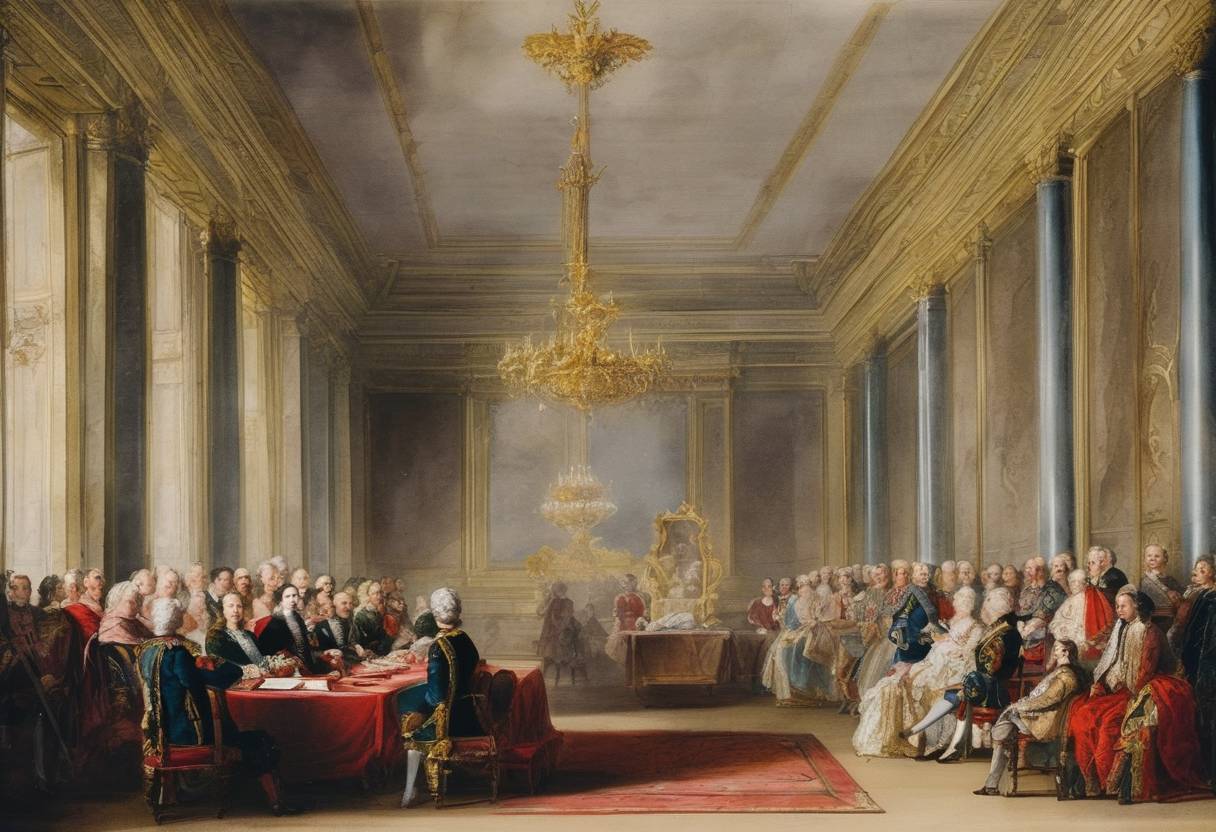
Treaty of Vienna - November 15, 1738
The Treaty of Vienna, signed on November 15, 1738, was a crucial diplomatic accord that concluded the War of the Polish Succession (1733-1738), a conflict rooted in the struggle for the Polish throne following the death of King Augustus II. The war involved multiple European powers, each aiming to enhance its influence, and eventually led to a shift in territorial control and political alignments across Europe.
Context and Background
- War of the Polish Succession: The war began after the death of Augustus II of Poland in 1733, resulting in a contested succession. France supported Stanisław Leszczyński, while Russia and the Holy Roman Empire backed Augustus III, the Elector of Saxony.
- European Involvement: The conflict saw involvement from major powers such as France, Spain, Sardinia, the Holy Roman Empire, and Russia, turning it into a broader dispute influenced by the balance of power politics.
Main Provisions of the Treaty
- Recognition of Augustus III: The treaty formalized Augustus III’s position as King of Poland, solidifying his rule with endorsement from the major European powers.
- Territorial Adjustments:
- Naples and Sicily: These territories were returned to Spanish control under the rule of Charles of Bourbon, illustrating a significant territorial concession to Spain in exchange for its recognition of Augustus III.
- Duchy of Lorraine: Stanisław Leszczyński was compensated with the Duchy of Lorraine, which he was to hold for life before it reverted to France. This arrangement effectively ensured the duchy’s eventual integration into France.
Consequences and Significance
- Political Realignments: The treaty marked a significant diplomatic shift in Europe by altering territorial boundaries without further immediate conflict, showcasing the era’s intricate balance of power diplomacy.
- Impact on Poland: Although Augustus III’s recognition as king provided a temporary resolution to the Polish succession issue, it also underscored Poland’s weakened sovereignty and the influence exerted by foreign powers on its internal affairs.
- Legacy: The Treaty of Vienna of 1738 exemplifies the complex dynamics of 18th-century European diplomacy, characterized by both strategic marriages and alliances, setting precedents for resolving similar disputes in subsequent decades.
The treaty reflects the era’s geopolitical strategies and foreshadows the continual reshaping of Europe via diplomatic and military means until the conclusion of the Napoleonic Wars.