Stephen Uroš IV Dušan Declares Himself King of Serbia
1331 · Skradin, Serbia
Stephen Uroš IV Dušan declares himself King of Serbia. Under his reign, the Serbian Kingdom would expand greatly, setting the stage for the formation of the Serbian Empire.
January 6, 1322
Stephen Uroš III of Serbia is crowned King of Serbia and begins his reign.
Deževo, Serbia
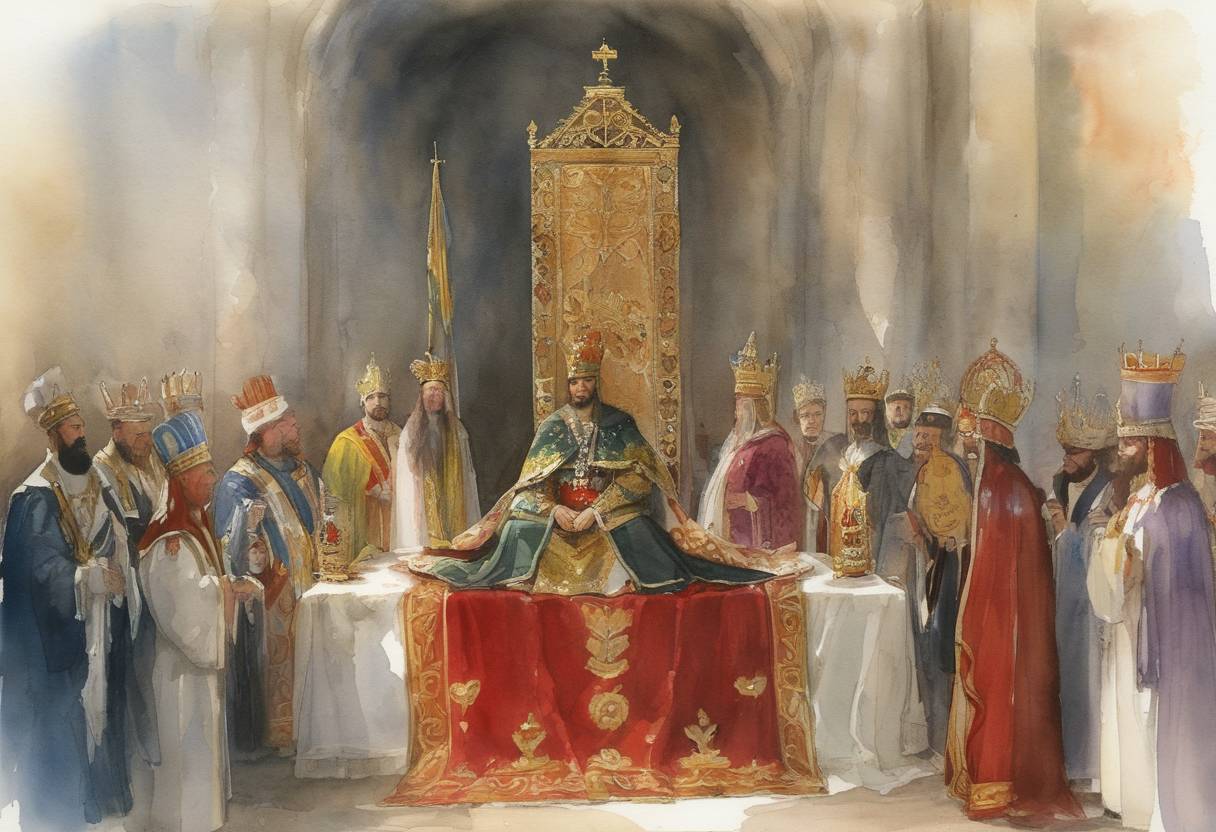
On January 6, 1322, Stephen Uroš III, known as Stefan Dečanski, was crowned King of Serbia, marking the beginning of his reign. This event was a significant milestone in medieval Serbian history, as it followed a tumultuous period of internal power struggles and external pressures.
Stephen Uroš III was the son of King Stefan Milutin. During his father’s reign, Serbia was a powerful state in the Balkans, but succession conflicts were rife. Stefan Dečanski had a strained relationship with his father, who initially appointed him as co-regent in 1314. However, due to political disagreements, particularly surrounding foreign alliances and succession plans, Stefan Dečanski was eventually exiled to Constantinople.
In 1321, after Stefan Milutin’s death, Serbia entered a period of instability. Upon his father’s passing, Stefan Dečanski returned to Serbia, supported by certain Serbian nobility factions and Byzantine allies. His claim to the throne was contested by his half-brother, Stefan Konstantin, leading to a brief civil war in which Stefan Dečanski emerged victorious.
Stefan Dečanski was crowned on Epiphany, January 6, 1322, in the cathedral at Žiča, a traditional coronation site for Serbian kings. His coronation was a strategic move to solidify his legitimacy and unify the Serbian state after the recent internal discord.
During his reign, Stefan Dečanski worked to maintain Serbia’s territorial integrity against external threats, particularly from Hungary and the Byzantine Empire. One of his significant military achievements was the victory at the Battle of Velbazhd in 1330 against the Bulgarian Empire, which further established Serbia’s dominance in the region.
Stefan Dečanski also pursued diplomatic efforts to strengthen alliances through marriage and negotiation. His reign saw a continuation of economic and cultural development initiated during his father’s rule, contributing to the continued flourishing of the Serbian medieval state.
Stefan Dečanski is remembered for his contributions to Serbian art and architecture, most notably the Visoki Dečani Monastery, which he commissioned. This monastery is an architectural masterpiece of the Serbian medieval period and is today a UNESCO World Heritage Site, symbolizing the rich cultural heritage of Serbia.
Stephen Uroš III’s reign marked a period of consolidation and growth for Serbia, albeit not without its challenges. His efforts to stabilize and enhance the kingdom left a lasting imprint on Serbian medieval history, both politically and culturally.