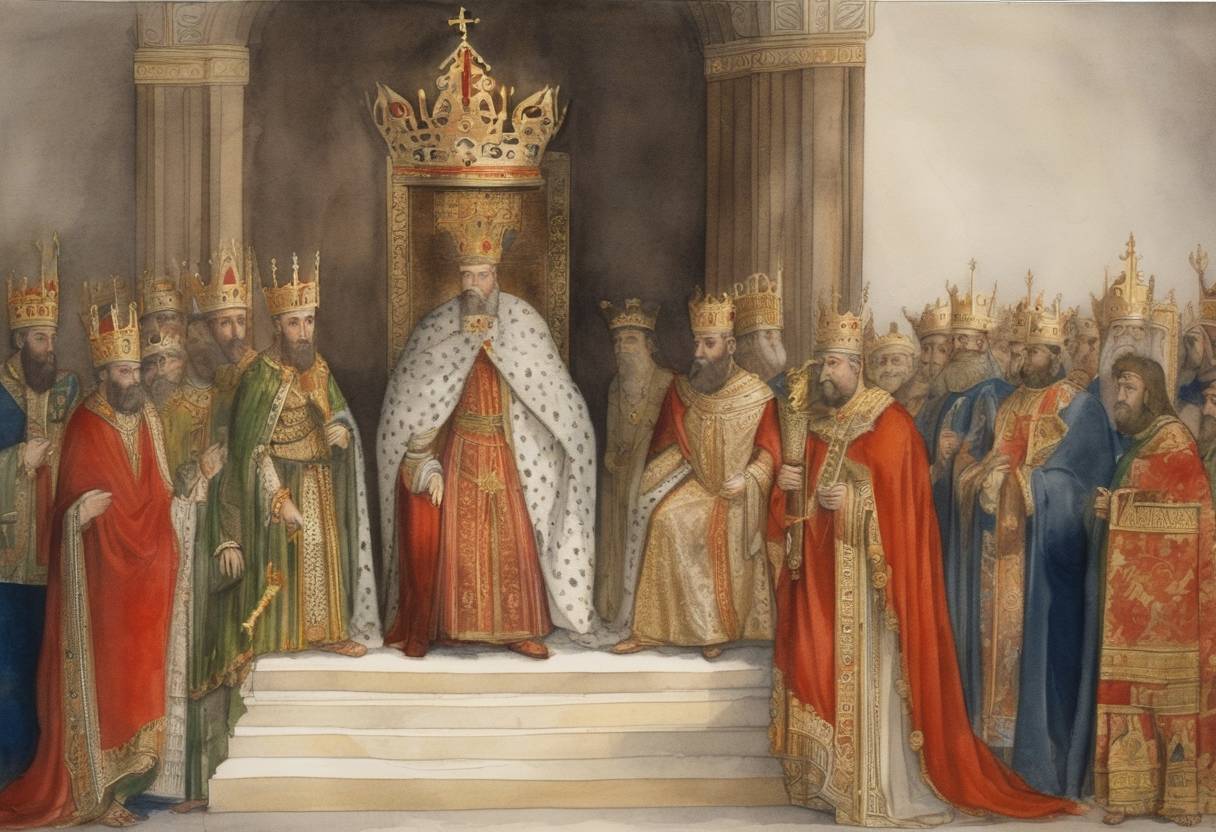
Coronation of Henry II of Jerusalem as King of Cyprus - June 29, 1312
On June 29, 1312, Henry II of Jerusalem was officially crowned King of Cyprus. Henry II was a member of the Lusignan dynasty, a European noble family originating from the region of Poitou in France. His ascent to the throne represented a continuation of the Lusignan rule over the Kingdom of Cyprus, a crucial territory in the eastern Mediterranean during the Middle Ages.
Historical Context
The Kingdom of Cyprus had been established in the late 12th century following the Third Crusade when Richard the Lionheart seized the island from the Byzantine Empire in 1191. He sold it to the Knights Templar, and subsequently, it came under the control of the Lusignan family. As a significant Christian stronghold, Cyprus played a key role in the crusading efforts and served as a vital link between Western Europe and the Holy Lands.
Henry II’s Ascension
Henry II was initially the king of both Cyprus and Jerusalem, though the latter title was primarily titular due to the Mamluk conquest of Jerusalem. His reign as King of Cyprus began with significant political and dynastic challenges, particularly involving his siblings. Henry’s authority was contested by his brother, Amalric, who briefly ousted him in a coup, leading to a period of exile for Henry. However, with the support of the Pope and other European powers, Henry regained control.
The Significance and Aftermath
Henry II’s coronation marked the restoration of his rule over Cyprus following his political upheaval. It was vital in re-establishing stability on the strategically important island. His rule saw efforts to fortify the kingdom’s defenses against external threats and to maintain its economic prosperity through trade connections.
The political dynamics of Henry’s reign influenced the broader geopolitical landscape of the Mediterranean at the time, particularly in relations between the Latin West and the burgeoning powers of the Mamluk Sultanate and the Byzantine Empire.
Henry II reigned until 1324. After his abdication, the Lusignan dynasty continued to lead Cyprus, although the political landscape of the region underwent significant changes throughout the 14th and 15th centuries, eventually leading to Cyprus falling under the control of the Venetian Republic in 1489.