Annexation of the Punjab Region - March 29, 1849
1849 · Punjab, India
The United Kingdom formally annexes the Punjab region after the Second Anglo-Sikh War, marking the end of Sikh sovereignty and the expansion of British rule in India.
August 4, 1848
The Matale Rebellion, a revolt against the British colonial rule in Sri Lanka, was definitively ended with the arrest of the last insurgent leaders.
Matale, Sri Lanka | British Empire
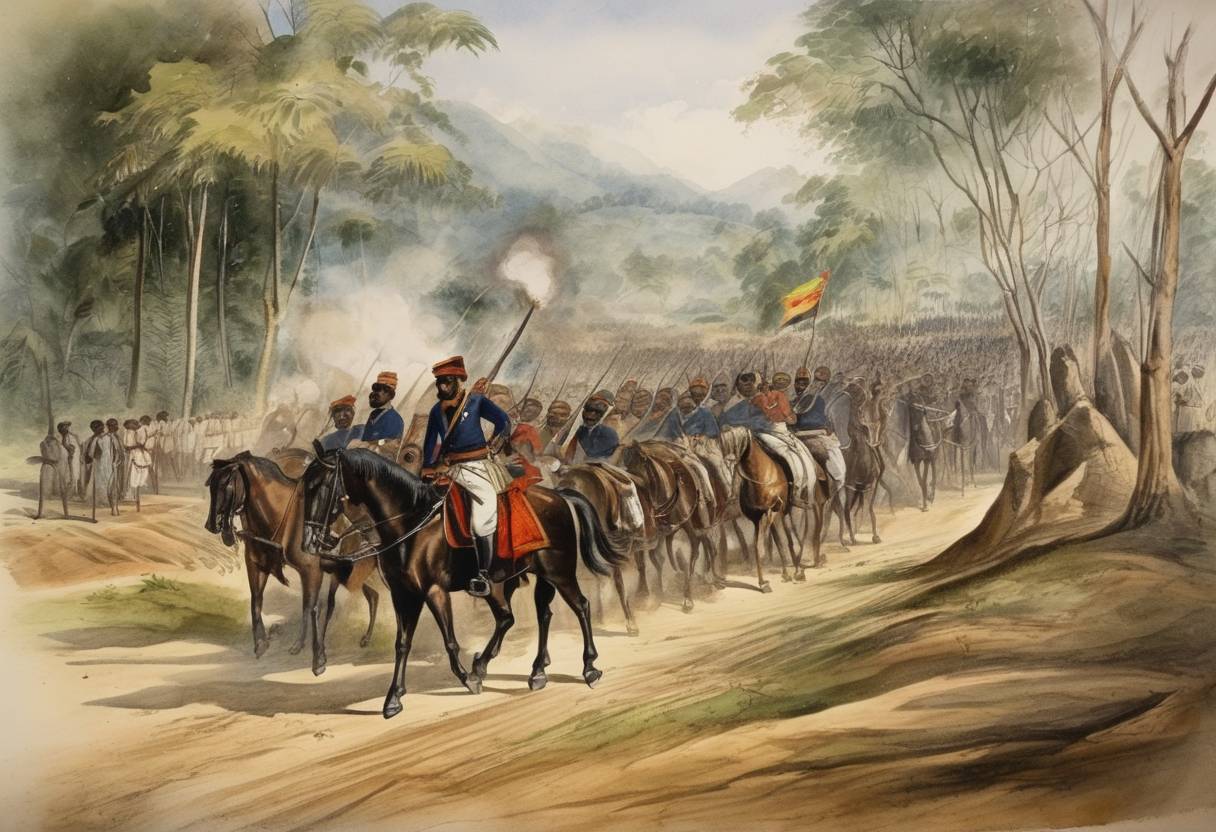
The Matale Rebellion, also known as the Rebellion of 1848 or the Kandyan Revolt, was a significant uprising against British colonial rule in Sri Lanka. It marked a crucial moment in the island’s resistance against colonial forces and was notably the first major resistance after the British took control following the Kandyan Convention of 1815.
Sri Lanka, known as Ceylon during British rule, was a significant colonial territory due to its strategic location and rich resources. Following the capture of the Kandyan Kingdom in 1815, the British imposed heavy taxes on the local population, particularly on goods and services. These economic pressures, alongside the erosion of traditional social structures and the oppressive policies of colonial administration, fueled widespread dissatisfaction among the Sri Lankans.
The rebellion began in July 1848 in the town of Matale, led primarily by local leaders such as Gongalegoda Banda, who was proclaimed a king, and Puran Appu, among others. The movement aimed to restore the Kandyan monarchy and eliminate colonial rule. Their grievances included exorbitant taxes and the disrespect towards traditional customs and authority structures.
The rebellion faced significant challenges, including a lack of military resources and coordination. By early August, British forces had regained control, and systematic crackdowns were underway. On August 4, 1848, the rebellion was effectively concluded when the last of the insurgent leaders were captured. This decisive action by the British authorities extinguished the organized resistance.
Following the suppression of the revolt, the British government implemented a series of reforms aimed at placating local discontent, such as reducing certain taxes and re-evaluating governance structures. Despite its failure to achieve immediate liberation or significant concessions, the Matale Rebellion became a symbol of anti-colonial resistance, inspiring future generations of Sri Lankans in their struggle for independence.
The rebellion’s complete suppression marked a temporary end to large-scale organized resistance but left a lasting legacy in Sri Lankan resistance history. It underscored the deep-rooted resistance against foreign rule and the enduring desire for sovereignty.
Although the rebellion did not succeed in its primary objectives, it generated a heightened sense of national identity and laid the groundwork for subsequent nationalist movements. Its leaders, particularly Puran Appu and Gongalegoda Banda, became folk heroes and symbols of resistance, setting a precedent for future uprisings and the eventual path towards independence in 1948.
Source: www.britannica.com