Oscar Pistorius Charged with the Murder of Reeva Steenkamp
2013 · Pretoria, South Africa
Oscar Pistorius, a South African Paralympic champion, was charged with the murder of his girlfriend Reeva Steenkamp.
August 10, 2022
Former South African President Jacob Zuma was ordered to return to jail after his early release was overturned by a court.
Pretoria, South Africa | South Africa Court
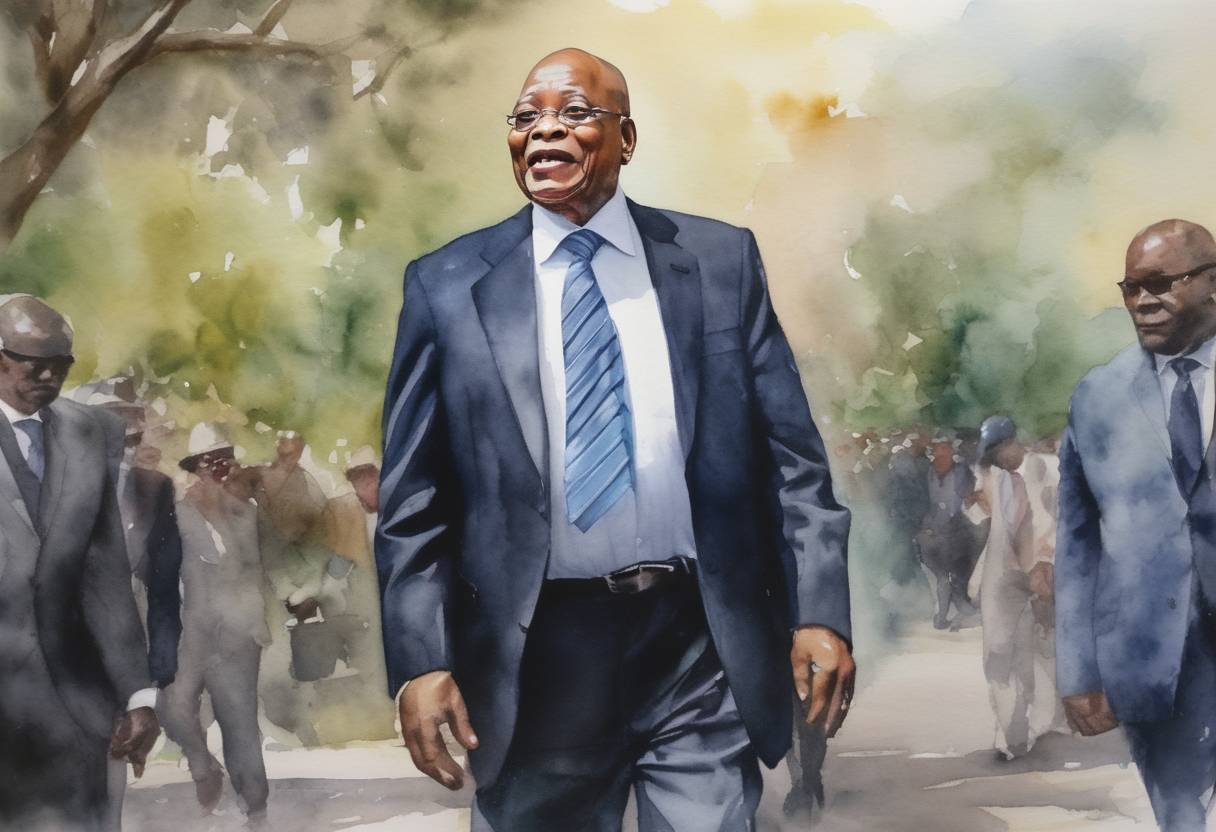
On October 10, 2022, the ongoing legal saga of former South African President Jacob Zuma took another significant turn. South Africa’s highest appellate court, the Supreme Court of Appeal, ruled against the previous decision to grant Zuma medical parole, effectively ordering him to return to incarceration.
Jacob Zuma, who served as President of South Africa from 2009 to 2018, was initially sentenced in June 2021 to a 15-month term for contempt of court. This sentence was a consequence of his refusal to appear before a commission investigating corruption during his presidency. His arrest and imprisonment in July 2021 sparked widespread protests and unrest across South Africa.
In September 2021, Zuma was released on medical parole by Arthur Fraser, then the national commissioner of correctional services. Fraser’s decision faced significant criticism and legal challenges, as it was argued that proper procedure was not followed and Zuma’s medical condition was not sufficiently severe to justify parole.
The Supreme Court’s ruling on October 10, 2022, concluded that the decision to grant medical parole was unlawful. The court found that the parole did not meet the necessary legal requirements, given the evidence regarding Zuma’s health condition. Consequently, it ordered that Zuma should complete the remainder of his sentence.
The ruling underscored significant tensions within South African politics and the legal community regarding accountability and the rule of law. Zuma’s legal team indicated plans to contest the decision, which highlighted the broader debates over legal processes and political interference.
The decision also carried potential ramifications for South Africa’s correctional services policies and the handling of high-profile political figures concerning legal accountability.
The Zuma case acts as a touchstone for discussions around governance, corruption, and judicial independence in South Africa. It reflects ongoing efforts to address past governmental corruption and brings into focus the challenges of transitional justice in a nation still dealing with the legacy of apartheid and its democratic development.
Source: www.theguardian.com