1816 · Winnipeg, Canada
Battle of Seven Oaks: A violent confrontation between the Hudson's Bay Company and the North West Company near present-day Winnipeg, Canada, marking a significant moment in the fur trade wars.
April 25, 1849
The Governor General of the Hudson's Bay Company, Sir George Simpson, arrived in what is now Vancouver, Canada, on a mission to centralize operations of the company in Fort Langley to increase trade efficiency.
Vancouver, Canada (then British North America) | Hudson's Bay Company
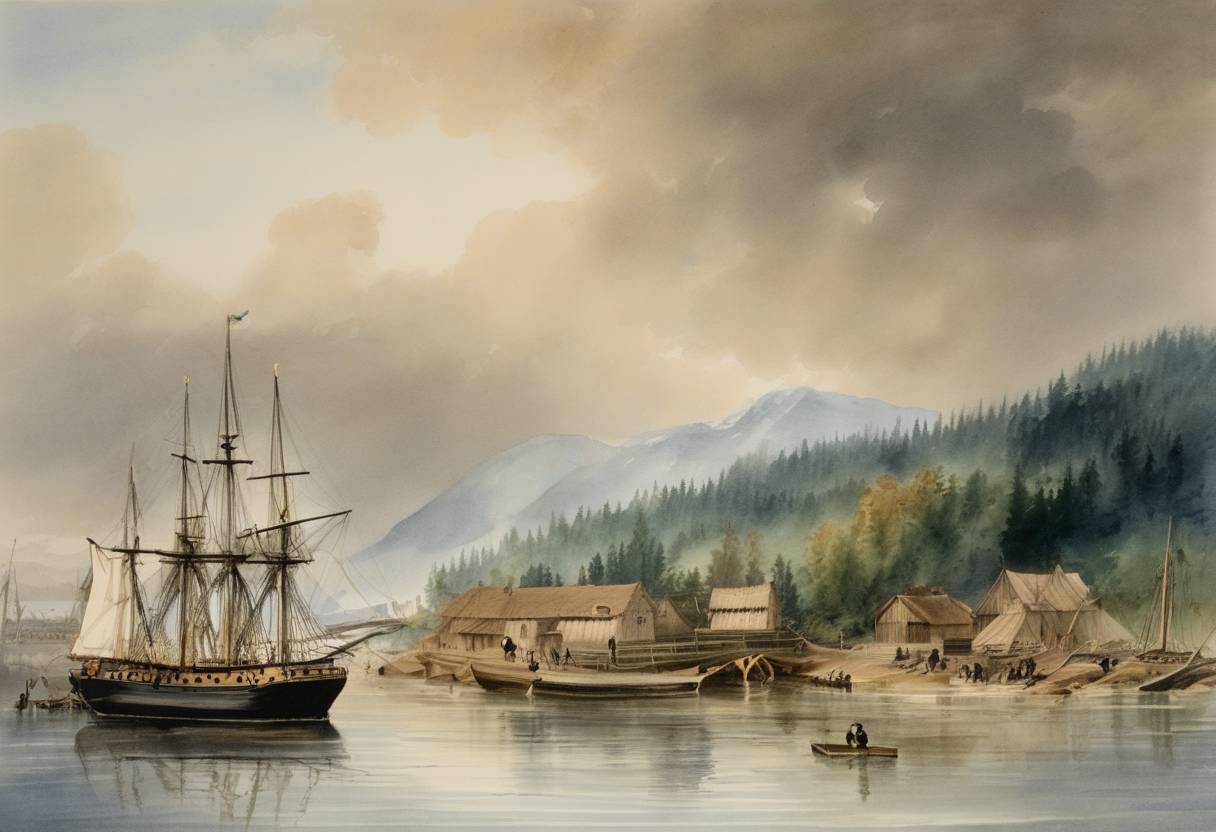
On April 25, 1849, Sir George Simpson, the influential Governor of the Hudson’s Bay Company, arrived at what is now Vancouver, Canada. His mission was to centralize the company’s operations at Fort Langley, with the goal of increasing trade efficiency in the region.
During the mid-19th century, the Hudson’s Bay Company was a major force in the fur trade and had expanded its operations widely across North America. Fort Langley, established in 1827 on the Fraser River, served as an important trading post, facilitating commerce with Indigenous nations and European settlers. By 1849, the strategic significance of Fort Langley had increased due to growing trade demands and shifts in regional economic activities.
Simpson’s visit was part of a broader initiative to enhance the company’s administrative effectiveness. With increasing competition and the spread of new settlements, Simpson recognized the need for a more centralized and coordinated approach to operations. His goals included:
Simpson’s efforts at centralization were crucial in maintaining the Hudson’s Bay Company’s dominance during a time of intense commercial rivalry. By strengthening operations at Fort Langley, the company could effectively tap into the rich fur resources of the Pacific Northwest. Furthermore, this move helped cement the company’s influence in trade networks stretching across what is now British Columbia and beyond.
Simpson’s leadership strategies during this period exemplified his commitment to adapting the company to a rapidly changing commercial landscape, which was essential for the company’s long-term sustainability in the region. This attempt at reorganization contributed to the Hudson’s Bay Company maintaining its status as a formidable trading empire throughout the 19th century.
Source: www.canadahistoryproject.ca