First Diesel-Engine Automobile Trip Completion
1930 · New York City, United States
The first diesel-engine automobile trip is completed, from Indianapolis to New York City.
August 9, 1898
Rudolf Diesel was granted a U.S. patent for the diesel engine, a pivotal development in mechanical engineering due to its efficiency and power.
New York, United States | United States Patent Office
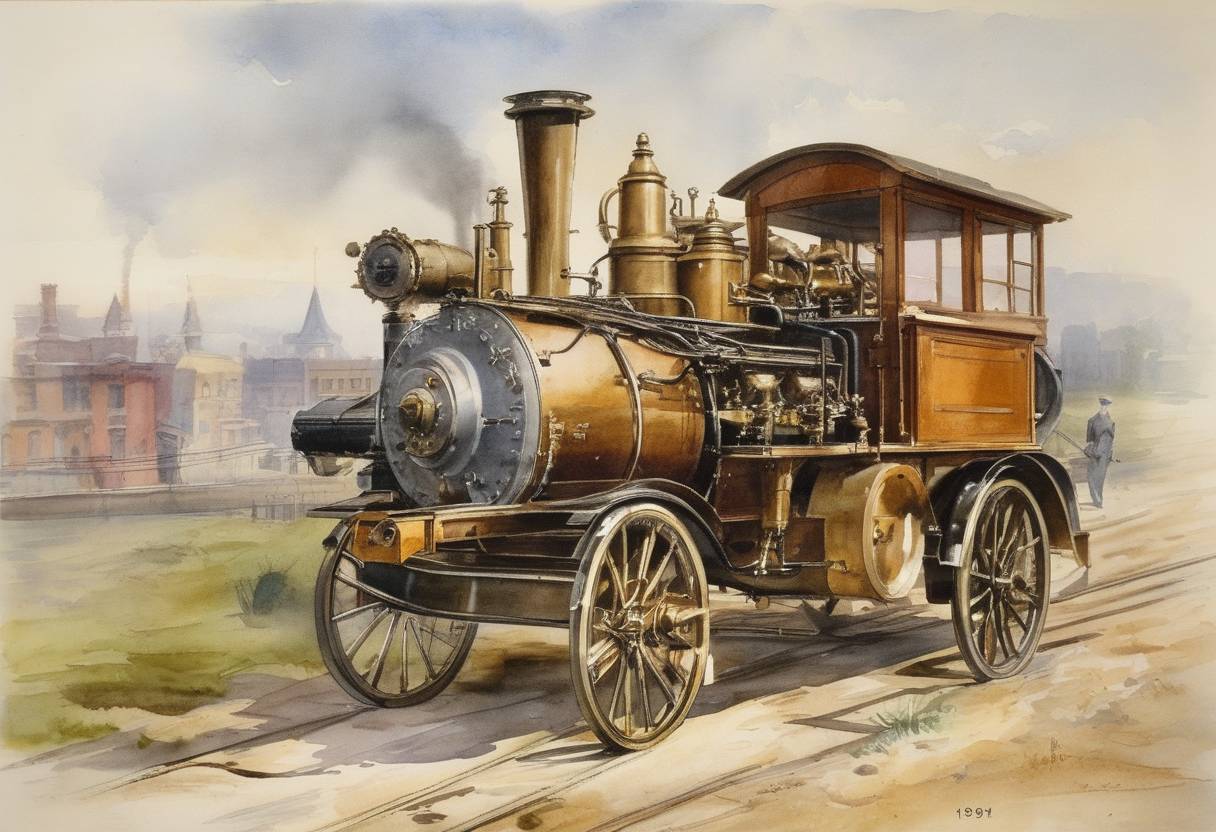
On August 9, 1898, Rudolf Diesel was granted U.S. Patent No. 608,845 for an “internal-combustion engine,” a transformative innovation in mechanical engineering. This patent marked a significant milestone in the development of engines, emphasizing Diesel’s work on creating more efficient and powerful internal combustion engines compared to the predominant steam engines of the time.
Rudolf Diesel, a German engineer, began working on the concept of an internal combustion engine in the 1890s. Diesel aimed to design an engine that not only improved fuel efficiency but also minimized energy losses. Existing engines, such as the steam engine, were widespread but suffered from inefficiency due to heat loss. The Otto engine, although more efficient, still didn’t optimize the compression of fuel, leading Diesel to conceive an alternative solution.
Diesel’s engine operated on a different principle known as the compression ignition cycle. The key innovation was its ability to compress air to a point where the high temperature generated ignites the fuel upon its injection into the combustion chamber. This process eliminated the need for a separate ignition source, like a spark plug found in gasoline engines, thereby enhancing the engine’s efficiency and thermal dynamics.
The issuance of the U.S. patent was instrumental in establishing the legal and commercial foundation for Diesel’s engine within the United States, helping to pave the way for its adoption in various industries. The diesel engine has since become a mainstay in transportation and industrial applications, powering everything from trucks and buses to ships and power plants.
Rudolf Diesel’s invention had a profound impact on 20th-century transportation and industrial sectors. The efficiency and robustness of the diesel engine enabled enhanced capabilities in shipping and logistics, contributing to the expansion of global trade. Today, diesel engines remain integral to commercial transportation and numerous industrial processes.
Understanding this patent underscores the historical significance of Diesel’s work and its ongoing influence on engineering and technology worldwide. Diesel’s groundbreaking ideas on engine efficiency and his contribution to industrial technology solidified his legacy as a pivotal figure in mechanical engineering.
Source: www.history.com