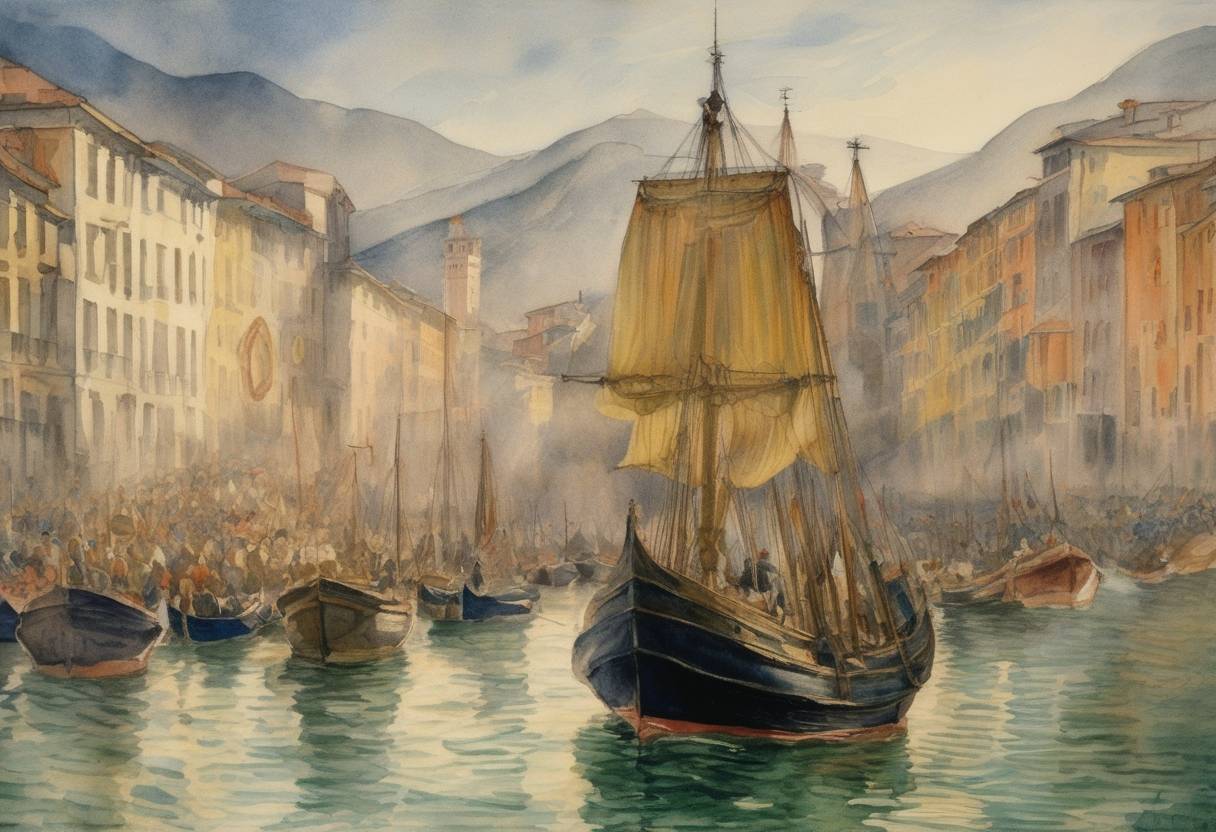
Appointment of Nino Boccioni as the First Doge of Genoa
On April 30, 1341, Nino Boccioni was appointed as the first Doge of Genoa, marking a transformative moment in the governance of the Republic of Genoa. This appointment signified the establishment of a new political tradition within Genoa’s historical trajectory, aligning it more closely with the structures seen in other prominent Italian city-states like Venice.
Background
Before the appointment of Nino Boccioni, the Republic of Genoa was governed by a series of consuls and later a podestà, who was often an outsider appointed for limited terms. The city was known for its vibrant mercantile and maritime dominance in the Mediterranean, which necessitated a stable and efficient administrative governance structure to handle its complex economic and political affairs.
Context and Events Leading Up to the Appointment
In the early 14th century, Genoa faced internal factionalism, economic challenges, and threats from external powers, which required a more centralized leadership model to maintain its independence and prosperity. The ruling oligarchy, consisting of powerful merchant families, decided to adopt a governance system that could better consolidate authority and manage factional disputes.
The selection of a doge, a model already successfully implemented in Venice, was seen as fitting to serve Genoa’s needs. This decision resulted in the nomination of Nino Boccioni, a figure with sufficient respect and standing among the Genoese elite, as the inaugural holder of this title.
The Role of Nino Boccioni as Doge
As the first Doge of Genoa, Nino Boccioni was expected to act as both a representative leader and a unifying figure whose primary role was to balance the interests of the mercantile oligarchy and the broader civic community. The position was largely symbolic initially, with limited executive power, but it played a crucial role in stabilizing the shifting political landscape of Genoa.
Historical Significance
The creation of the Doge position marked a significant shift in Genoese politics, symbolizing a move towards a more centralized and streamlined system of governance. It helped mitigate some of the chaos stemming from the political rivalry among Genoa’s powerful families and placed Genoa on a path towards strengthening its governance structure amidst regional competition.
Nino Boccioni’s appointment paved the way for subsequent doges who would navigate Genoa through periods of conflict, prosperity, and significant shifts in trade dynamics in Europe. The doge system in Genoa persisted until the late 18th century, punctuated by periods of reform and political adaptation that further entrenched its relevance in managing the Republic’s complex affairs.