The Outbreak of the Korean War: June 25, 1950
1950 · Seoul, Korea
The Korean War began when North Korean forces crossed the 38th parallel into South Korea.
June 28, 1950
North Korean forces captured Seoul, the capital of South Korea, during the early stages of the Korean War. This conflict was a significant event in the Cold War, involving major powers such as the United States, China, and the Soviet Union.
Seoul, South Korea | North Korean Army
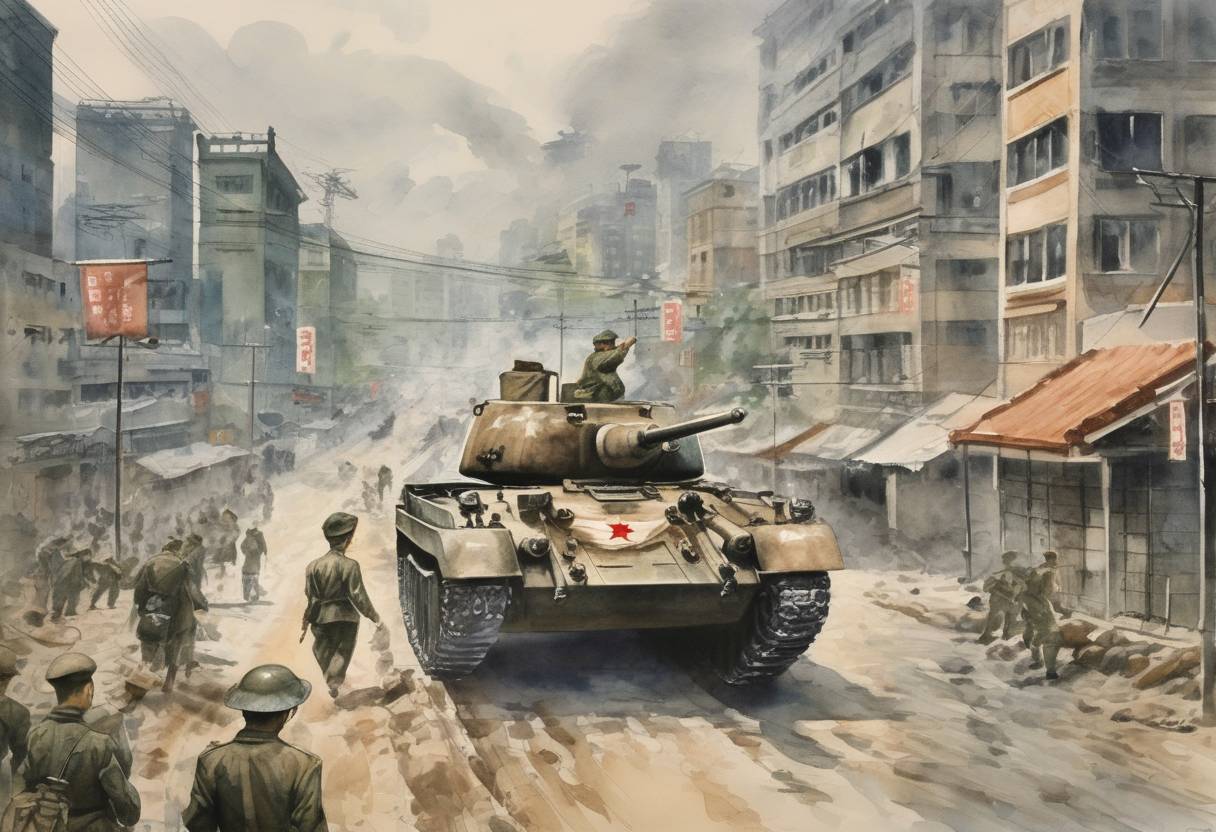
The capture of Seoul by North Korean forces on June 28, 1950, marked a pivotal moment in the early stages of the Korean War, a conflict that was deeply entwined with the broader geopolitical tensions of the Cold War. This event underscored the rapid escalation of hostilities on the Korean Peninsula and set the stage for international intervention.
The Korean War began on June 25, 1950, when North Korean forces, under the command of Kim Il-sung, launched a surprise invasion across the 38th parallel into South Korea. This aggressive move was part of a broader strategy to unify Korea under communist rule, supported by the Soviet Union and, to a lesser extent, China. The invasion caught South Korea and its allies, particularly the United States, off guard.
Initial Invasion: North Korean troops, well-equipped and trained, quickly overwhelmed South Korean defenses. The South Korean military, known as the Republic of Korea Army (ROKA), was underprepared and lacked sufficient resources to repel the invasion effectively.
Rapid Advance: Within three days, North Korean forces had advanced approximately 90 kilometers (about 56 miles) from the border, reaching the outskirts of Seoul. The speed of their advance was facilitated by superior numbers and equipment, including tanks and artillery.
Fall of Seoul: On June 28, 1950, North Korean troops entered Seoul, the capital of South Korea. The fall of the city was a significant blow to South Korean morale and a strategic victory for the North. The capture of Seoul demonstrated the effectiveness of the North Korean military strategy and highlighted the vulnerabilities of the South Korean defenses.
International Response: The fall of Seoul prompted a swift response from the United Nations, led by the United States. President Harry S. Truman ordered American forces to intervene, marking the beginning of a significant international military engagement in Korea.
UN Resolution: The United Nations Security Council passed Resolution 83, recommending member states provide military assistance to South Korea. This led to the formation of a UN Command, with the United States taking a leading role in the military operations.
Strategic Reassessment: The capture of Seoul forced South Korean and UN forces to reassess their strategies. It highlighted the need for a coordinated international military effort to repel the North Korean advance and restore stability to the region.
The capture of Seoul was a critical early event in the Korean War, illustrating the volatile nature of Cold War geopolitics. It underscored the ideological divide between the communist and capitalist blocs and set the stage for a protracted conflict that would involve major world powers. The Korean War ultimately became a significant theater in the Cold War, influencing military and political strategies for years to come.
The fall of Seoul and the subsequent international response also demonstrated the effectiveness of collective security measures under the United Nations, setting a precedent for future international military interventions.
Source: en.wikipedia.org