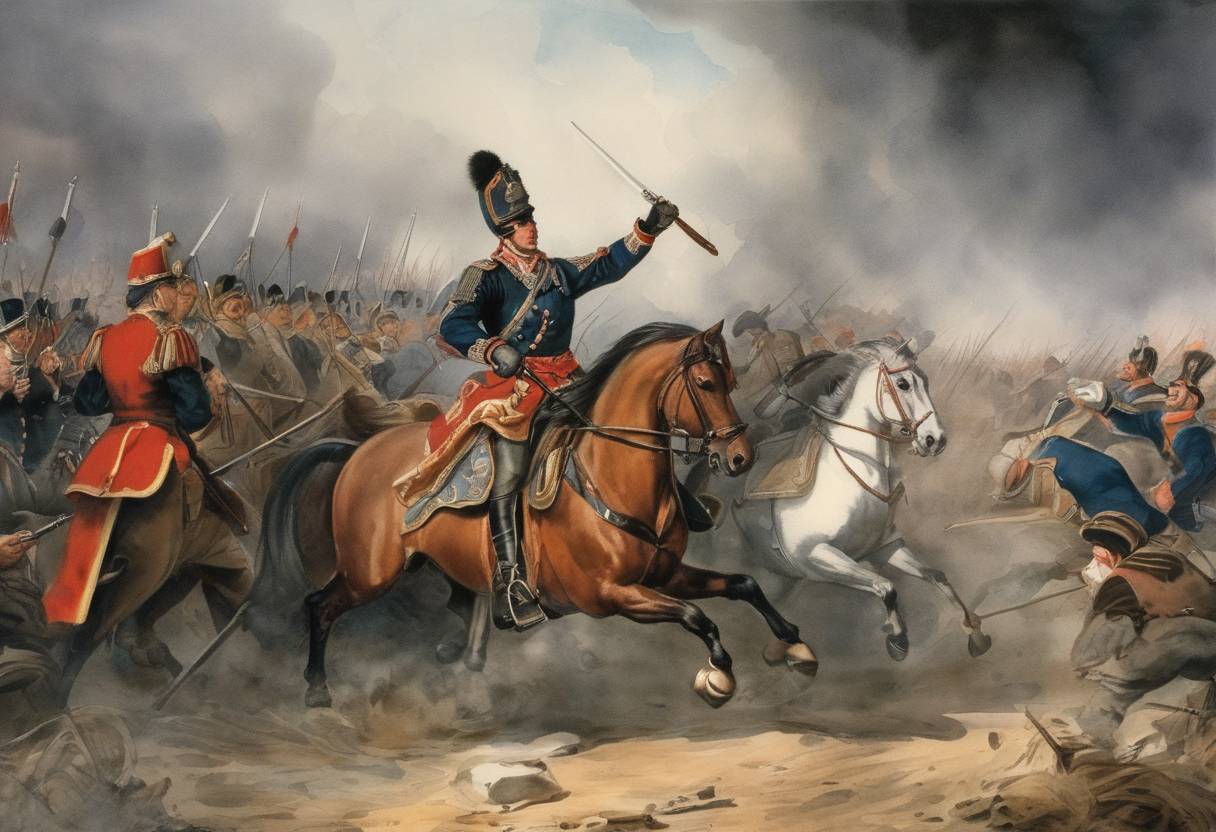
Battle of Narva - November 18, 1700
On November 18, 1700, King Charles XII of Sweden achieved a significant military victory against Russian forces in the Battle of Narva. This battle was part of the larger Great Northern War, which saw Sweden’s dominance in Northern Europe challenged by a coalition of Denmark-Norway, Saxony-Poland-Lithuania, and Russia.
Context
- The Great Northern War: This conflict lasted from 1700 to 1721, with the purpose of curbing Swedish power and territorial control across the Baltic Sea region.
- Background: Charles XII ascended the Swedish throne in 1697 at the age of fifteen. The surrounding countries perceived his youth as a strategic opportunity to challenge Sweden’s influence.
- Coalition against Sweden: The war began when Denmark-Norway, Russia, and Saxony-Poland-Lithuania banded together to attack Sweden simultaneously.
The Battle
- Location: The battle took place near Narva, a key strategic fortress on the eastern borders of the Swedish Empire, located in present-day Estonia.
- Forces: Charles XII faced a significantly larger Russian army led by Tsar Peter the Great. Estimates place the Russian numbers at approximately 35,000 to 40,000 troops, whereas the Swedish force consisted of around 8,000 to 12,000 soldiers.
- Tactics: Despite being outnumbered, Charles demonstrated exceptional strategic acumen. A blinding snowstorm on the day of the battle provided cover for the Swedish forces. They launched a surprise attack, exploiting weaknesses in the Russian lines.
Outcome
- Swedish Victory: The battle resulted in a decisive victory for Sweden. The Russian forces suffered massive losses with thousands killed, wounded, or captured, while Swedish casualties were minimal compared to their opponents.
- Aftermath: The victory at Narva temporarily alleviated the immediate threats Swedes faced in the region and showcased Charles XII’s leadership and military prowess. It bolstered Swedish morale and consolidated Charles’s reputation as a formidable military commander even at a young age.
Broader Significance
- Impact on Russia: Although a significant setback, the defeat at Narva motivated Peter the Great to reform the Russian military, eventually strengthening it substantially later in the war.
- Continued Conflict: The victory at Narva was one of many battles in the Great Northern War, which would continue for over two decades. Despite early successes, Sweden ultimately faced numerous challenges that led to its decline as a major power by the war’s conclusion in 1721.
This strategic win, a defining moment early in Charles XII’s reign, emphasized Sweden’s military capabilities and influenced the geopolitical dynamics of the Baltic region during the early 18th century.