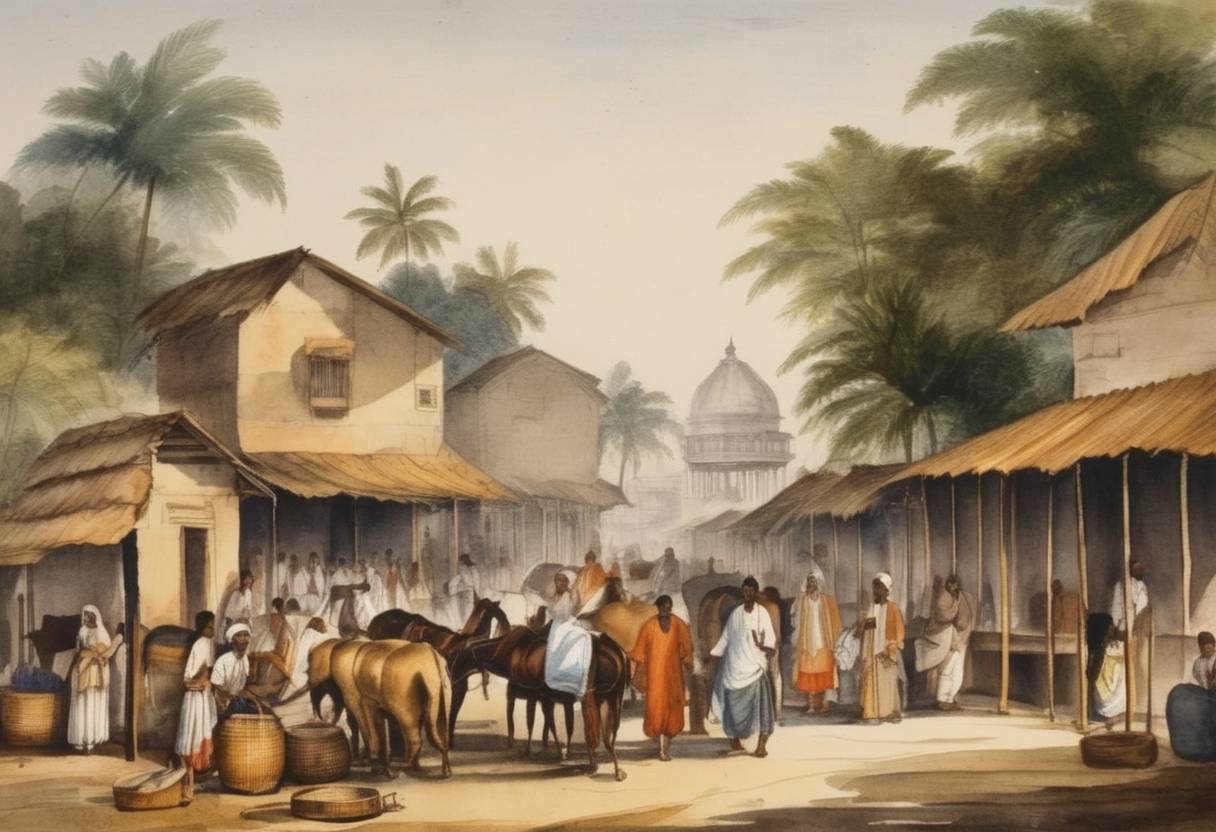
Establishment of a Trading Settlement by Job Charnock on August 24, 1690
On August 24, 1690, Job Charnock, an agent of the English East India Company, established a trading settlement that would eventually develop into the city of Calcutta (now Kolkata), a major urban center and the capital of the Indian state of West Bengal.
Background
The English East India Company, founded in 1600, was a powerful trading corporation that sought to expand its trading interests in India, amidst competition from other European powers such as the Dutch, Portuguese, and French. Eastern India offered lucrative opportunities for trade in goods like textiles, spices, and other commodities.
The Settlement
Job Charnock, acting on behalf of the English East India Company, identified the strategic potential of the area around the Hooghly River in present-day West Bengal. The site chosen by Charnock was Sutanuti, one of three villages (with Gobindapur and Kalikata) that would eventually amalgamate into Calcutta. The location offered navigable river access, making it an ideal spot for trade and commerce.
On this date, Charnock established a modest settlement here, laying down the foundations for what would become one of the major port cities during British rule in India.
Historical Context
The establishment of the settlement came during a period when the Mughal Empire, under Emperor Aurangzeb, was in control of vast regions of India. However, the Empire’s decentralized nature allowed regional governors some autonomy, which the English adeptly navigated to secure trading rights and privileges.
Significance
- The settlement initiated by Charnock marked a pivotal shift in the colonial strategy in Bengal and paved the way for the growth of British influence in the region.
- Over time, Calcutta evolved into the headquarters of the East India Company in India by 1772, serving as the capital of British-held Indian territories for many years until 1911.
- The city’s development underscored the increasing importance of mercantile trade in the expansion of British power in South Asia.
Controversial Legacy
Though traditionally credited with founding Calcutta, historical assessments and local traditions challenge the notion, with some historians suggesting that the city’s origins are a culmination of several factors including indigenous settlements. Job Charnock’s role, however, remains a symbol of the start of a significant colonial chapter in India’s history.
These events play a critical role in understanding the expansion of colonial British influence in India and how Calcutta grew to become a central hub of political, cultural, and economic activity in the region.