Election of Pope Sylvester II on April 2, 999
999 · Rome, Italy
Sylvester II became Pope, the head of the Catholic Church.
May 21, 0996
Emperor Otto III crowned his cousin Bruno as Pope Gregory V, making him the first German pope.
Pavia, Italy | Catholic Church
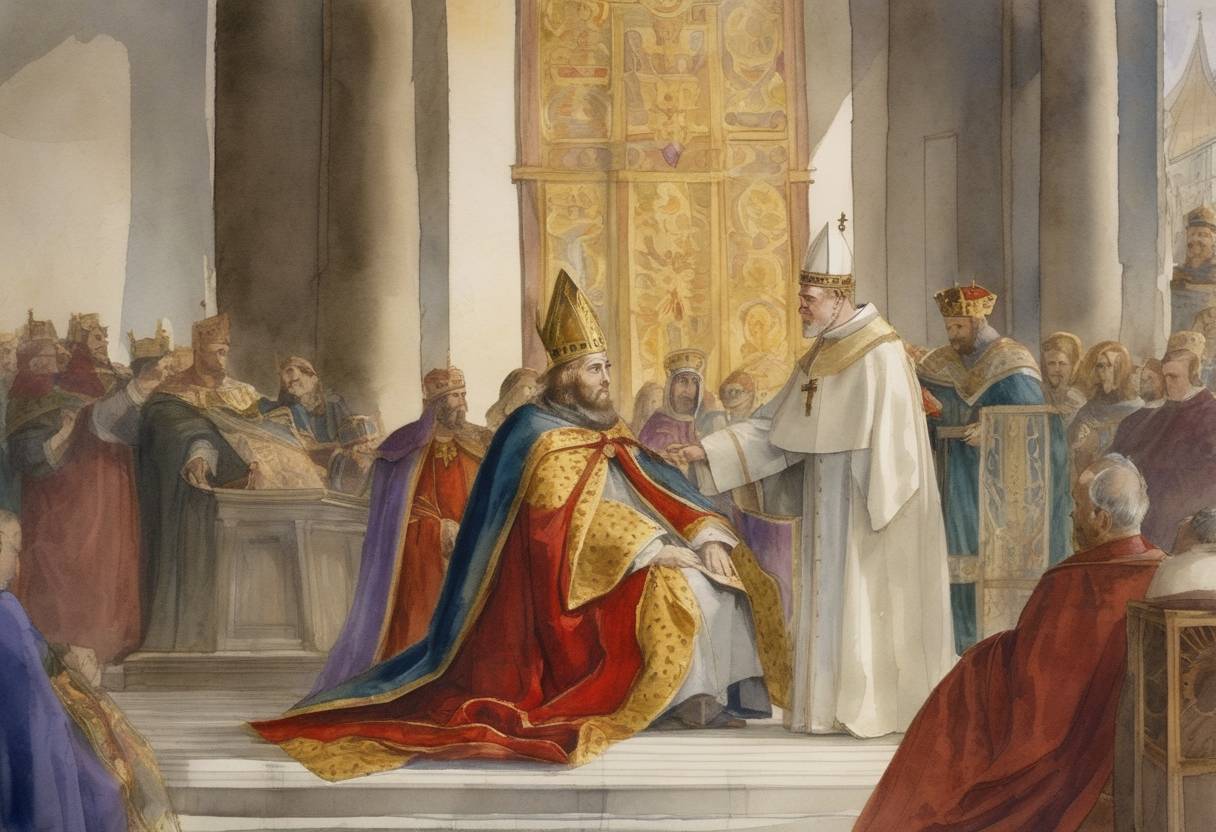
On May 21, 996, a significant event unfolded in the history of the Catholic Church and the Holy Roman Empire—Bruno, the first German to ascend to the papacy, was crowned as Pope Gregory V. This marked a pivotal moment in the entwined histories of the papacy and the German monarchy.
During this period, the influence of the Holy Roman Empire over the Catholic Church was profound. The empire, under the Ottonian dynasty, sought to exert considerable control over papal appointments to consolidate its power. Otto III, who became Holy Roman Emperor at a young age, was determined to strengthen the empire’s ties with the papacy, viewing it as a means to legitimize and expand his reign.
The enthronement of Gregory V as pope represented a deepening alliance between the Holy Roman Empire and the papacy, a dynamic that would continue to define European political and religious landscapes for centuries. It underscored the practice of imperial involvement in spiritual matters, which would be a recurring theme until the tensions of the Investiture Controversy in the 11th century challenged such practices. Gregory V’s papacy thus signifies an era where the interplay of religious and secular powers shaped the trajectory of European history.
Source: en.wikipedia.org