The Death of King John and the Ascension of Henry III
1216 · Newark, England
King John of England dies at Newark Castle, leading to the ascension of his nine-year-old son, Henry III, to the throne.
April 26, 1199
John of England is proclaimed King of England after the death of his brother Richard I.
Westminster, England | English Monarchy
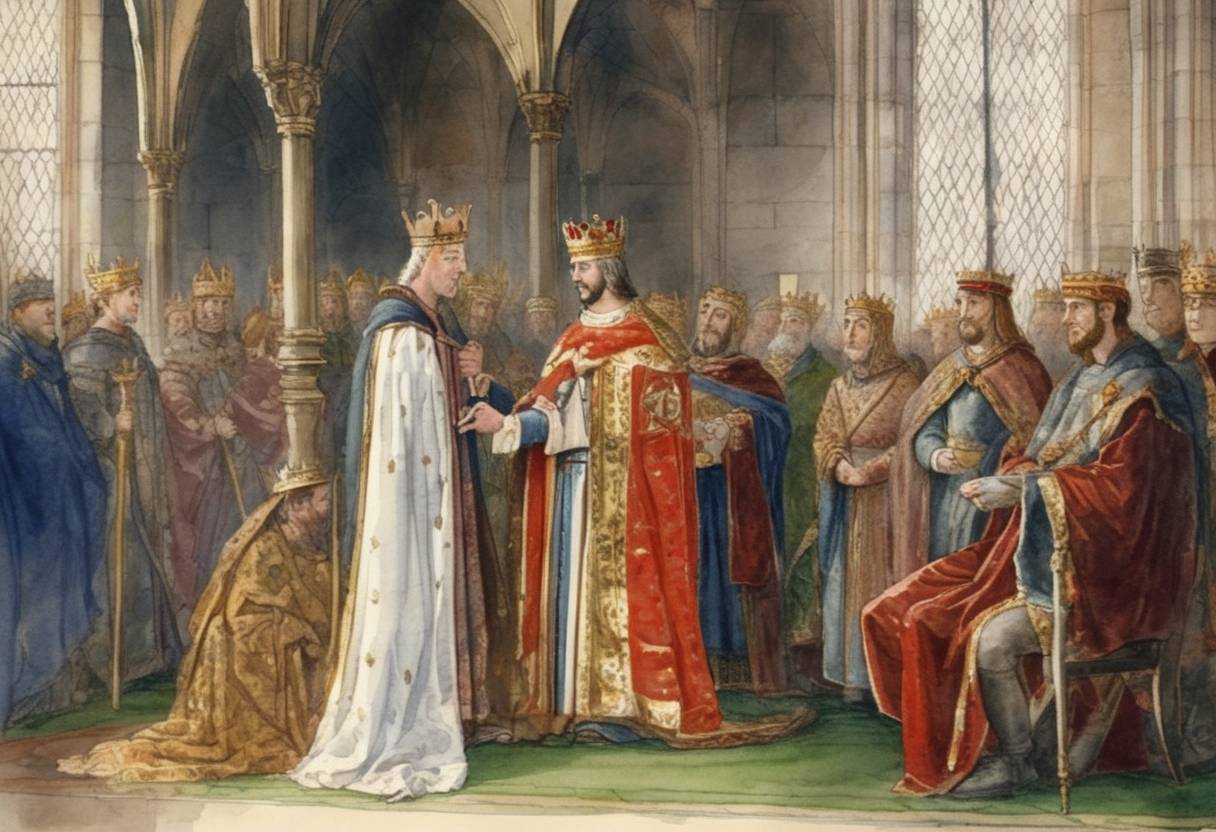
On April 26, 1199, John of England was proclaimed King after the death of his brother, Richard I, also known as Richard the Lionheart. This transition marked a significant event in the Plantagenet dynasty, altering the trajectory of English and European history.
John was the youngest of five sons born to King Henry II of England and Eleanor of Aquitaine. His brothers, including the formidable Richard I, overshadowed his early life. Richard’s reign as king was predominantly focused on the Third Crusade and conflicts in France, which occupied much of the resources and attention during his rule.
Richard I died from an infected wound sustained in the Siege of Chalus in Limousin, France. With no legitimate heirs, the crown was left without a direct successor. According to the principles of succession, the claim to the throne fell to John, despite his contentious relationship with his brother and strained reputation among the nobility.
John was quickly proclaimed King of England on April 26, 1199. His claim, however, was not without opposition. Arthur of Brittany, the son of John’s elder brother Geoffrey, also laid claim to the throne, supported by a faction of French nobility. This dispute led to intermittent warfare in the years that followed, contributing to the instability of John’s early reign.
As king, John faced considerable challenges. His reign was marked by problematic relationships with his barons, the royal court, and the clergy. Notably, John was involved in extensive conflicts in France, struggling to retain the Angevin empire’s territories. His loss of these lands to King Philip II of France earned him the nickname “John Lackland.”
Domestically, John’s rule is most remembered for his disputes with the nobles, culminating in the sealing of the Magna Carta in 1215, a landmark document in constitutional history that established the precedent for legal constraints on monarchical power.
John’s proclamation as king initiated a tumultuous period in English history. His reign contributed significantly to the development of governmental and administrative reforms due to the political pressures and conflicts he faced. Despite the controversy of his kingship and often negative portrayal, his legacy is intrinsically linked to the evolution of medieval constitutional governance.
Source: en.wikipedia.org