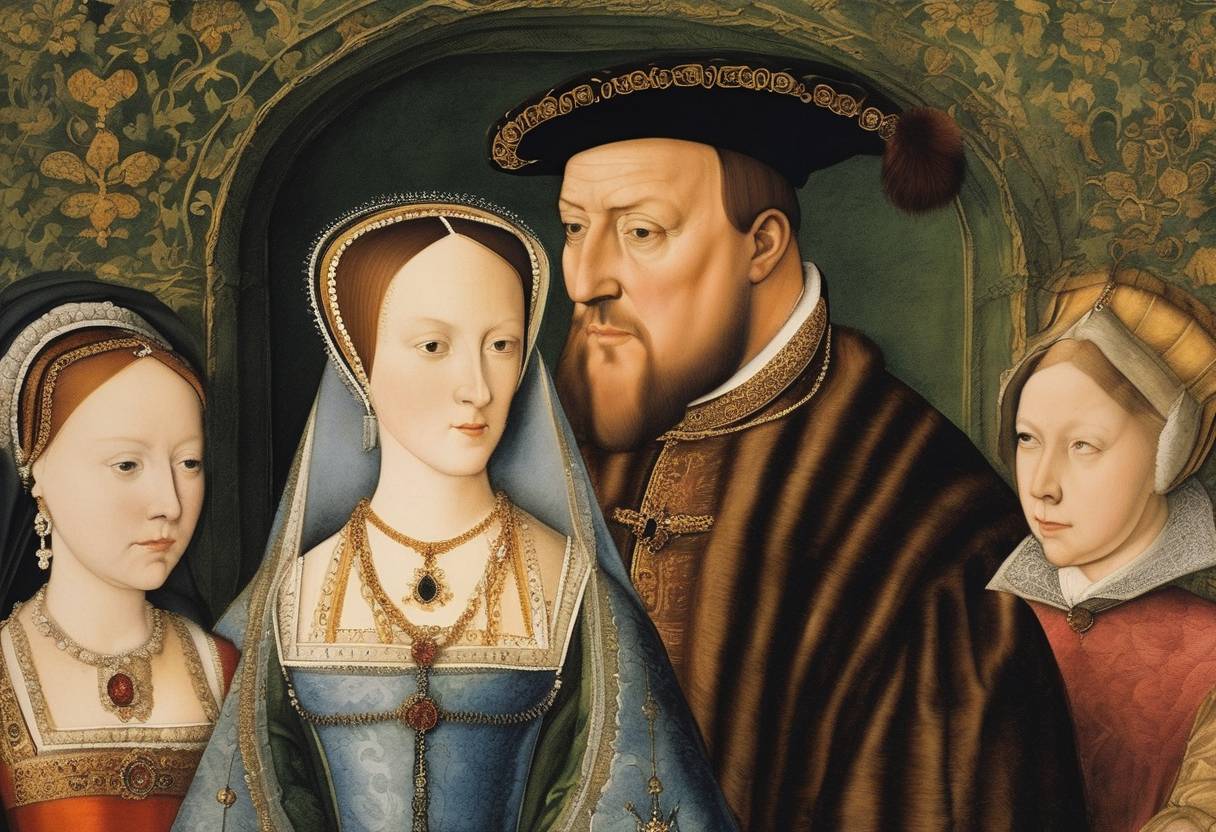
The Validation of Henry VIII and Anne Boleyn’s Marriage
On April 24, 1533, Archbishop of Canterbury Thomas Cranmer officially declared the marriage of King Henry VIII and Anne Boleyn valid. This decisive action took place amidst significant controversy and marked a pivotal moment in England’s history, strengthening the couple’s position despite fierce opposition.
Context
The marriage between Henry VIII and Anne Boleyn was at the heart of a profound religious and political upheaval in England. Henry’s pursuit of an annulment from his first wife, Catherine of Aragon, had been fraught with obstacles, chiefly the Pope’s refusal to grant it. This impasse had driven Henry to break away from the Roman Catholic Church, leading to the establishment of the Church of England.
Key Event
Archbishop Thomas Cranmer’s declaration was a formal recognition of the marriage, lending it ecclesiastical legitimacy. This pronouncement was a crucial step as it came after Henry and Anne’s secret marriage, which took place earlier that year on January 25, 1533. Cranmer’s action was essential for the validation of Anne’s title as queen and any heirs she might produce.
Consequences
The validation of the marriage laid the groundwork for Anne’s coronation as queen, which occurred on June 1, 1533. Additionally, it precipitated significant religious changes by consolidating the Reformation in England. Cranmer’s declaration not only supported Henry’s authority over religious matters but also underscored the newly established independence of the Church of England from papal control.
Anne Boleyn’s eventual pregnancy strengthened Henry’s determination to see the marriage recognized formally, anticipating the birth of a male heir. However, their first child was Elizabeth, born in September 1533, who would later become one of England’s greatest monarchs.
Broader Historical Significance
The impact of Cranmer’s validation extended beyond the immediate political and religious outcomes. It exemplified the shifting dynamics of power in Henry’s court and signaled the rise of Anne Boleyn’s influence, albeit temporarily. The event also encapsulated the broader European conflicts between emerging Protestant reformers and the established Catholic Church, marking a significant chapter in the Reformation era.