The Treaty of Lyon: January 17, 1601
1601 · Lyon, France
The Treaty of Lyon is signed, ending the Franco-Savoyard War and resulting in territorial exchanges between France and the Duchy of Savoy.
February 6, 1564
The Treaty of Troyes was signed between the Kingdom of France and the Kingdom of England, ending the English occupation of several regions in northern France.
Troyes, France | Kingdom of France
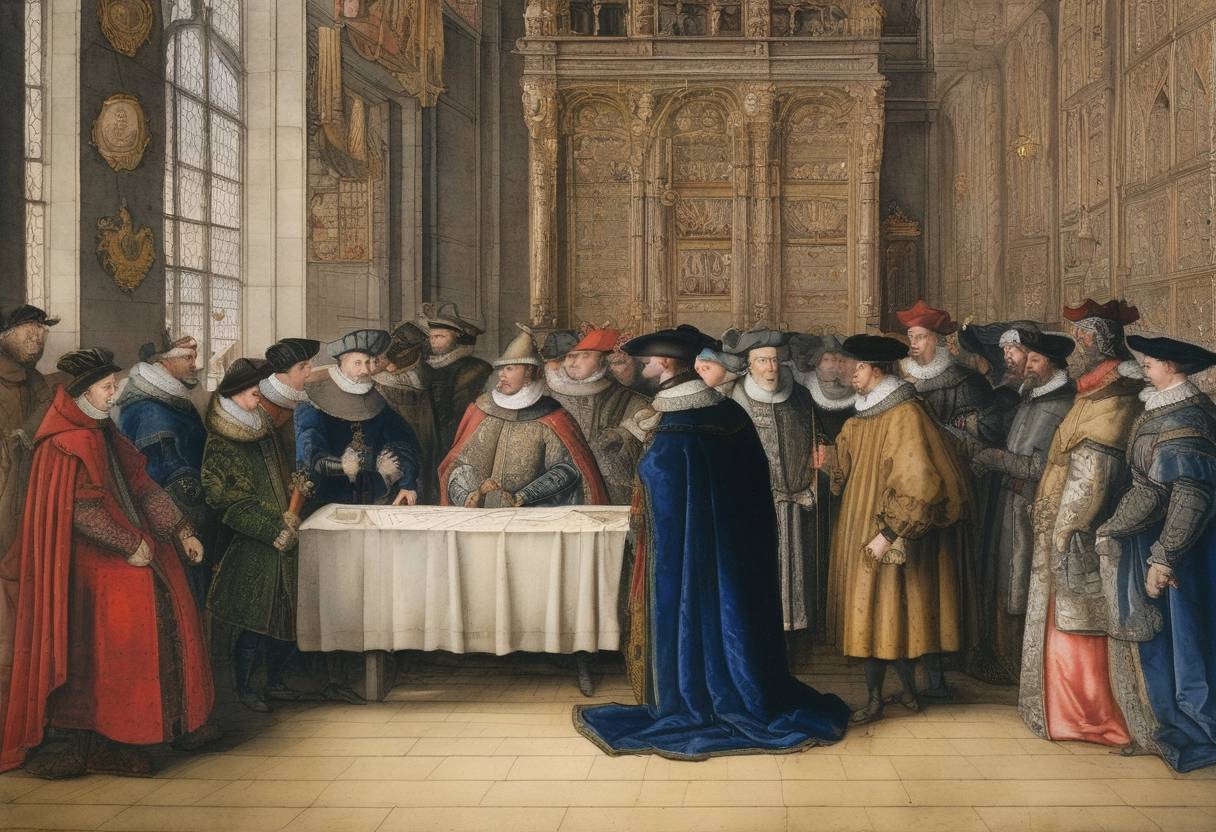
The Treaty of Troyes referenced in your query might contain some inaccuracies regarding the described event on the specified date. The historical Treaty of Troyes that is most renowned was actually enacted on May 21, 1420, between the Kingdom of France and the Kingdom of England. In this case, it is important to clarify historical records:
In the early 15th century, the ongoing conflict known as the Hundred Years’ War (1337–1453) raged between England and France. By 1420, the English, led by King Henry V, had achieved several military victories over France, culminating in the signing of the Treaty of Troyes.
The Treaty of Troyes was significant because it temporarily brought the prospect of a unified French-English monarchy under Henry V. However, its long-term consequences were not realized due to Henry V’s premature death in 1422 and the resurgence of French nationalism under Charles VII, which ultimately led to the expulsion of English forces from much of France.
Despite the treaty, the French eventually rejected the terms, and hostilities resumed. The rise of leaders such as Joan of Arc revitalized French efforts, culminating in English defeat by 1453, thus concluding the Hundred Years’ War.
There is no widely recognized or recorded treaty signed on June 2, 1564, referred to as the Treaty of Troyes which ended English occupation of regions in northern France. It’s important to cross-verify with accurate sources if referencing such an event.
Source: www.britannica.com