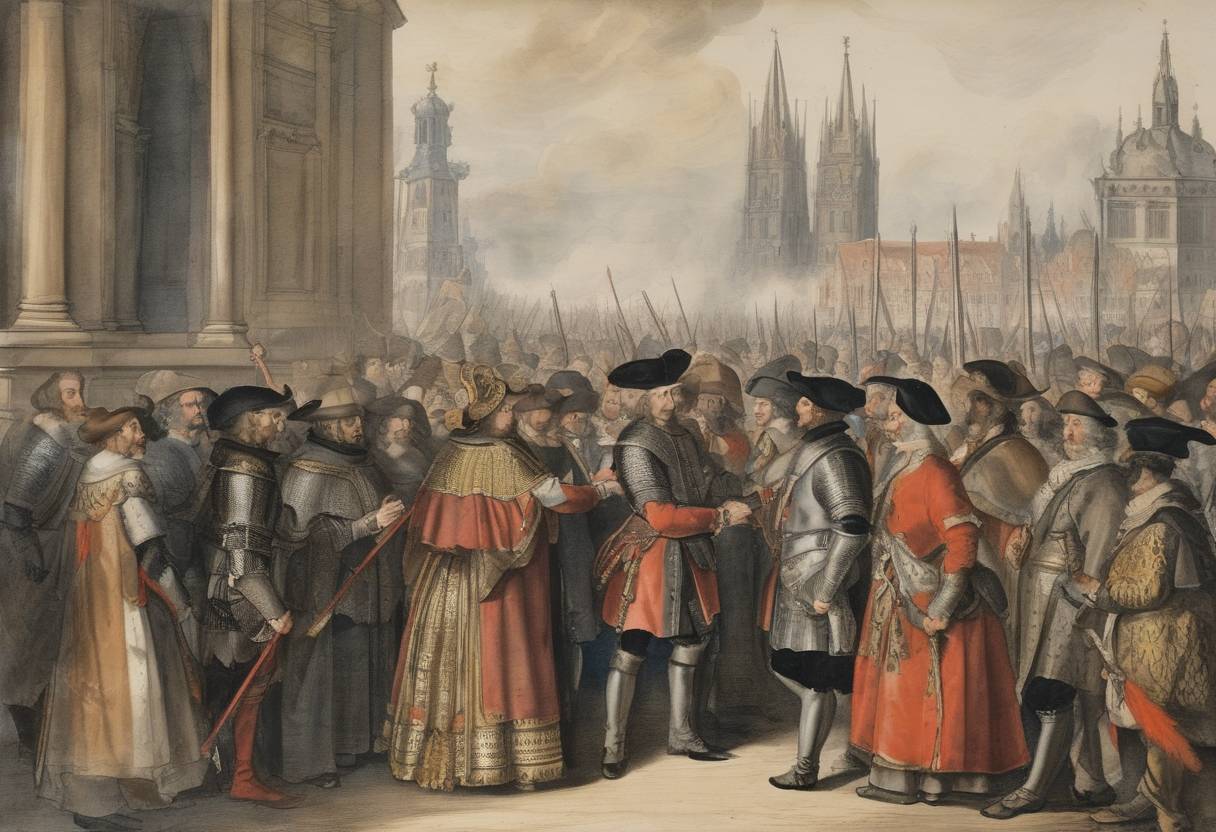
The Treaty of Münster - May 15, 1648
The Treaty of Münster was signed on May 15, 1648, marking a crucial milestone in European history by officially ending the Eighty Years’ War between Spain and the Dutch Republic and recognizing Dutch independence. This agreement was part of the larger series of treaties known collectively as the Peace of Westphalia, which also concluded the Thirty Years’ War in the Holy Roman Empire.
Background
The Eighty Years’ War, spanning from 1568 to 1648, was a protracted conflict between the Kingdom of Spain and the Dutch provinces in the Spanish Netherlands. It began as a revolt of the Seventeen Provinces against the political and religious hegemony of Philip II of Spain. Over time, the conflict evolved from a revolt for religious freedom into a full-fledged war for independence.
Leading Up to the Treaty
By the mid-17th century, the war had exhausted resources on both sides. The Spanish Empire, coping with its own set of financial and military pressures, sought to stem its losses amidst the broader array of European conflicts. Similarly, the Dutch Republic had achieved significant economic and strategic successes but faced ongoing military and political challenges.
Diplomatic negotiations in the city of Münster, part of the Westphalian Peace talks, reflected a growing European inclination toward peace after decades of destructive warfare.
Key Provisions of the Treaty
- Recognition of Independence: Spain recognized the full sovereignty of the Dutch Republic, formally acknowledging the United Provinces as an independent state.
- Territorial Adjustments: The treaty confirmed the de facto independence of regions secured by the Dutch, such as the United Provinces in the north, while the southern regions remained under Spanish control.
- Trade and Economic Terms: The treaty included clauses that regulated commercial relations, vital for the burgeoning Dutch trading empire, as well as the return of certain territories and provisions for religious freedoms in the affected regions.
Consequences and Significance
- End of Spanish Domination in the North: The treaty marked the decline of Spanish power in Northern Europe and continued the fragmentation of the Habsburg dynastic influence.
- Rise of the Dutch Republic: The recognition of Dutch independence facilitated the rise of the Dutch Republic as a major economic power and set the stage for its Golden Age.
- Westphalian Sovereignty Principles: This treaty, along with others signed in 1648, laid foundational principles for modern state sovereignty, influencing the structure of modern international law and diplomacy.
The Treaty of Münster represented not just the conclusion of a prolonged conflict, but also a turning point in European history, influencing the political and religious landscape for generations to come.