The End of the Battle of Gallipoli: January 9, 1916
1916 · Gallipoli, Turkey
The Battle of Gallipoli ended with an Ottoman victory as Allied forces completed their evacuation from the peninsula.
February 19, 1915
The British and French began naval operations against Ottoman Empire defenses in the Dardanelles, an event that marked the beginning of the Gallipoli Campaign during World War I.
Dardanelles Strait, Ottoman Empire | Allied Powers
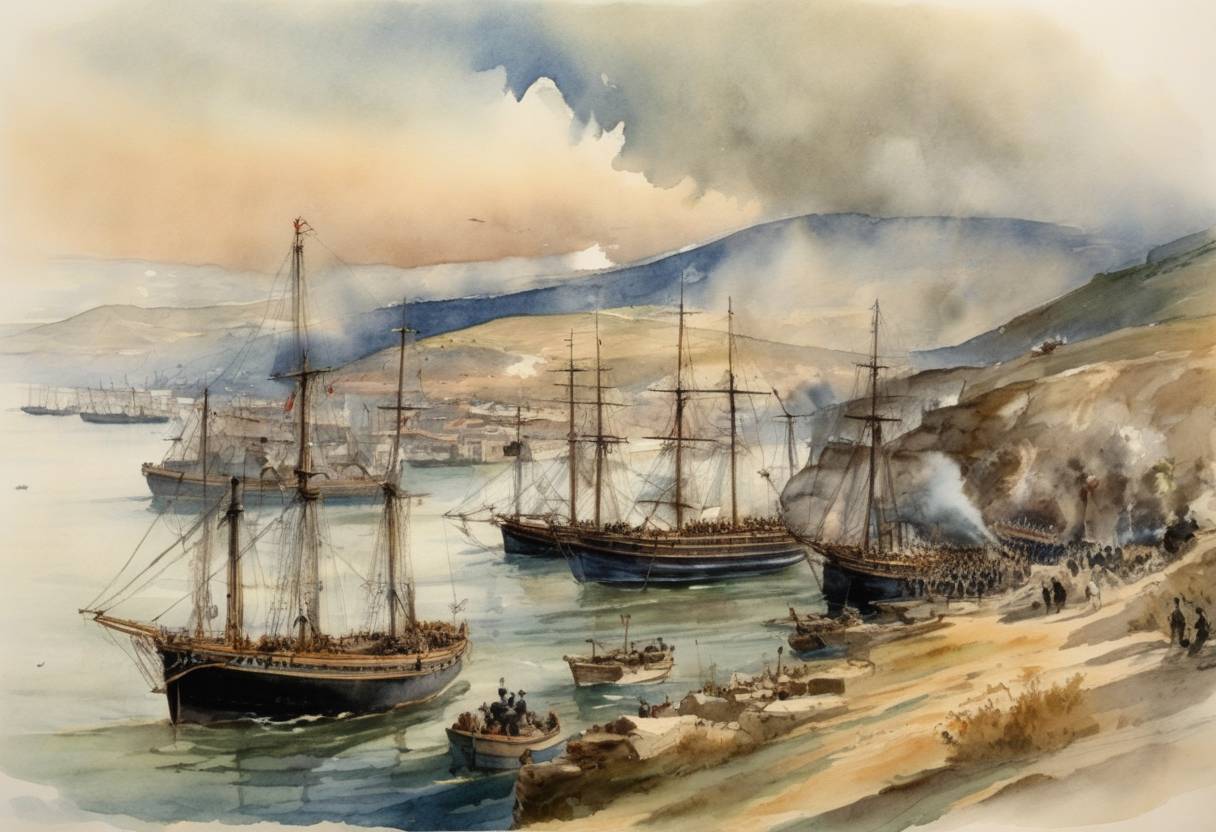
On February 19, 1915, the British and French navies initiated the first naval assaults on the Ottoman Empire’s defenses in the Dardanelles Strait. This offensive marked the commencement of the Gallipoli Campaign, a significant and challenging operation during World War I.
The Dardanelles Strait, a narrow, strategically crucial waterway in northwestern Turkey, served as the gateway between the Aegean Sea and the Sea of Marmara. Control of the strait was essential for the Allies for several reasons:
Access to the Ottoman Capital: Securing the Dardanelles would allow the Allies to threaten Constantinople (modern-day Istanbul), the capital of the Ottoman Empire, potentially knocking them out of the war.
Linking with Russia: It was critical for establishing a supply line to Russia via the Black Sea, which was cut off from the Western Allies due to German control over key sea routes.
Relief to Eastern Front: A successful campaign might relieve pressure on Russia by diverting Central Powers’ resources from the Eastern Front.
The operation began with combined forces comprising British and French warships targeting the robust Ottoman fortifications guarding the entrance to the Dardanelles. The objective was to bombard and destroy these coastal defenses, thereby clearing a path for a naval advance through the strait.
Assault on Fortifications: The naval operation commenced with a preliminary bombardment aimed at dismantling outer defenses, including forts and artillery emplacements.
Initial Struggles: The attack, however, was met with difficulties. Weather conditions and poor visibility hampered the effectiveness of naval gunfire. The Ottoman defenses, consisting of fortified guns and mines, posed a formidable challenge.
The Gallipoli Campaign would evolve into a protracted and grueling conflict lasting until January 1916. The initial naval assaults foreshadowed the complexities and hardships the Allies would face in the ensuing months. The campaign ultimately highlighted the significant challenges of amphibious operations and exerted a lasting impact on military strategy and future engagements.
The operation didn’t achieve the swift victory the Allies had hoped for and led to a costly and indecisive land campaign months later. The experiences at Gallipoli were formative, influencing military tactics and strategies in subsequent conflicts and contributing to the reshaping of national identities, particularly in Turkey, Australia, and New Zealand.
The Gallipoli Campaign stands as a testament to the strategic ambitions and operational difficulties faced during World War I, highlighting the interplay of naval and land forces in one of the conflict’s most infamous theaters.
Source: www.britannica.com