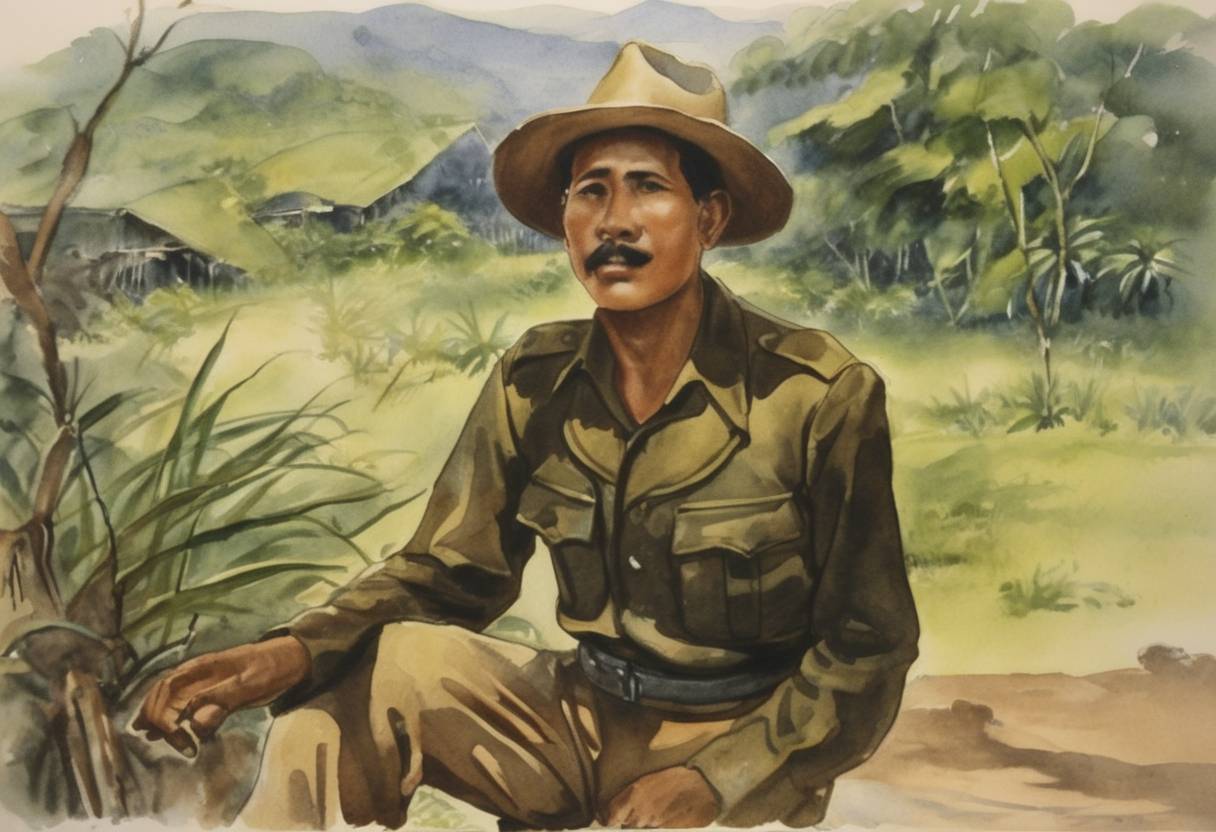
Augusto Sandino and the Attack on Ocotal - July 16, 1927
On July 16, 1927, pivotal action unfolded in Nicaragua when Augusto César Sandino, a significant figure in Nicaraguan history, launched an attack that marked the beginning of a protracted guerrilla conflict against U.S. military forces occupying the country. This insurgency effort turned out to be a critical chapter in the struggle for Nicaraguan sovereignty and the broader landscape of resistance in Latin America.
Background
The United States had been involved in Nicaraguan affairs since the early 20th century, motivated by strategic interests and the ambition to build a canal through the Central American isthmus. In 1926, civil war broke out amid a contested presidential election. As instability grew, the U.S. dispatched Marines to impose peace, effectively initiating a military occupation.
The Rise of Sandino
Augusto César Sandino emerged from this turmoil as a fervent nationalist and revolutionary. He vociferously opposed foreign intervention and capitalized on widespread discontent towards U.S. presence to rally support. Sandino’s resistance began in earnest after the Conservative President Adolfo Díaz, backed by the United States, continued to rely on foreign military support.
The Attack on Ocotal
The attack on the garrison at Ocotal in northwestern Nicaragua was a strategically significant move. It was the first direct assault by Sandino’s forces on U.S. Marines and Nicaraguan National Guard troops. Despite being vastly outmatched in terms of firepower and resources, Sandino’s band of rebels sought to demonstrate their resolve and galvanize further insurgent action across the nation.
Execution and Outcome
The battle commenced with Sandino’s approximately 400 men launching a surprise attack at dawn. Despite the element of surprise and initial success, Sandino’s forces eventually succumbed to the superior firepower of the Marine patrol which included air support provided by five aircraft. This marked the first time in history that aerial bombardment was utilized to support ground troops during a conflict. The heavy machine-gun fire and aerial bombing ultimately forced Sandino’s forces to withdraw after several hours of combat.
Aftermath and Significance
The assault on Ocotal stands out as a turning point in Sandino’s campaign. Although militarily unsuccessful, the attack symbolized a bold challenge to U.S. dominance in the region. It bolstered Sandino’s image as a revolutionary leader and inspired a prolonged guerrilla warfare campaign that continued until 1933.
The Nicaraguan guerrilla war influenced regional views on U.S. interventionism and has remained a powerful symbol of resistance against foreign empire and control. Sandino’s legacy continued to inspire leftist movements in Latin America and his name was later adopted by the Sandinista National Liberation Front, an influential political movement that came to power in 1979.
In understanding the events of July 16, 1927, it becomes clear that Sandino’s attack on Ocotal was more than a military encounter; it was the catalyst for a struggle for national self-determination and sovereignty in Nicaragua.