Pope Gregory I and the Gregorian Chant
600 · Rome, Italy
Pope Gregory I, also known as Gregory the Great, issues a decree that would later influence the Gregorian Chant, a form of plainchant used in the Roman Catholic Church.
January 18, 1562
The Council of Trent concluded in Italy, after addressing church reform and condemning Protestantism, and shaping the Roman Catholic Church's counter-reformation.
Trent, Italy | Roman Catholic Church
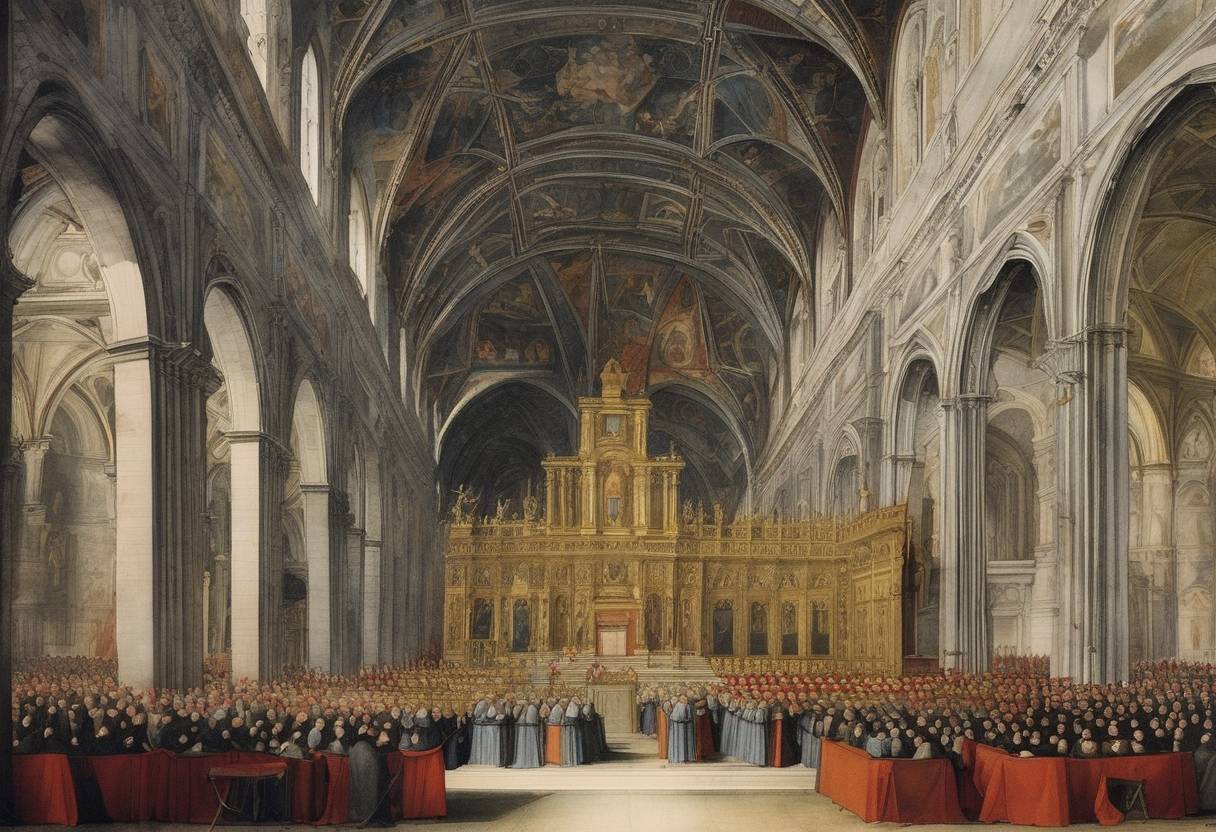
While the date you requested (January 18, 1562) reflects part of the Council’s long history, the Council of Trent did not conclude on that date. Here is a detailed context and correct conclusion of the Council:
The Council of Trent is one of the most significant ecumenical councils in the history of the Roman Catholic Church. Convened by Pope Paul III, it was an essential component of the Counter-Reformation, responding to the doctrinal challenges posed by the Protestant Reformation. The Council aimed at reforming the Church’s practices, clarifying Catholic doctrine, and condemning the tenets of Protestantism. It spanned three major periods: 1545–1547, 1551–1552, and 1562–1563.
During the sessions of the Council:
The Council of Trent formally concluded on December 4, 1563, during its 25th session. Its decisions had a profound impact on the Catholic Church, fortifying its doctrines against Protestant critiques and leading to the standardization of the Mass and other ecclesiastical practices. The decrees of the Council were implemented actively by subsequent popes, most notably by Pope Pius IV and Pius V.
The long-lasting implications of the Council of Trent were vast, leading to the revitalization of the Catholic Church in Europe and fostering a clear demarcation between Catholic and Protestant territories. The reforms and reaffirmations issued by the Council were instrumental in revitalizing the Catholic identity and influence during a period of significant religious upheaval.
Source: www.britannica.com