Capture of Vienna by Matthias Corvinus on June 1, 1485
1485 · Vienna, Austria
Matthias Corvinus, King of Hungary, captured Vienna, a significant event in the Austro-Hungarian history.
January 24, 1458
Matthias Corvinus is elected King of Hungary by the Diet of Hungary.
Buda, Kingdom of Hungary | Diet of Hungary
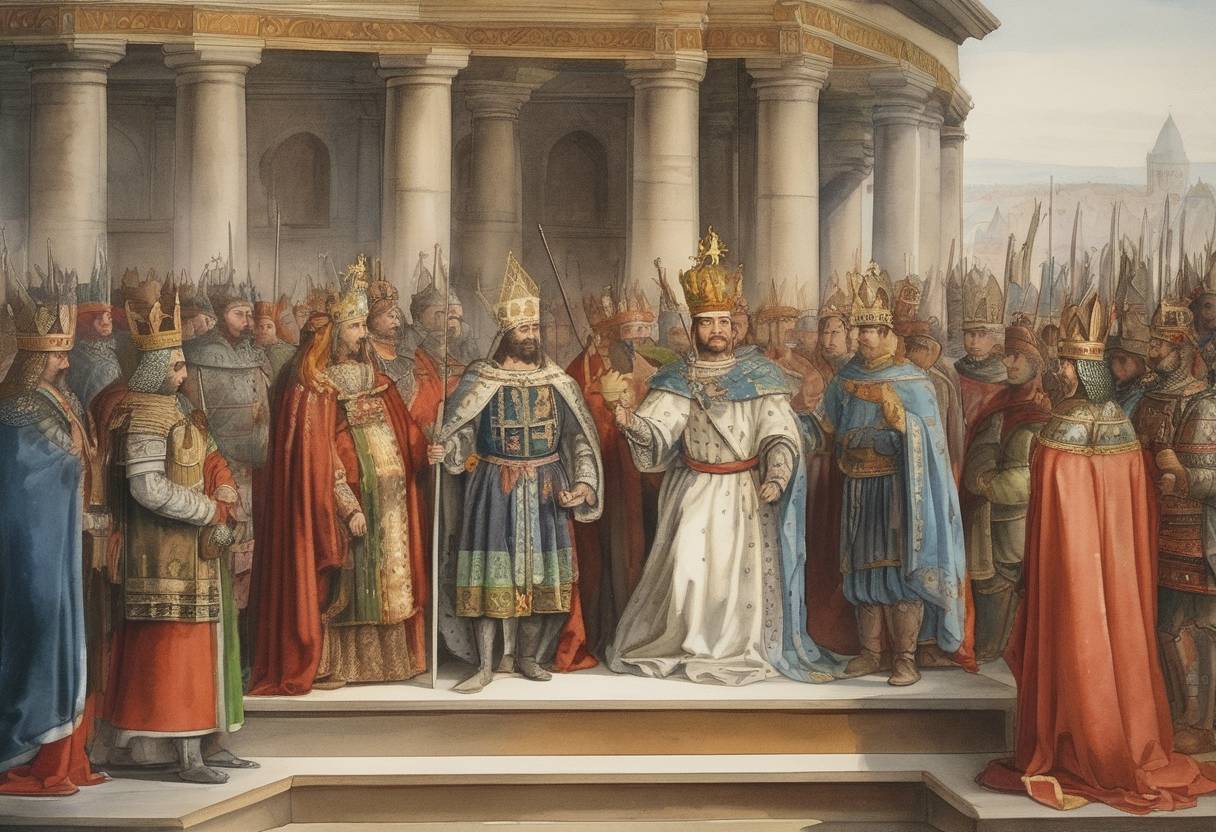
On January 24, 1458, Matthias Corvinus was elected as the King of Hungary by the Diet of Hungary. This election marked a significant transition in Hungarian history, beginning the reign of one of its most notable monarchs.
The election of Matthias occurred in the aftermath of internal strife and a period of instability in Hungary. The previous king, Ladislaus the Posthumous, died suddenly in 1457, leaving no direct heirs and a nation divided by noble factions.
Matthias’s election was largely influenced by the efforts of his uncle, Michael Szilágyi, and his mother, Erzsébet Szilágyi, who negotiated with the Hungarian nobility and secured the support of key factions, such as the Hunyadi League.
Matthias, born in 1443, was the son of John Hunyadi, a renowned military leader and regent of Hungary. Educated in arts and sciences, Matthias was recognized for his intellect and diplomatic acumen even before he ascended to the throne.
The decision to elect Matthias was made by the Hungarian noble assembly, or Diet, convened at Buda on January 24, 1458. It was a strategic move, reflecting the desire for stability and safeguarding against external threats, especially those posed by the Ottoman Empire. His election was also aimed at appeasing the various rival factions within the kingdom, who needed a unifying figure.
As king, Matthias Corvinus implemented significant reforms and expansions that solidified his legacy:
Military Reforms: He established the Black Army, one of the first professional standing armies in Europe.
Cultural Flourishing: Matthias was a patron of the Renaissance, enhancing cultural and educational institutions, including founding the Bibliotheca Corviniana, one of the largest libraries in Europe at the time.
Political Influence: Under his reign, Hungary became a central European power, with Matthias leading successful campaigns extending into Austria and Bohemia.
Matthias’s rule is often remembered as a golden age in Hungarian history, characterized by increased stability, cultural advancement, and regional influence. His ability to maintain control amidst the complex dynamics of Hungarian politics set a precedent for future leadership in the region.
Source: www.britannica.com