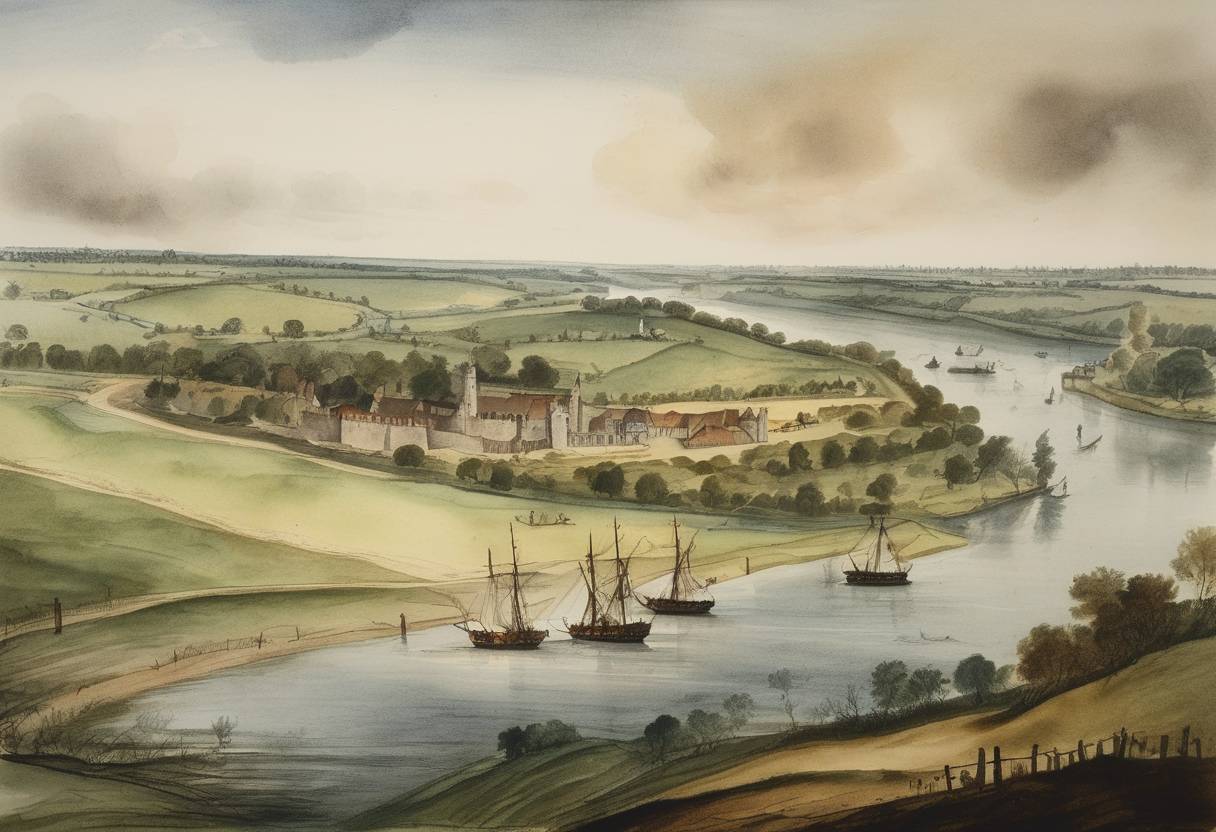
Battle of the Boyne
The Battle of the Boyne took place on July 11, 1690, near the River Boyne in what is today’s County Meath, Ireland. This battle was a pivotal confrontation in the Williamite War in Ireland. It featured the forces of the deposed King James II of England against those of his successor, King William III.
Context and Background
- Glorious Revolution: The battle’s roots can be traced to the Glorious Revolution of 1688, which saw James II, a Catholic, deposed and replaced by his Protestant daughter Mary II and her husband, William of Orange, who became William III of England. James II fled to France, seeking to regain his throne with the support of Louis XIV.
- Williamite War in Ireland: The conflict in Ireland was part of a broader struggle between Catholics supporting James II and Protestants supporting William III. Ireland, largely Catholic, became a strategic base for James’s campaign to reclaim the English throne.
The Armies
- James II’s Army: James’s forces primarily consisted of Irish Catholics, augmented by some French troops contributed by Louis XIV. Despite having about 23,000 men, a lack of military training and inferior weaponry plagued his forces.
- William III’s Army: William commanded a more experienced multinational army of about 36,000, comprising Dutch, German, Danish, and English troops. His forces were better equipped and trained, giving William a strategic advantage.
The Battle
- Location and Strategy: The River Boyne served as the battlefield, with James’s forces positioned on the southern bank to meet William’s advancing army. William aimed to use his numerical and tactical advantages to defeat the Jacobite forces.
- Key Events: Despite an early injury to William, a confident and coordinated assault led his forces to outmaneuver James’s army. The battle saw strategic movements, including a successful crossing of the Boyne by part of William’s army, which outflanked the entrenched Jacobite positions.
- Outcome: The battle ended in a decisive victory for William III. James II’s forces were overwhelmed and forced to retreat towards Dublin, ultimately leaving James to flee back to France.
Aftermath and Significance
- Political Consequences: The defeat dealt a significant blow to Jacobite hopes, cementing William’s rule over England, Scotland, and Ireland.
- Long-term Impact: The battle reinforced Protestant Ascendancy in Ireland, laying a foundation for Protestant dominance in Irish affairs for generations. It also had lasting symbolic significance, with annual commemorations by the Orange Order as a celebration of Protestant victory.
- Legacy: The Battle of the Boyne has continued to be a focal point in discussions of Irish-British history and was especially influential during the sectarian conflicts in Northern Ireland in the 20th century.
This battle remains a crucial moment in British and Irish history, exemplifying broader European religious and political conflicts of the era.