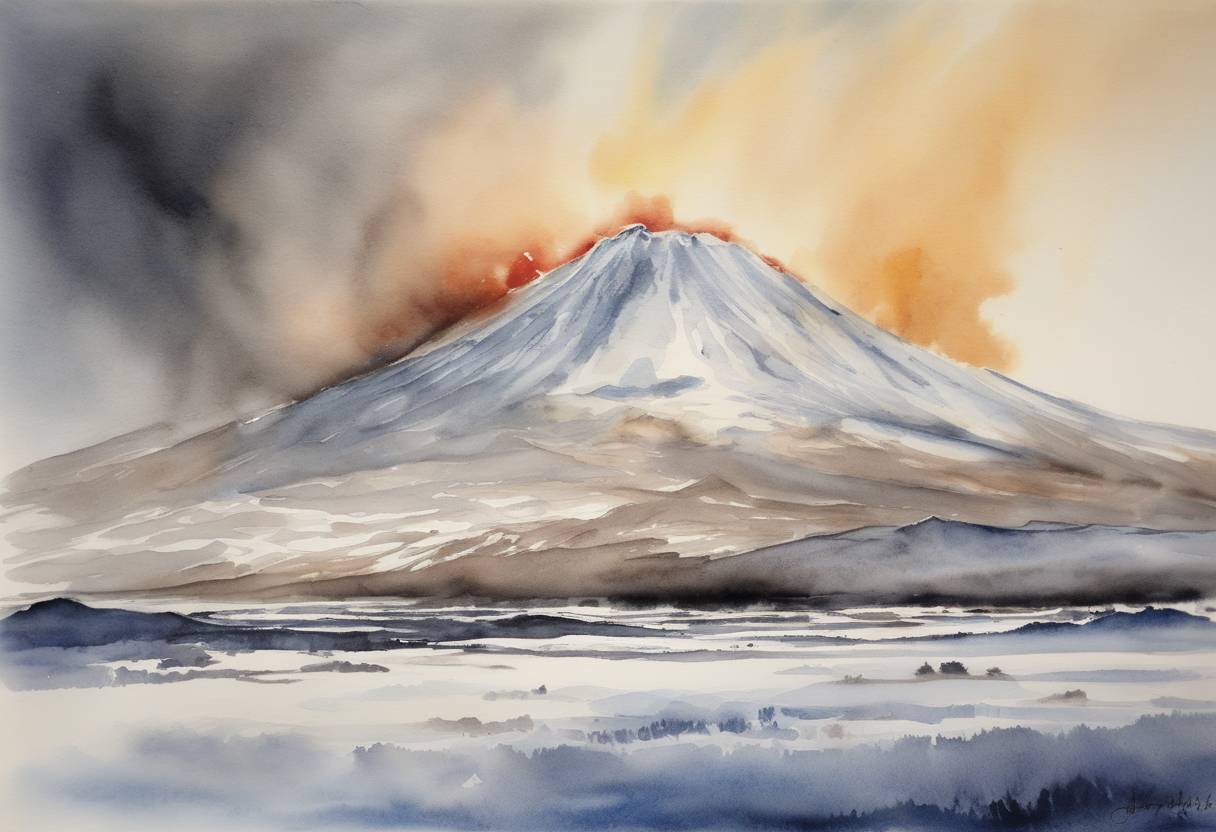
April 15, 2010: Eyjafjallajökull Eruption and Air Travel Disruption
On April 15, 2010, the Eyjafjallajökull volcano in Iceland continued a significant eruption that had begun a day earlier on April 14. This event caused widespread disruption in air travel across most of Europe, primarily due to the massive ash clouds emitted by the volcano.
Background and Context
Eyjafjallajökull, a glacier-covered stratovolcano in southern Iceland, stands approximately 1,651 meters (5,417 feet) tall. Prior to the 2010 eruption, it had not erupted since 1823. The 2010 eruption began in a volcanic vent beneath ice, which resulted in the rapid melting of glacial ice. The interaction of this melting ice with hot lava created explosive phreatomagmatic eruptions.
The Eruption
The volcanic activity intensified on April 14, when the ash plume was projected several kilometers into the atmosphere. By April 15, due to favorable meteorological conditions, high-altitude winds began to transport volcanic ash clouds southeastward across Europe.
Impact on Air Travel
The presence of volcanic ash in the atmosphere presented a significant hazard to aviation. Volcanic ash can damage aircraft engines, leading to potential engine failure. As a result, airspace authorities decided to ground flights to ensure safety.
On April 15, the UK Civil Aviation Authority closed its airspace, followed by many other European countries. This led to the largest air travel disruption since World War II, affecting millions of passengers. Thousands of flights were cancelled in the consequent days, with over 20 countries closing their airspace at various times across Europe.
Consequences and Aftermath
Economic Impact: Airlines suffered substantial financial losses estimated at around $1.7 billion, with a significant number of passengers stranded worldwide.
Policy and Safety: The disruption prompted a reevaluation of international aviation policies concerning volcanic ash, leading to improved safety measures and better predictive models for ash cloud displacement.
Environmental Impact: Despite the air travel disruption, reduced emissions from grounded flights temporarily decreased the environmental impact of aviation in Europe.
Broader Historical Significance
The Eyjafjallajökull eruption highlighted the need for robust international cooperation in managing natural disasters, especially those affecting global transportation networks. It underscored the vulnerability of modern infrastructure to geophysical events and influenced future crisis management strategies within the aviation industry.
The event remains a critical case study in aviation safety, volcanic monitoring, and emergency preparedness.