Reinstatement of Slavery in French Colonies by Napoleon Bonaparte on May 20, 1802
1802 · Paris, France
Napoleon Bonaparte reinstated slavery in the French colonies, reversing its abolition during the French Revolution.
June 22, 1848
The June Days Uprising began in France, as working-class Parisians protested the closure of National Workshops, leading to a violent confrontation with the French government.
Paris, France | French Government
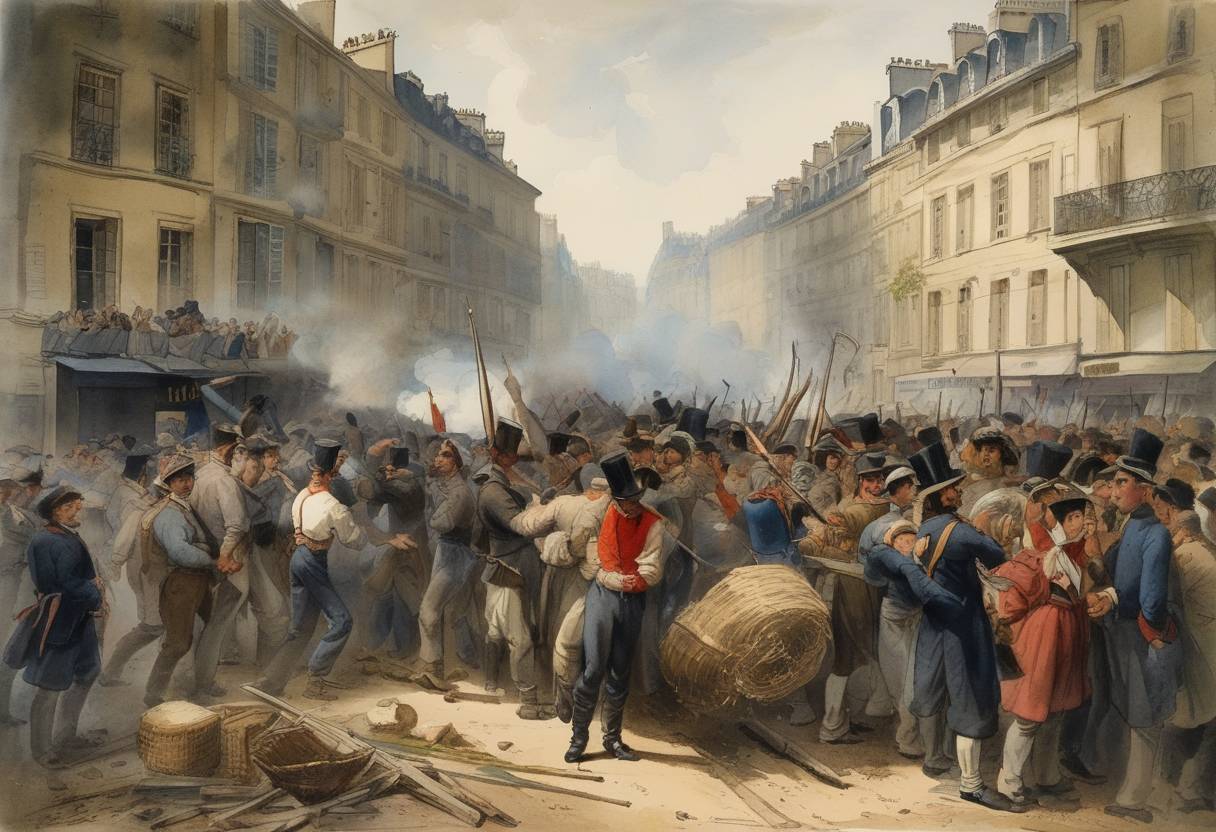
The June Days Uprising was a pivotal moment during the tumultuous period of the French Second Republic. It commenced on June 22, 1848, in Paris, triggered by widespread dissatisfaction among the working class over the government’s decision to terminate the National Workshops, a key social and economic program established after the February Revolution of the same year.
In February 1848, the French monarchy was overthrown, leading to the establishment of the Second Republic. The provisional government, aiming to address the economic hardships faced by the lower classes, instituted the National Workshops. These workshops provided employment to Paris’s unemployed, reflecting socialist influences and the Revolution’s promise to tackle workers’ concerns.
However, the workshops were financially unsustainable and seen by many conservatives as hotbeds for radicalism. Facing mounting pressure, the government decided to dissolve the National Workshops in June 1848.
On June 22, the announcement of the workshops’ closure led to immediate unrest. Thousands of workers took to the streets, planning to reopen the workshops and demand better labor conditions. What began as a peaceful protest quickly escalated into violent confrontations as tensions between the workers and the government grew.
The uprising highlighted deep social and economic divisions in France. The workers, predominantly from Paris’s poorer districts, erected barricades, recalling tactics from prior revolutions. Over three days, intense fighting occurred between insurgents and government forces led by General Louis-Eugène Cavaignac.
The insurrection was brutally suppressed by June 26, with government troops retaking control of the city. The crackdown resulted in the deaths of an estimated 1,500 workers, with thousands more imprisoned or exiled. The swift and severe government response effectively crushed hopes for achieving more radical socioeconomic reforms through political means.
The June Days Uprising was a decisive episode that underscored the ideological divide between the working classes and the republican government. It marked a shift towards more conservative and authoritarian measures by the Second Republic and solidified General Cavaignac’s position as a strongman, eventually leading to the election of Louis-Napoléon Bonaparte as president later in the year. The Lessons from the uprising also influenced the growing class consciousness and the development of socialist movements in France and across Europe.
Source: www.britannica.com