The First Blood Transfusion in England: November 14, 1666
1666 · Oxford, England
Samuel Pepys reports on the first blood transfusion performed on a dog by Richard Lower in England.
February 11, 1355
The St. Scholastica Day riot occurred in Oxford, England, which erupted due to a dispute between two local townspeople and students from the University of Oxford escalating into a large-scale conflict, contributing to long-standing tensions between town and gown.
Oxford, England | University of Oxford
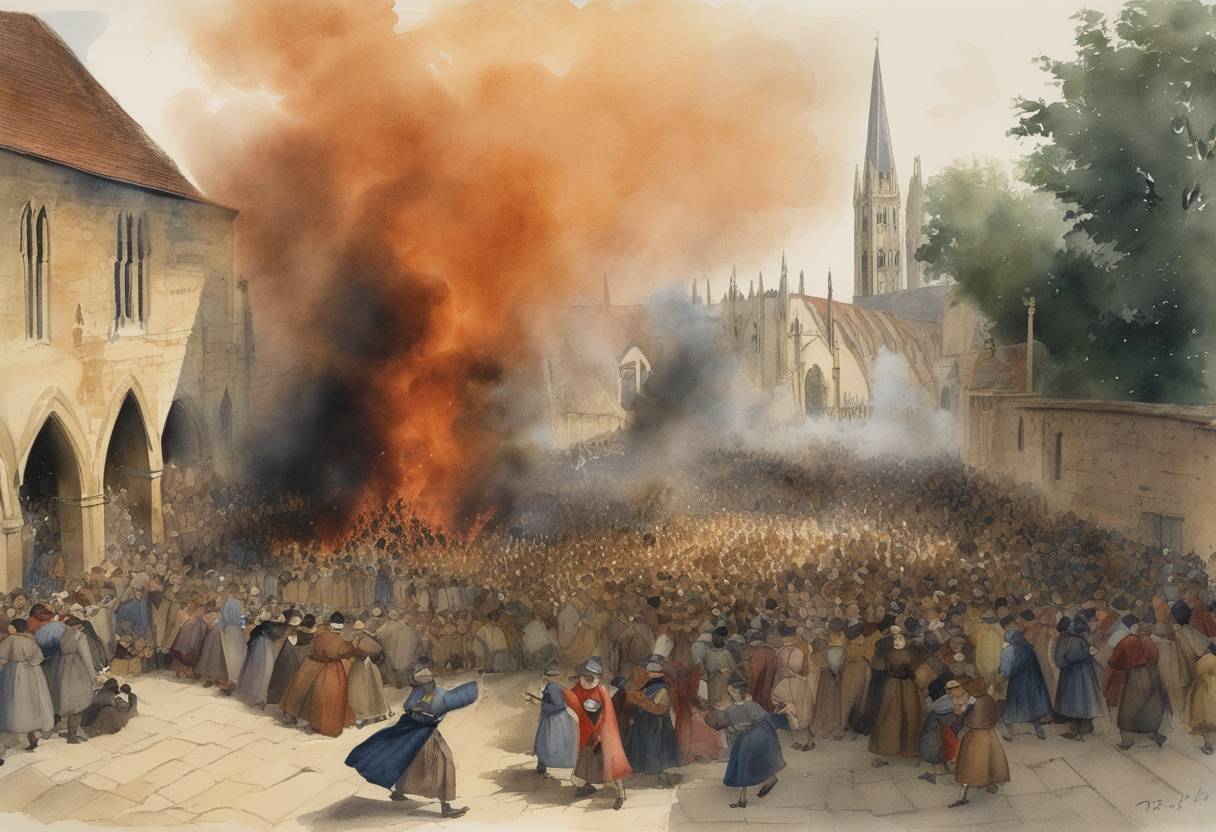
The St. Scholastica Day riot, which took place in Oxford, England, on February 10, 1355, stands as one of the most significant and violent outbreaks of “town and gown” hostility—a term used to describe tensions between university members and local residents.
By the 14th century, Oxford had already established itself as a major center of learning with the University of Oxford at its heart. However, the presence of the university created a cultural and economic dichotomy with the local townspeople, often leading to friction. The local populace, primarily engaged in commerce and trade, occasionally resented the university, partially because students and faculty enjoyed certain privileges, including legal exemptions and access to resources.
The disturbance was ignited in a tavern on February 10, 1355, during a feast to celebrate St. Scholastica’s Day. The trouble began when two university students, Walter de Springheuse and Roger de Chesterfield, reportedly complained about the quality of the wine being served at the Swindlestock Tavern. An argument with the tavern owner quickly escalated into physical violence.
This altercation spiraled out of control, leading to a broader confrontation between students and townspeople. As the day wore on, violence erupted in the streets, involving a reported engagement of hundreds of university affiliates and local citizens. The intense skirmishes lasted for several days, extending beyond the initial scuffle to door-to-door assaults, resulting in significant casualties.
The St. Scholastica Day riot became emblematic of the tensions that can arise between educational institutions and their locales, an issue mirrored in other university towns. The incident contributed to affirming the autonomy and privileges of the University of Oxford, reinforcing a socio-political structure that would persist for centuries. An annual mass was conducted every year for the souls of the deceased, reflecting a structured yet strained reconciliation between the town and the gown that evolved over time.
This violent episode underscores the historical complexities of maintaining harmony between centers of learning and municipal life, echoing challenges that many university cities continue to navigate today.
Source: en.wikipedia.org