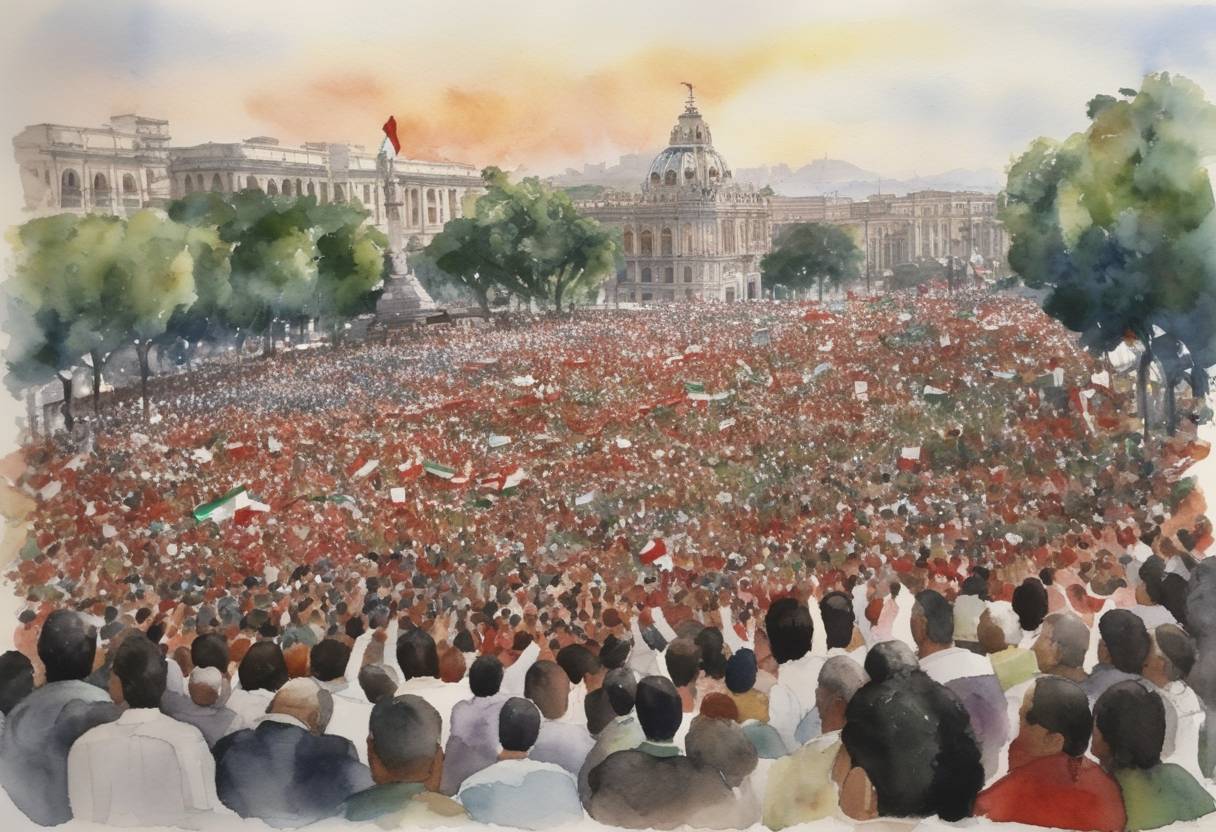
Andrés Manuel López Obrador’s Mayoral Election Victory on July 1, 2000
On July 1, 2000, Andrés Manuel López Obrador, representing the Partido de la Revolución Democrática (PRD), was declared the winner of the Mexico City mayoral election. This victory was historically significant as it marked the first instance of an opposition party seizing control of Mexico City’s local government, which had been a stronghold for the ruling Institutional Revolutionary Party (PRI) for decades.
Context and Background
For much of the 20th century, Mexico’s political landscape was predominantly shaped by the PRI, which held a tight grip over political offices at all levels. The democratization reforms of the 1990s, aimed at increasing transparency and competitiveness, allowed opposition parties to gain traction. The PRD, founded in 1989, quickly became a formidable force in Mexican politics by advocating for greater social justice, electoral reform, and accountability.
Key Events Leading to the Election
Andrés Manuel López Obrador, a charismatic leader known for his advocacy for the poor and anti-corruption stance, became a prominent figure in Mexican politics. Leading up to the election, his campaign focused on issues pertinent to the residents of Mexico City, such as crime reduction, public transportation improvements, and social welfare programs. His populist approach resonated with voters who sought change from the long-standing PRI dominance.
Election and Outcome
López Obrador’s victory was emblematic of the electorate’s desire for reform and modernization. Garnering a notable majority, his success underscored a growing shift in political attitudes among the Mexican populace, particularly in urban areas. His win in Mexico City served as a precursor to further gains by opposition parties across the country, signaling a pivotal transition in Mexico’s political landscape.
Significance and Aftermath
López Obrador’s ascendancy to the mayoral office foreshadowed the increasing viability of political alternatives to the PRI at a national level. His tenure as mayor was marked by significant social policy initiatives, infrastructure projects, and fiscal reforms aimed at reducing inequality and enhancing urban living standards.
The election victory set the stage for López Obrador’s future political trajectory, eventually leading to his prominent roles in national politics, including two subsequent presidential runs before finally securing the presidency in 2018. This marked a broader acceptance and integration of diverse political ideologies within Mexico’s democratic framework.