1928 · Nanjing, China
Chiang Kai-shek became Chairman of the National Government of the Republic of China.
March 1, 1912
The Republic of China National Day was celebrated for the first time.
Nanjing, China
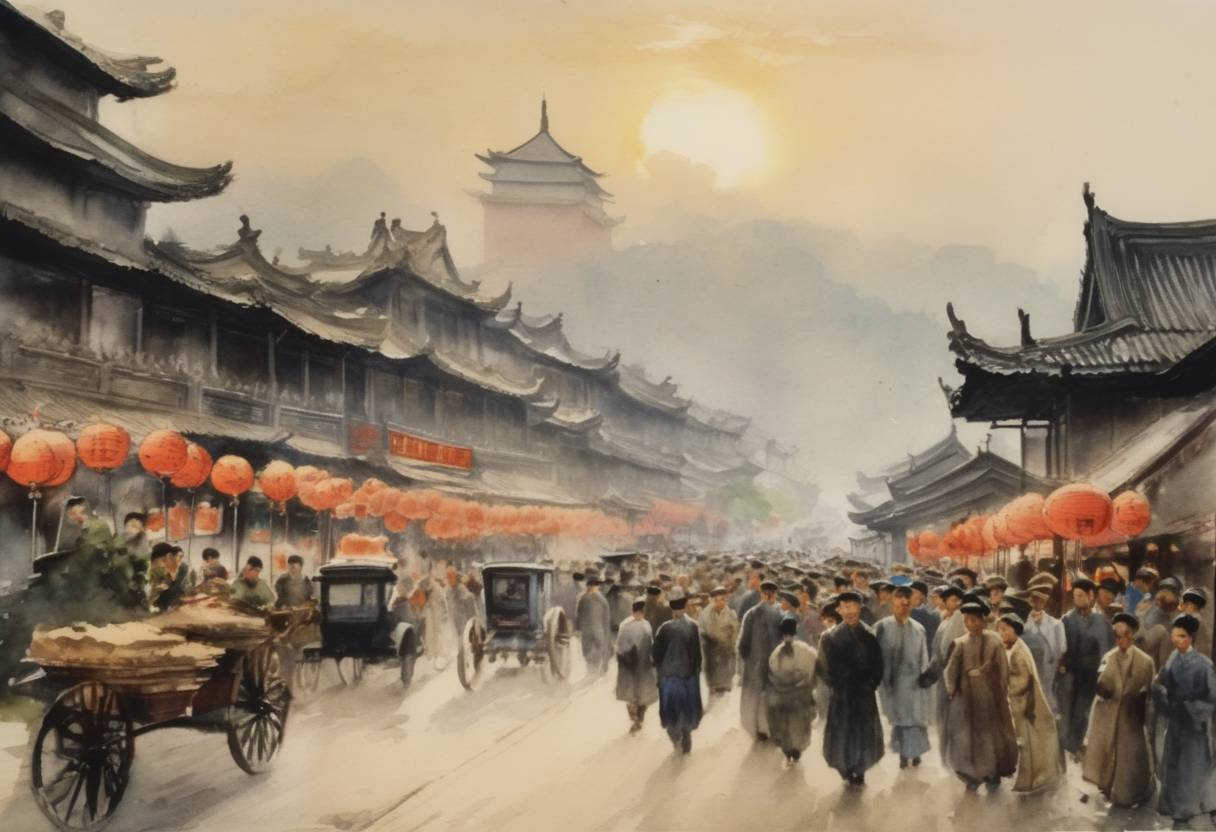
The Republic of China (ROC) National Day, also known as “Double Ten Day,” was first celebrated on January 3, 1912. This date marked the beginning of a new era following the collapse of the Qing Dynasty, which had ruled for centuries. It signifies the founding of the Republic of China and is celebrated in Taiwan and by many Chinese communities around the world as a day of national pride and celebration.
The early 20th century was a period of significant upheaval in China. The Qing Dynasty, which had reigned since 1644, was facing internal discontent and external pressures. Revolutionary ideas were spreading, influenced by Western political philosophies and the success of other regions in throwing off oppressive governance.
In response to these pressures, the Wuchang Uprising broke out in October 1911. This revolt, part of the larger Xinhai Revolution, quickly gained support from numerous provinces and resulted in the abdication of the last Qing emperor, Puyi, in early 1912.
The celebration of National Day reaffirmed the legitimacy of the new republic and was significant in consolidating the support of the Chinese populace around the revolutionary ideals. It also aimed to inspire unity and national identity during a time of considerable change and uncertainty.
The adoption of January 1st as the moment of celebrating the establishment of the Republic of China set a precedent that followed modern calendar practices, contrasting the traditional lunar calendar that the Qing had adhered to. This decision was part of broader efforts to modernize and reform Chinese society along western lines.
While January 3 marked the first celebration, “Double Ten Day” on October 10 is celebrated as the official National Day because it recalls the Wuchang Uprising, the catalyst for the revolution. This change was later adopted to align with the revolutionary spirit and commemorate the uprising that led to the eventual fall of the Qing Dynasty.
The founding of the Republic of China had a lasting impact on the nation’s history, leading to a protracted period of political struggle as different factions vied for control. Despite these challenges, the establishment of the ROC laid the groundwork for the eventual development of modern Chinese governance, which continues to be a subject of historical significance.
Source: en.wikipedia.org