Robert II Becomes King of Scotland: The Beginning of the Stuart Dynasty
1371 · Scone, Scotland
Robert II became King of Scotland, marking the beginning of the Stuart dynasty.
March 10, 1126
David I became King of Scots following the death of his brother, Alexander I. His reign marked a period of feudal transformation, religious reform, and administrative changes in Scotland.
Perth, Scotland | Monarchy of Scotland
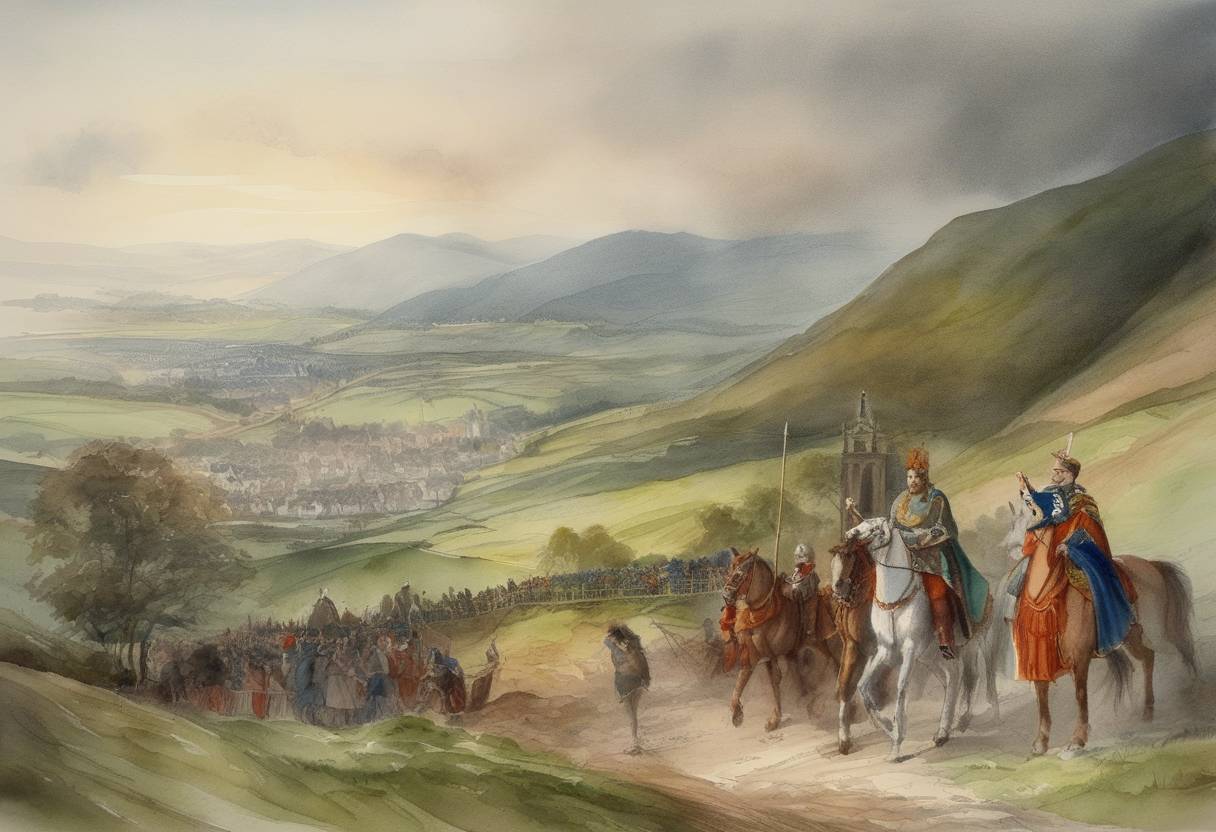
On April 23, 1124, David I ascended to the throne of Scotland following the death of his brother, Alexander I. His reign, extending until 1153, was marked by substantial changes in Scotland’s political and ecclesiastical landscapes, which significantly influenced the nation’s history.
Born around 1084, David was the youngest son of Malcolm III of Scotland and Saint Margaret of Scotland. He spent much of his early life in England, under the care of King Henry I, where he was exposed to Norman customs and governance. This experience shaped his approach to leadership once he became king.
David’s rule is often described as a transformative period for Scotland. He implemented feudalism modeled after Norman practices, granting lands to Norman and Anglo-Norman barons who supported him. This not only helped consolidate his power over Scottish territory but also introduced a new class of landholders who were loyal to the crown, reshaping the Scottish nobility.
David was a deeply pious ruler who championed the church’s reform and growth in Scotland. He founded several monasteries, including the famous Cistercian abbey at Melrose, and promoted the establishment of diocesan structures, elevating the clergy’s role within the kingdom. This emphasis on Christian reform sought to align the Scottish church more closely with Roman practices, enhancing its influence and reach.
David I also focused on improving administrative efficiency. He established a more centralized government by creating royal burghs—early towns granted special trading privileges, which became vital economic centers. These changes helped stimulate economic development and growth, laying the groundwork for urbanization in Scotland.
David I’s reign ended with his death in 1153, but his impact on Scotland endured. His policies effectively integrated Scotland into the broader European political and religious framework. Moreover, his reforms established legislative and social foundations that influenced the administrative and religious structure of Scotland long after his tenure.
David’s reign is often seen as a turning point in Scottish history, marking the transition from a tribal society to a feudal kingdom that later monarchs would build upon. His legacy is that of a reformer and modernizer, whose efforts paved the way for the nation’s future development.
Source: en.wikipedia.org